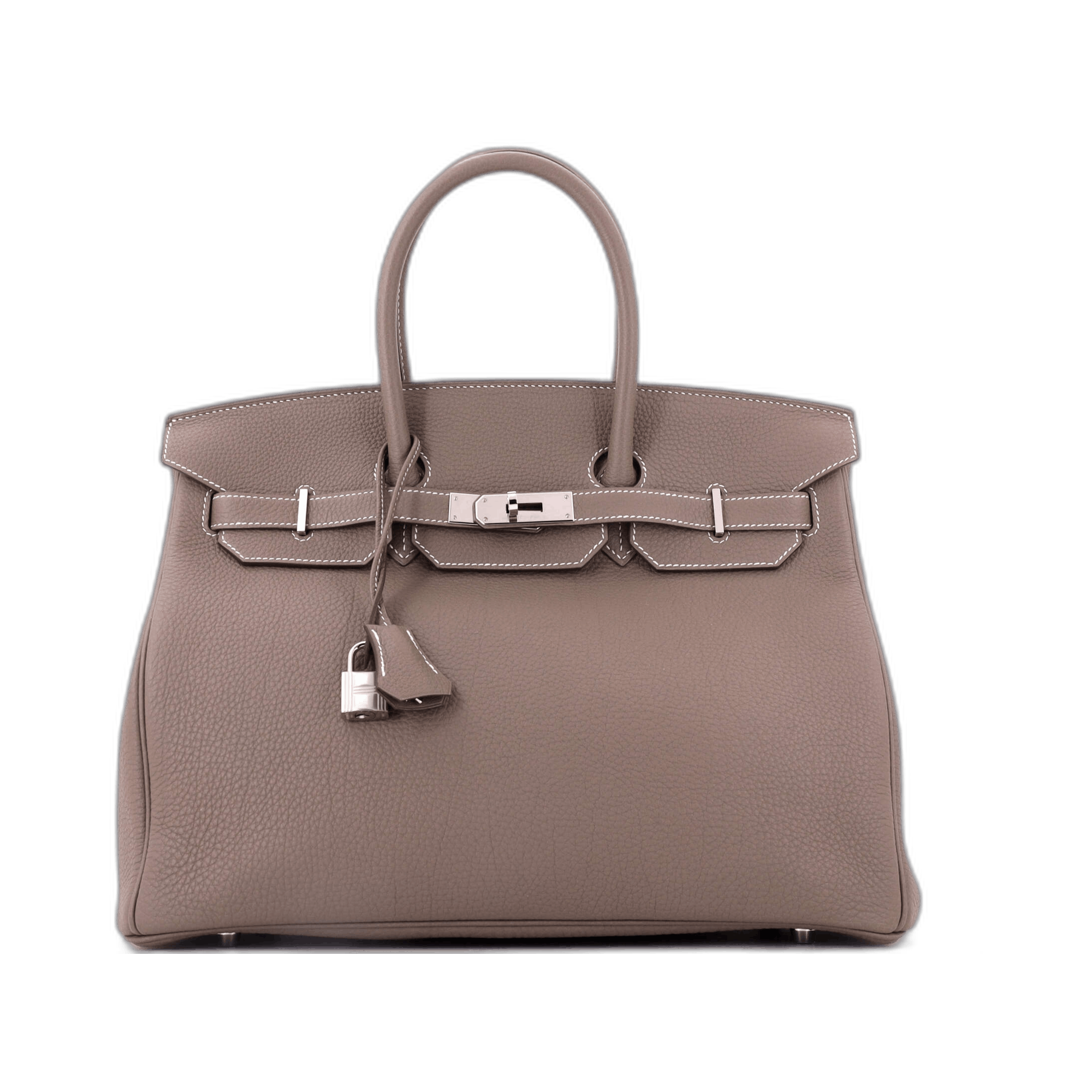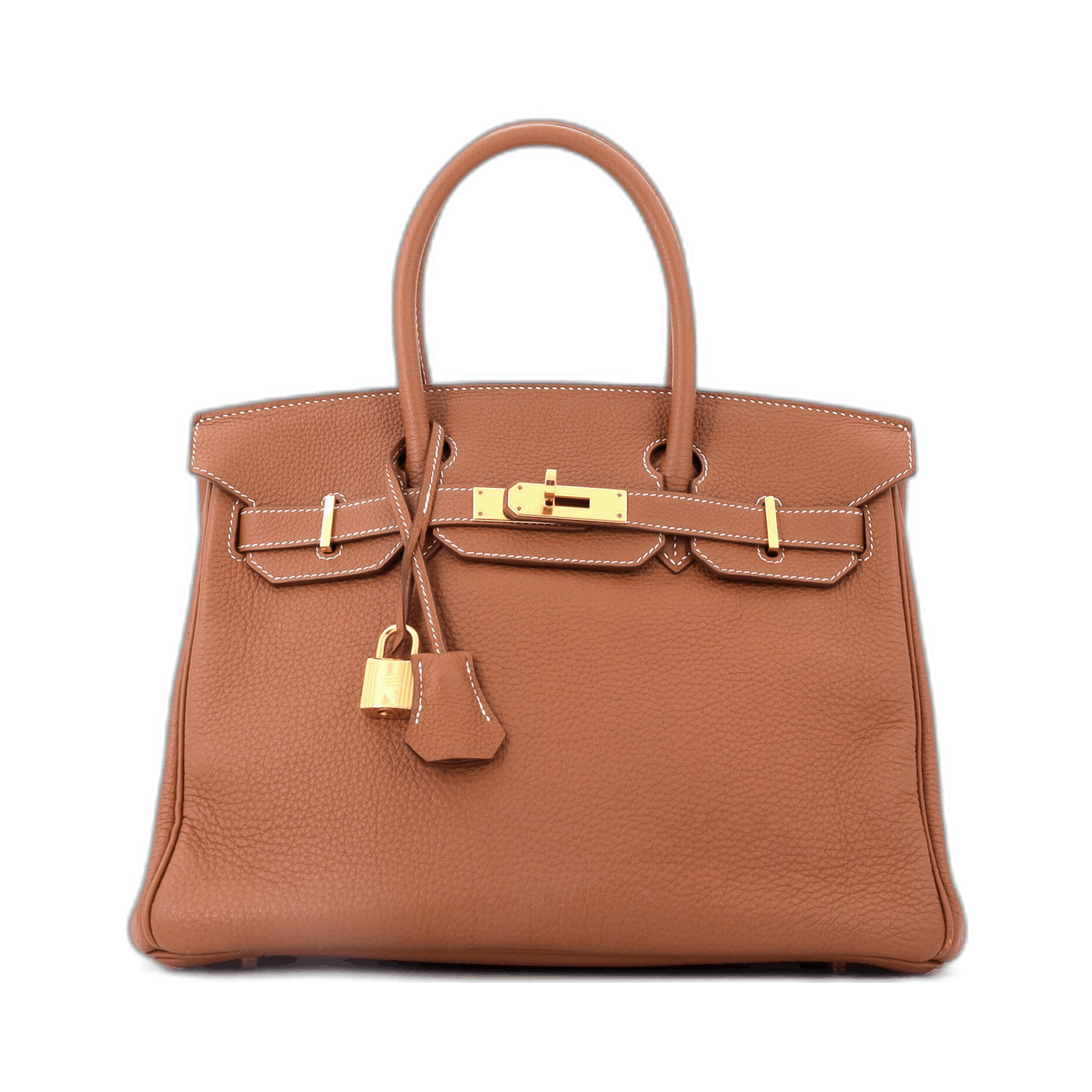
The Birkin is a structured top-handle bag with a flap closure, a turn-lock, a padlock and two keys held in a leather clochette. It is made in sizes from 25 to 40 centimeters, in a wide range of leathers, colors and hardware finishes. Prices here reflect standard leathers; exotic skins cost several times more.
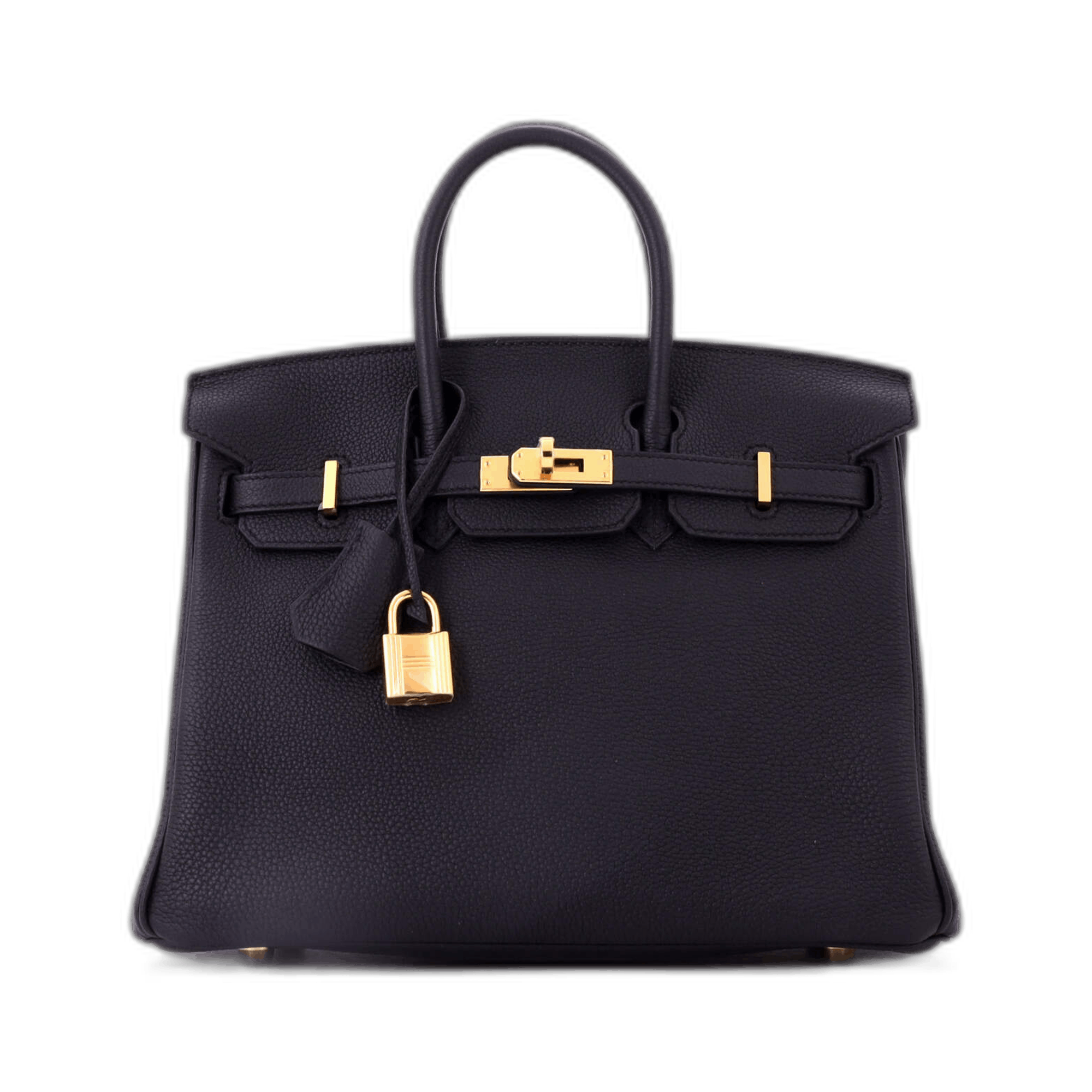
The most requested size today and generally the strongest performer on the resale market.
The classic everyday size, roomy enough for a laptop sleeve or a small tablet.
A larger work and travel size. It trades at a smaller premium than the 25 and 30.
The largest common size, used as a weekend bag. Demand is thinner, so resale is more variable.
Standard-leather Birkins in neutral colors commonly resell at or above boutique retail. The Birkin 25 and 30 in Togo or Epsom typically clear roughly $14,000 to $30,000 depending on color, hardware and condition, while the Birkin 35 tends to sit lower, around $13,000 to $25,000. Exotic leathers and rare colorways trade far above this range and are not covered here. Because sold prices move with the market, treat these figures as an estimate and compare recent sold listings before deciding.
The Birkin was introduced in 1984 after Jean-Louis Dumas, then head of Hermès, met the actress and singer Jane Birkin on a flight between Paris and London. Her bag spilled in the aisle, and the conversation that followed led to a bag built around how she wanted to carry her things: roomy, structured and easy to open.
It was closely related in construction to the Kelly, but larger and with a different proportion. Over the following decades it became the handbag most associated with luxury scarcity, in part because Hermès has never sold it on an open, first-come basis.
The Birkin is the most recognized luxury handbag in the world and the standard against which other status bags are measured. It has appeared in film and television for decades and is closely watched by collectors, auction houses and investors.
Its cultural weight comes from the difficulty of buying one at retail. That difficulty, more than any single design feature, is what underpins its resale market.