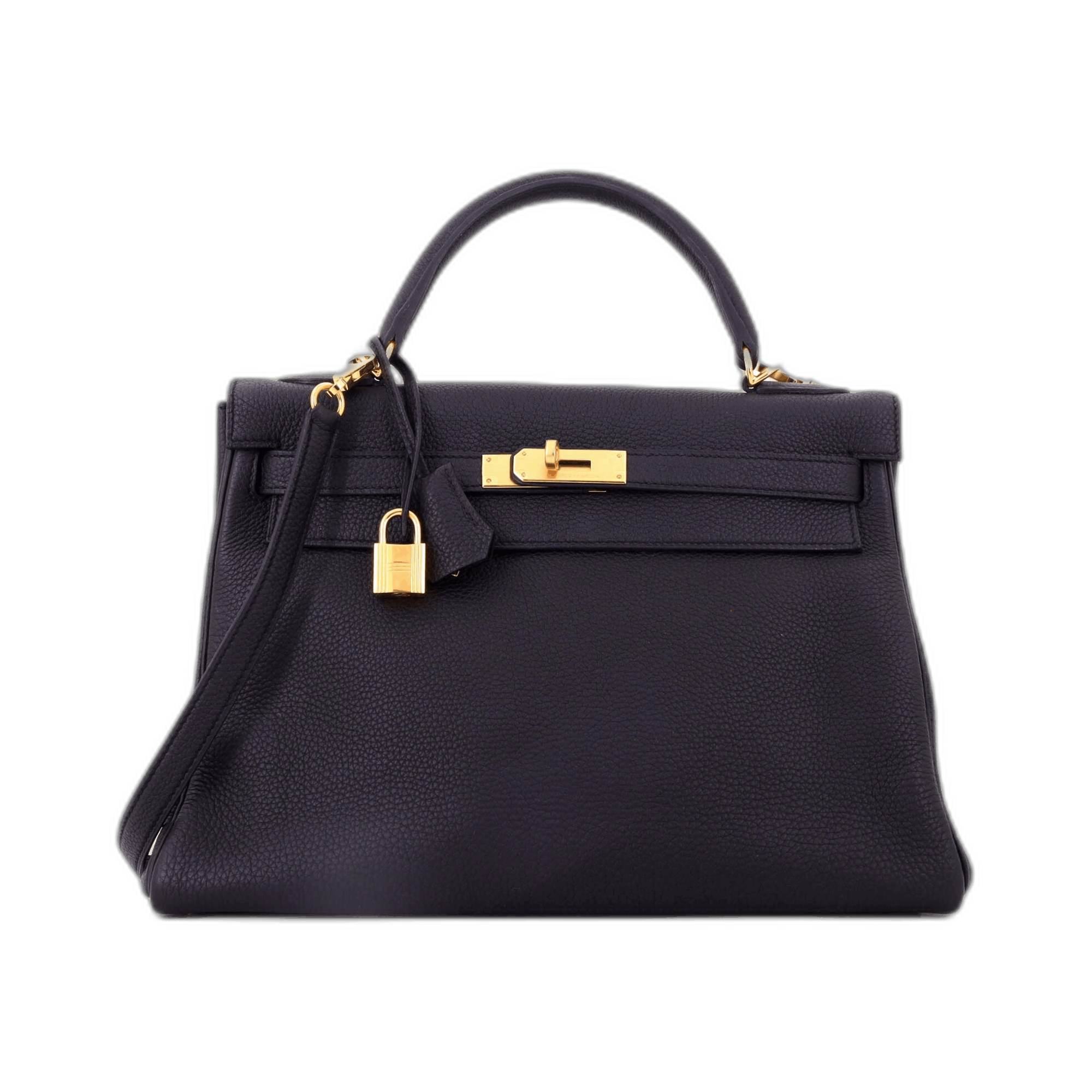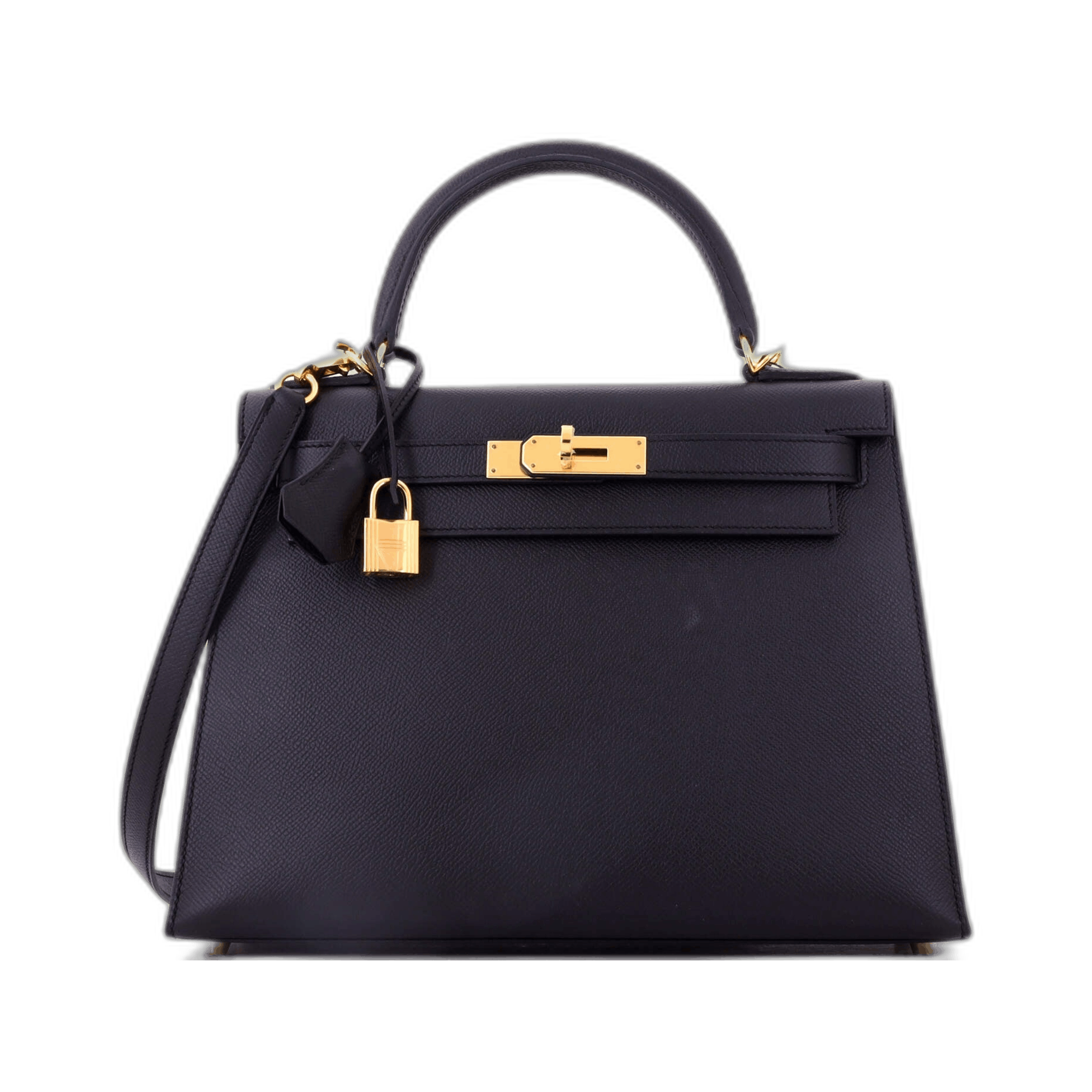
The Kelly is a structured top-handle bag with a trapezoid shape, a single flap, a turn-lock and a padlock with two keys. It comes in two constructions: Retourne, with a softer, slightly slouchy look, and Sellier, with a rigid, sharp-edged body that is stitched on the outside. It can be carried by the handle or on a detachable shoulder strap.
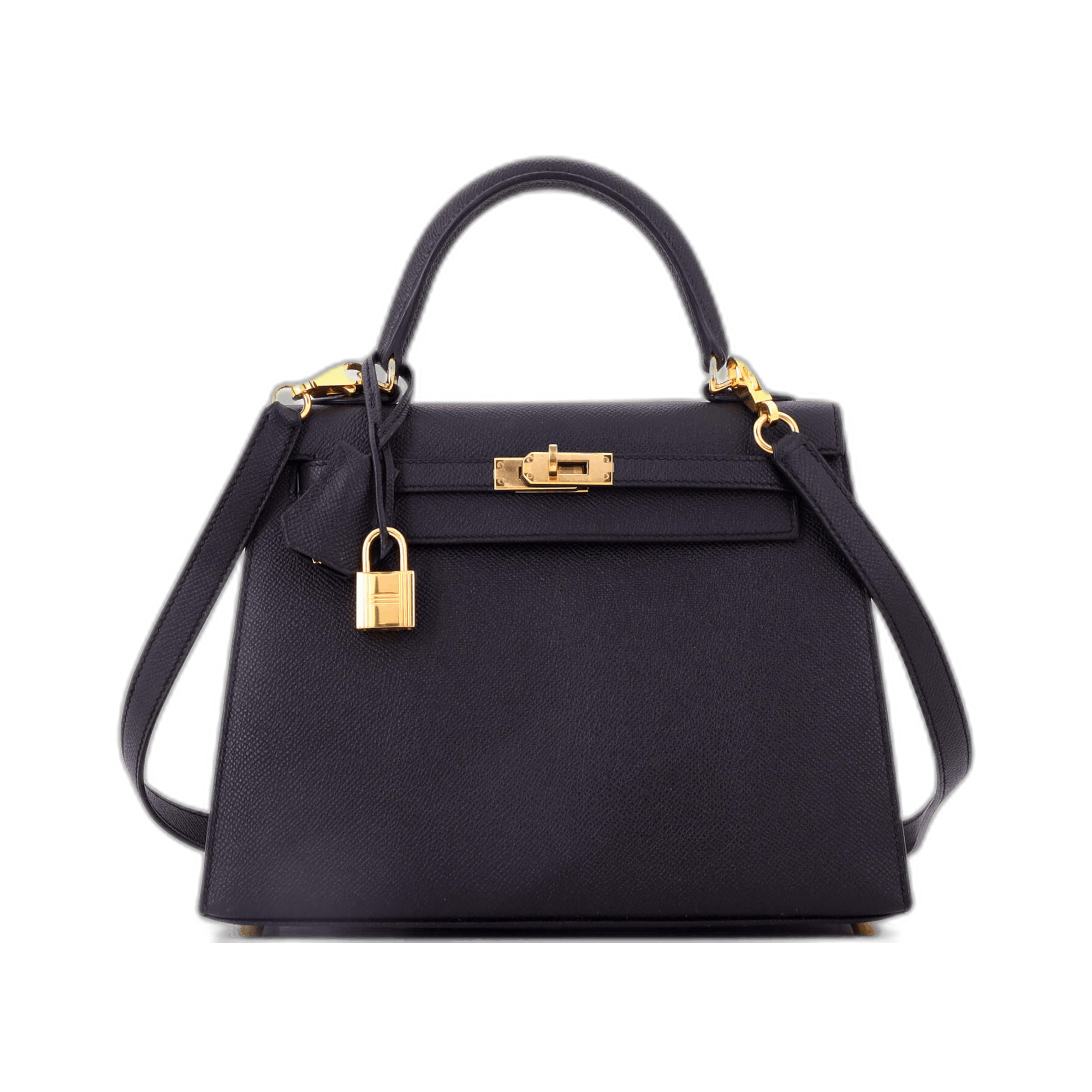
The most requested Kelly size and a consistent performer in resale.
A slightly roomier everyday size that still carries the classic proportion.
The largest common size, closer to a work bag. It resells at a smaller premium.
Standard-leather Kellys generally resell at or above boutique retail. A Kelly 25 or 28 in Epsom or Togo commonly clears roughly $12,000 to $28,000 depending on color, hardware and condition, and Sellier examples tend to sit at the upper end. The Kelly 32 is typically cheaper. Exotic leathers and special orders trade far above this range and are not covered here. Treat these figures as an estimate and compare recent sold listings before deciding.
The Kelly began in the 1930s as a design for a saddle-bag-inspired handbag originally known as the sac à dépêches. It took its current name in the mid-1950s, after photographs of Grace Kelly, then Princess of Monaco, holding the bag in front of her were widely published. The house later formalized the name.
It predates the Birkin by nearly half a century and shares its construction methods, which is why the two are often discussed together.
The Kelly is one of the few handbags with a genuine claim to being a classic in the strict sense: its silhouette has stayed essentially the same for decades. It has long been associated with formal dressing and with collectors who prefer a more compact, tailored bag to the Birkin.
Demand for the Kelly, like the Birkin, is driven by limited supply at retail rather than by trends.