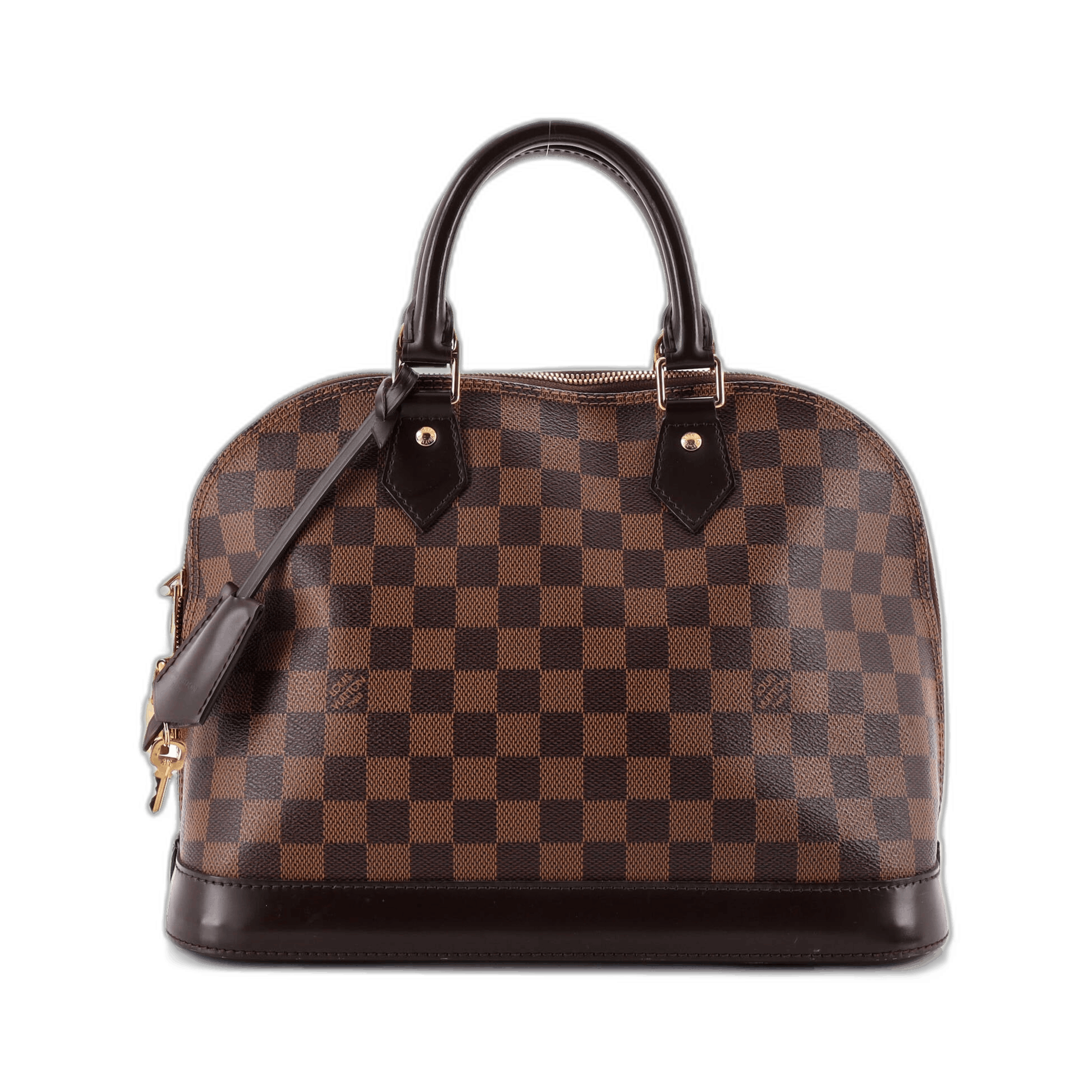
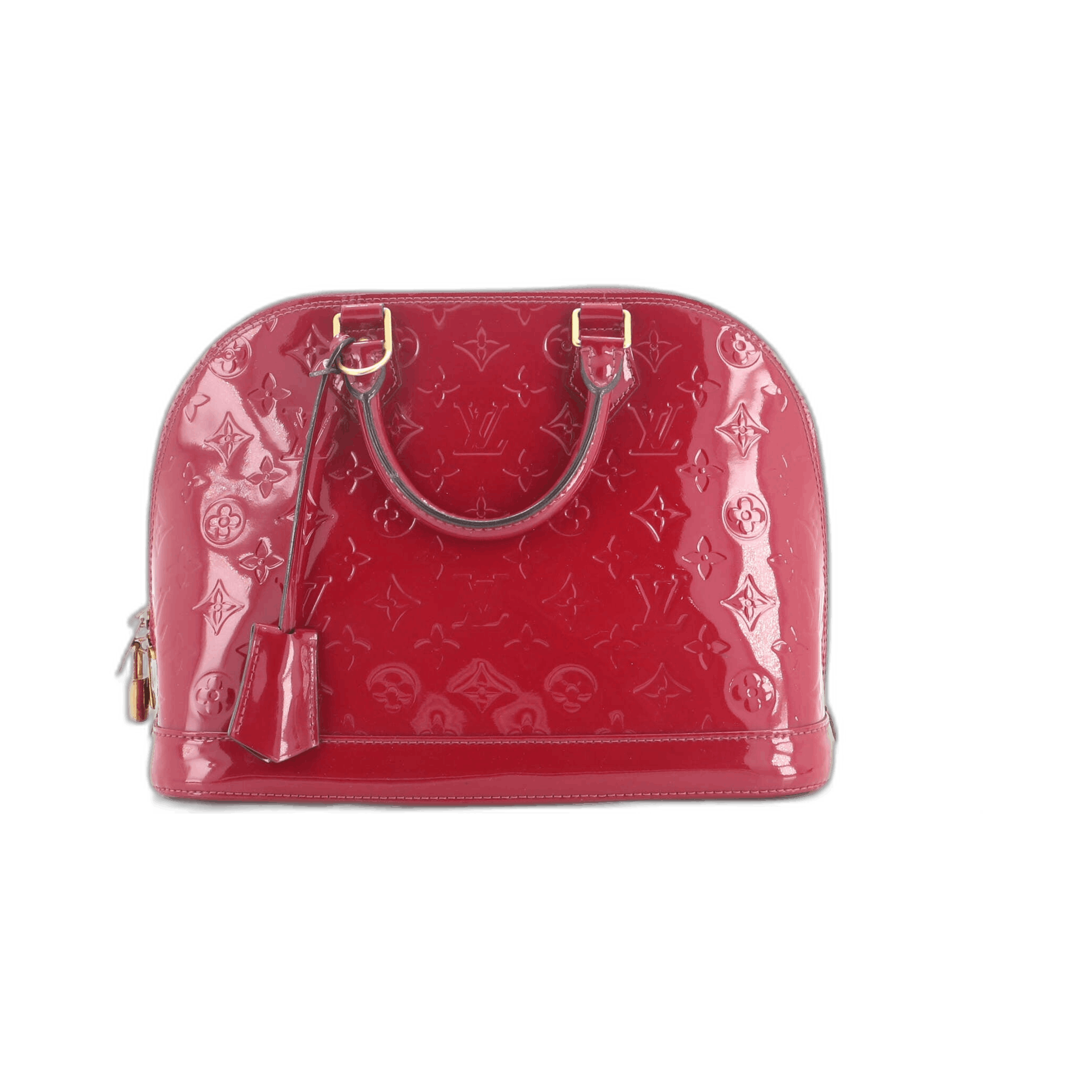
Golden padlock and two keysFunctional lock accessory at the top double-zip.A detail resale buyers and authenticators check (Top center, above zippers), correct shape, finish, and placement here support a higher verified resale value.
Hand-stitched Toron handlesTwisted, braided rolled leather handles unique to the Alma.A detail resale buyers and authenticators check (Top handles), correct shape, finish, and placement here support a higher verified resale value.
Leather key bell (clochette)A small bell-shaped leather fob holding the keys.A detail resale buyers and authenticators check (Attached near handle base), correct shape, finish, and placement here support a higher verified resale value.
Double zip closure meeting at centerTwo zipper pulls converging at the middle top.A detail resale buyers and authenticators check (Top opening, center), correct shape, finish, and placement here support a higher verified resale value.
Protective metal bottom studsRound feet on the base.A detail resale buyers and authenticators check (Base of bag), correct shape, finish, and placement here support a higher verified resale value.
Interior smartphone slip pocketA dedicated interior pocket.A detail resale buyers and authenticators check (Interior wall), correct shape, finish, and placement here support a higher verified resale value.
Detachable adjustable crossbody strapAdd-on strap for versatility.A detail resale buyers and authenticators check (Strap attachment rings), correct shape, finish, and placement here support a higher verified resale value.
Alma
Louis Vuitton
Stable
MaterialMonogram coated canvas with hand-stitched Toron leather handles
HardwareGolden padlock and two keys
Introduced1934
Categorytop-handle, crossbody
The Alma is one of Louis Vuitton's oldest silhouettes, designed in 1934 and named in 1992 after cycling through the names "Steamer" and "Squire." Its structured, rounded silhouette and hand-stitched Toron handles set it apart from the house's other top-handle bags, and it remains available across Monogram canvas, Epi leather, and other standing catalog materials.