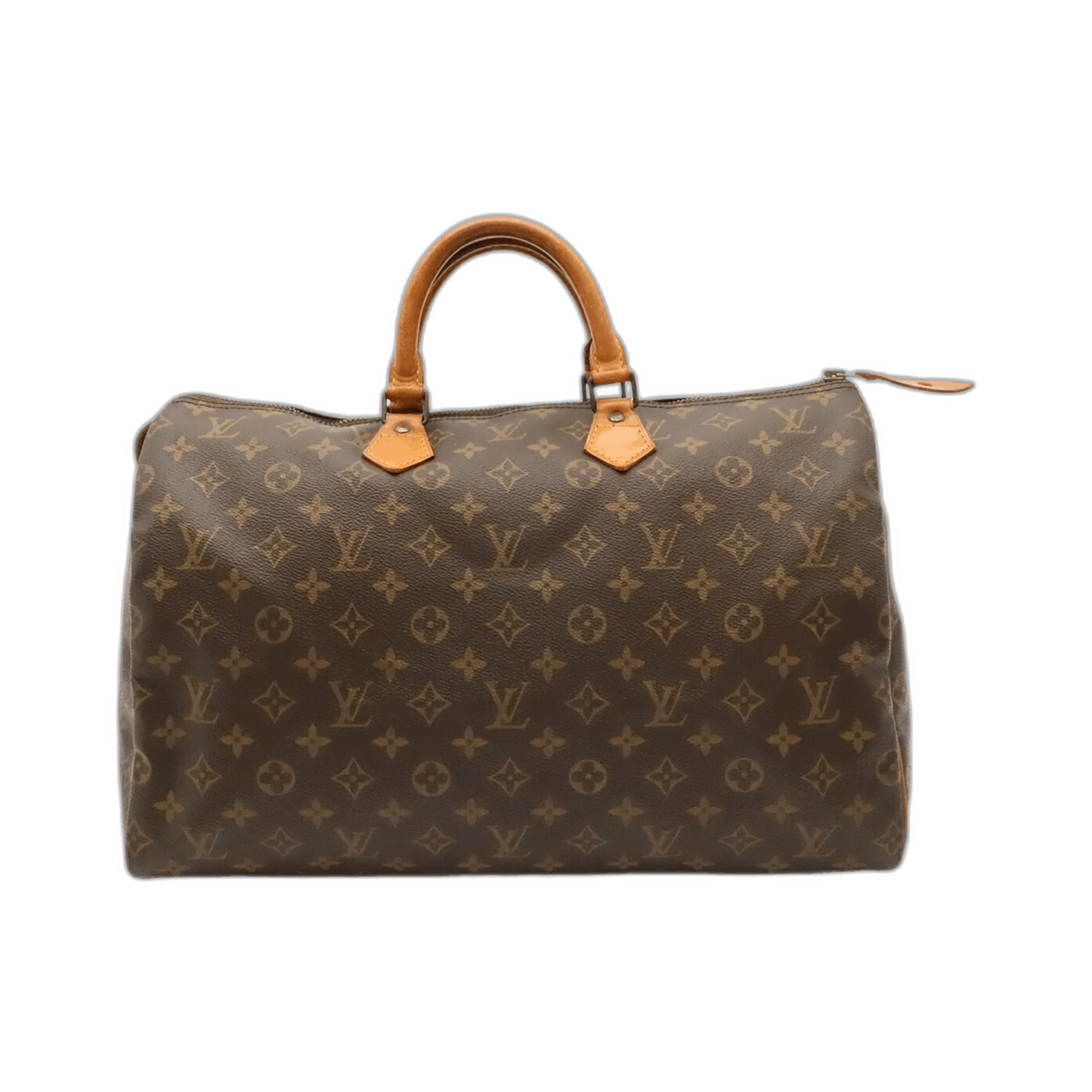
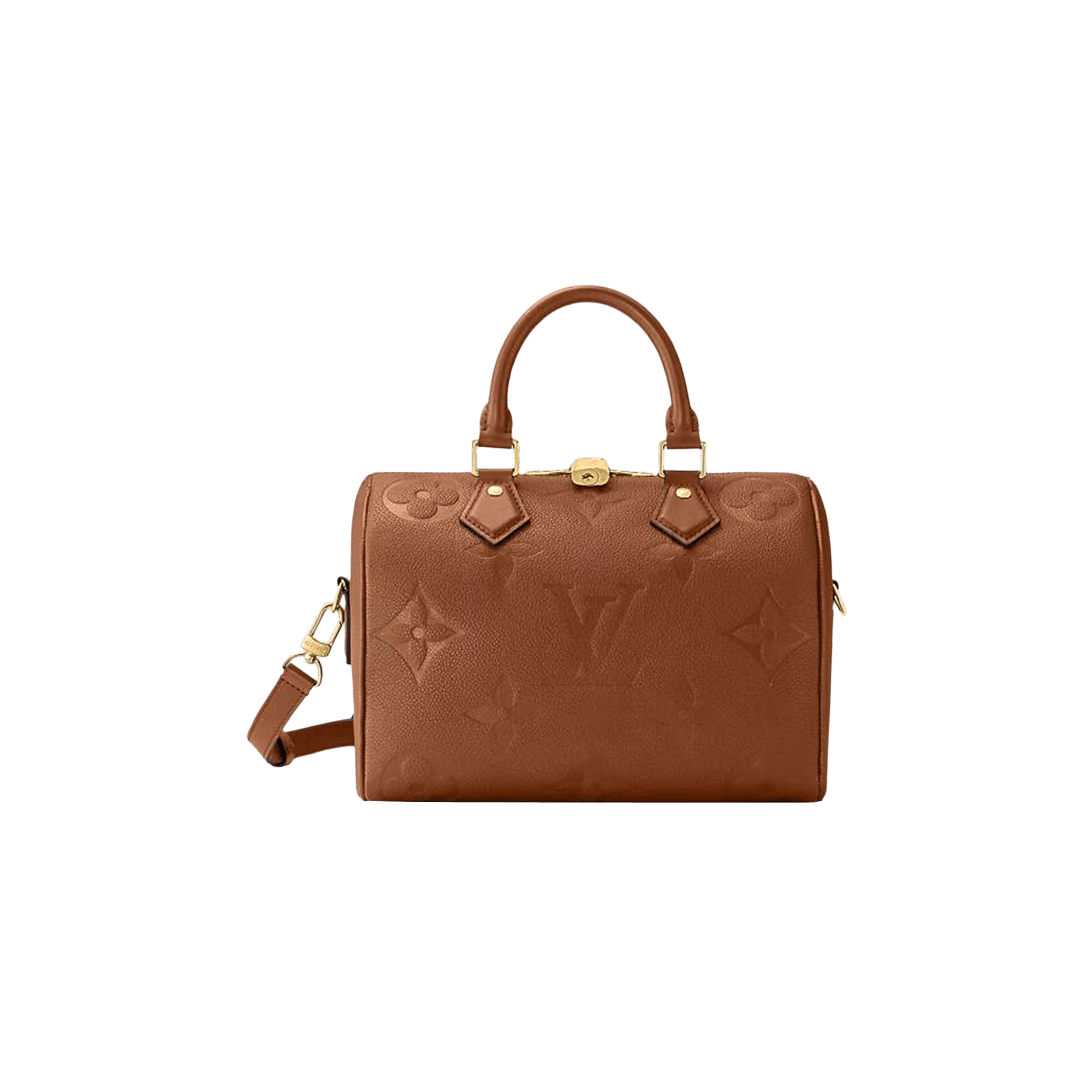
Engraved brass padlock (cadenas) with two keysIconic lock accessory hanging from a leather tab.A detail resale buyers and authenticators check (Front, near top handles), correct shape, finish, and placement here support a higher verified resale value.
Round brass rivets embossed "LOUIS VUITTON"Convex studs securing the handles and sides.A detail resale buyers and authenticators check (Handle base attachment points), correct shape, finish, and placement here support a higher verified resale value.
Vachetta cowhide rolled top handlesNatural leather handles that patina over time.A detail resale buyers and authenticators check (Top handles), correct shape, finish, and placement here support a higher verified resale value.
Double zipper closure with leather pull tabsTwo zipper sliders meeting at the D-ring/padlock loop.A detail resale buyers and authenticators check (Top closure, center), correct shape, finish, and placement here support a higher verified resale value.
Monogram canvas bodyThe coated-canvas LV monogram/flower print.A detail resale buyers and authenticators check (Main body panel), correct shape, finish, and placement here support a higher verified resale value.
Heat-stamped leather tab"Louis Vuitton, made in [country]" stamp.A detail resale buyers and authenticators check (Interior leather tab), correct shape, finish, and placement here support a higher verified resale value.
Metal bottom feet (select eras)Protective studs on the base, discontinued on some later production runs.A detail resale buyers and authenticators check (Base of bag), correct shape, finish, and placement here support a higher verified resale value.
Speedy
Louis Vuitton
Stable
MaterialMonogram coated canvas with vachetta leather trim
HardwareEngraved brass padlock (cadenas) with two keys
Introduced1930
Categorytop-handle, crossbody
The Speedy is Louis Vuitton's most enduring silhouette, originally introduced in 1930 as a smaller alternative to the house's traditional trunks. Rendered in the brand's signature Monogram canvas with vachetta leather trim, it became a global icon after Audrey Hepburn requested a miniaturized version in the late 1950s, and it remains one of the most photographed handbags in fashion history.