Brands

Explore

Sell on alias
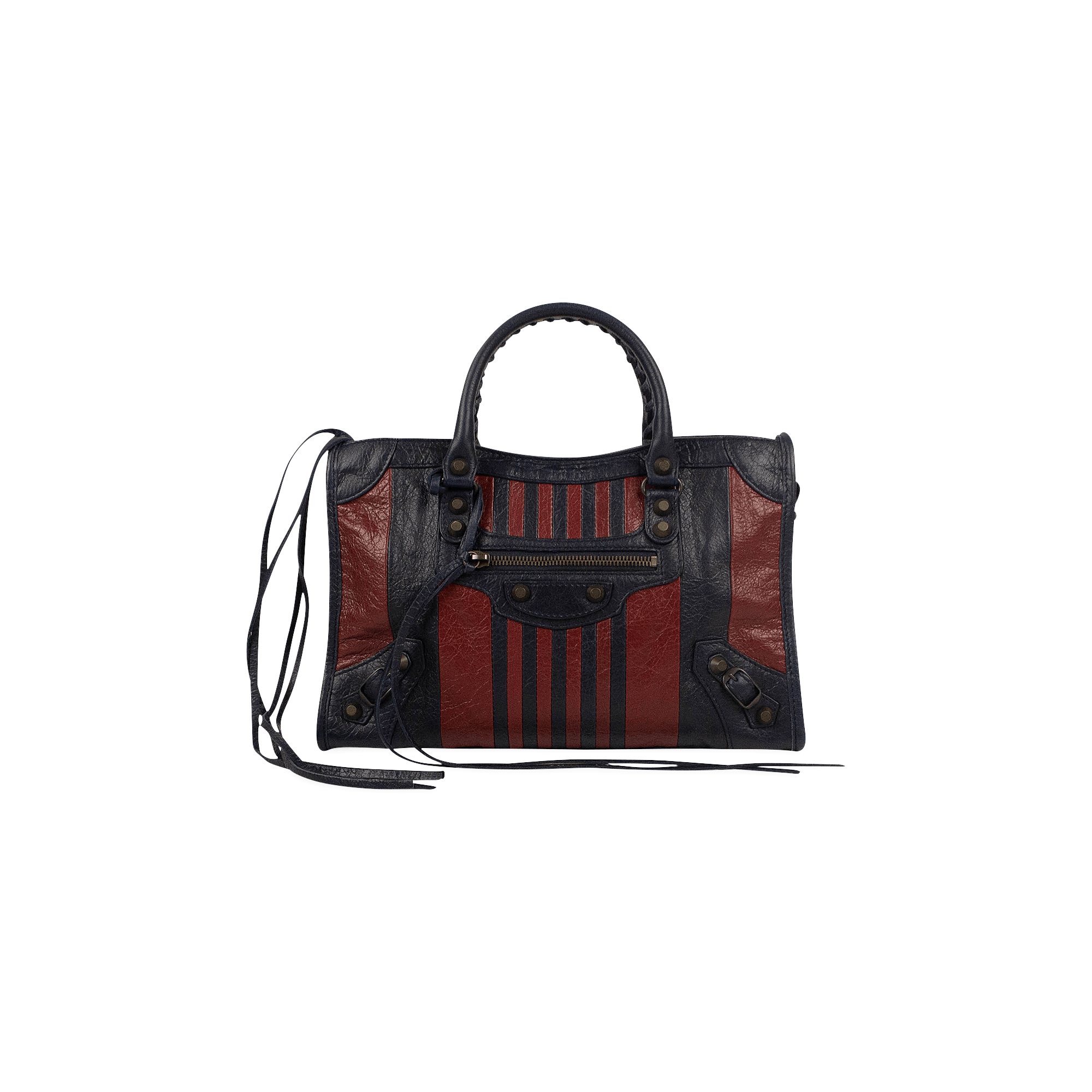
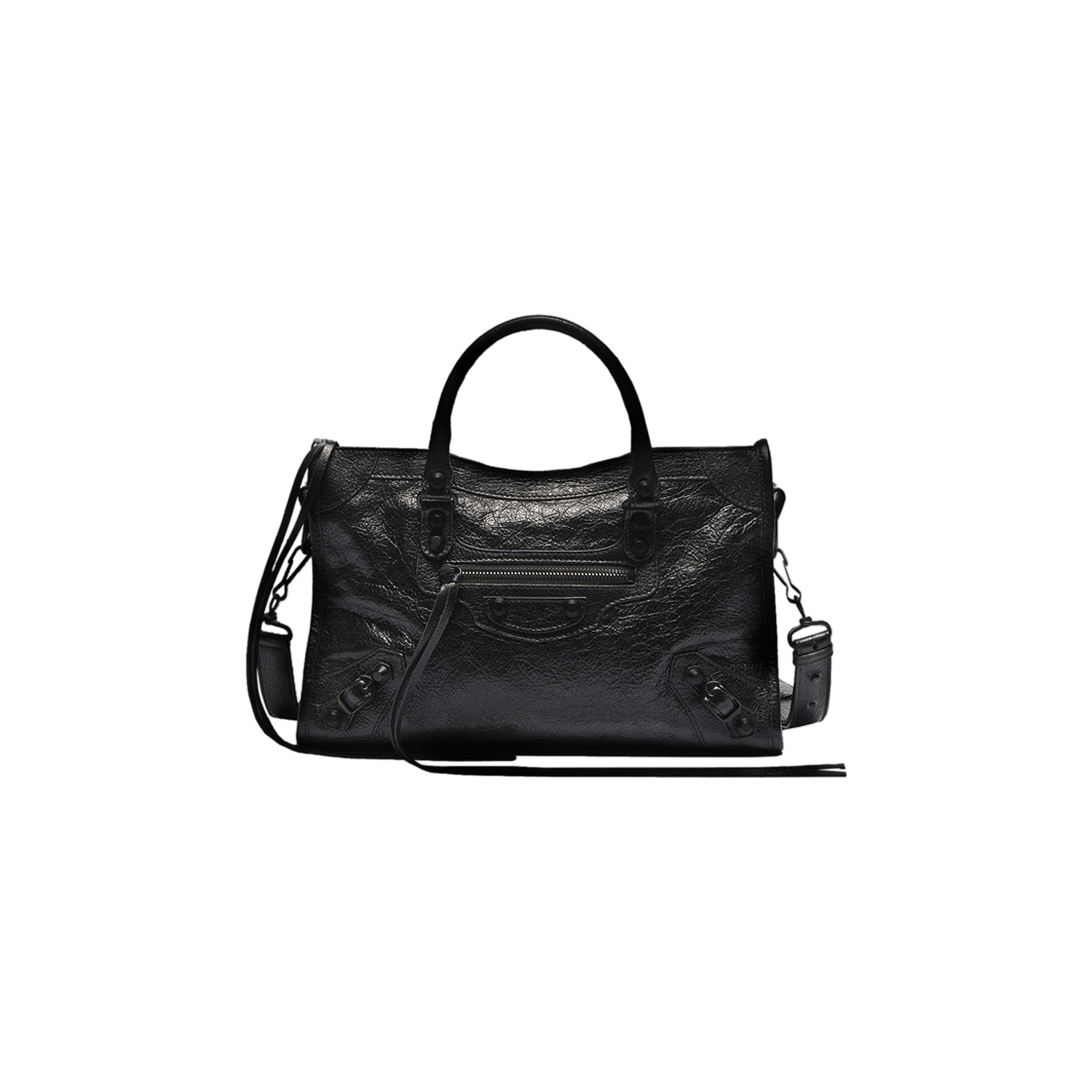
City Bag (Classic City)
Bold round metal studsSignature dome studs reinforcing the front-pocket corners and handle bases.A detail resale buyers and authenticators check (Front pocket corners and handle bases), correct shape, finish, and placement here support a higher verified resale value.
Whipstitched leather top handlesTwin rolled handles finished with visible whipstitch edging.A detail resale buyers and authenticators check (Top handles), correct shape, finish, and placement here support a higher verified resale value.
Front zip pocket with tassel pullAn angled exterior zip pocket, historically finished with a leather tassel pull.A detail resale buyers and authenticators check (Front pocket zipper pull), correct shape, finish, and placement here support a higher verified resale value.
Square buckle side strapsSmall decorative leather straps with metal square buckles near the base.A detail resale buyers and authenticators check (Side straps near base), correct shape, finish, and placement here support a higher verified resale value.
Antiqued brass hardware finishDistinctive dark brass tone used across studs and buckles.A detail resale buyers and authenticators check (Visible at each hardware piece), correct shape, finish, and placement here support a higher verified resale value.
Overextended top zipper with leather pullZipper track runs past the opening for an exaggerated look.A detail resale buyers and authenticators check (Top zipper pull), correct shape, finish, and placement here support a higher verified resale value.

City Bag (Classic City)

Balenciaga
Appreciating
Resale Retail
Resale value range
$1,100 to $2,400
Retail price range
$1,890 to $3,250
MaterialDistressed, soft lambskin leather (agneau)
HardwareAntiqued brass hardware with round studs and buckled straps
Introduced2001
Categoryshoulder, crossbody

The City Bag, also known as the Classic City, is Balenciaga's foundational slouchy leather tote, introduced by Nicolas Ghesquière for Fall/Winter 2001. Its defining trait is the soft, distressed lambskin body finished with antiqued brass studs and buckles, a deliberately undone look that broke from the structured bags of its era. Only 25 prototypes were made before Kate Moss's public embrace turned it into one of the first true 2000s It bags.
City Bag Sizes

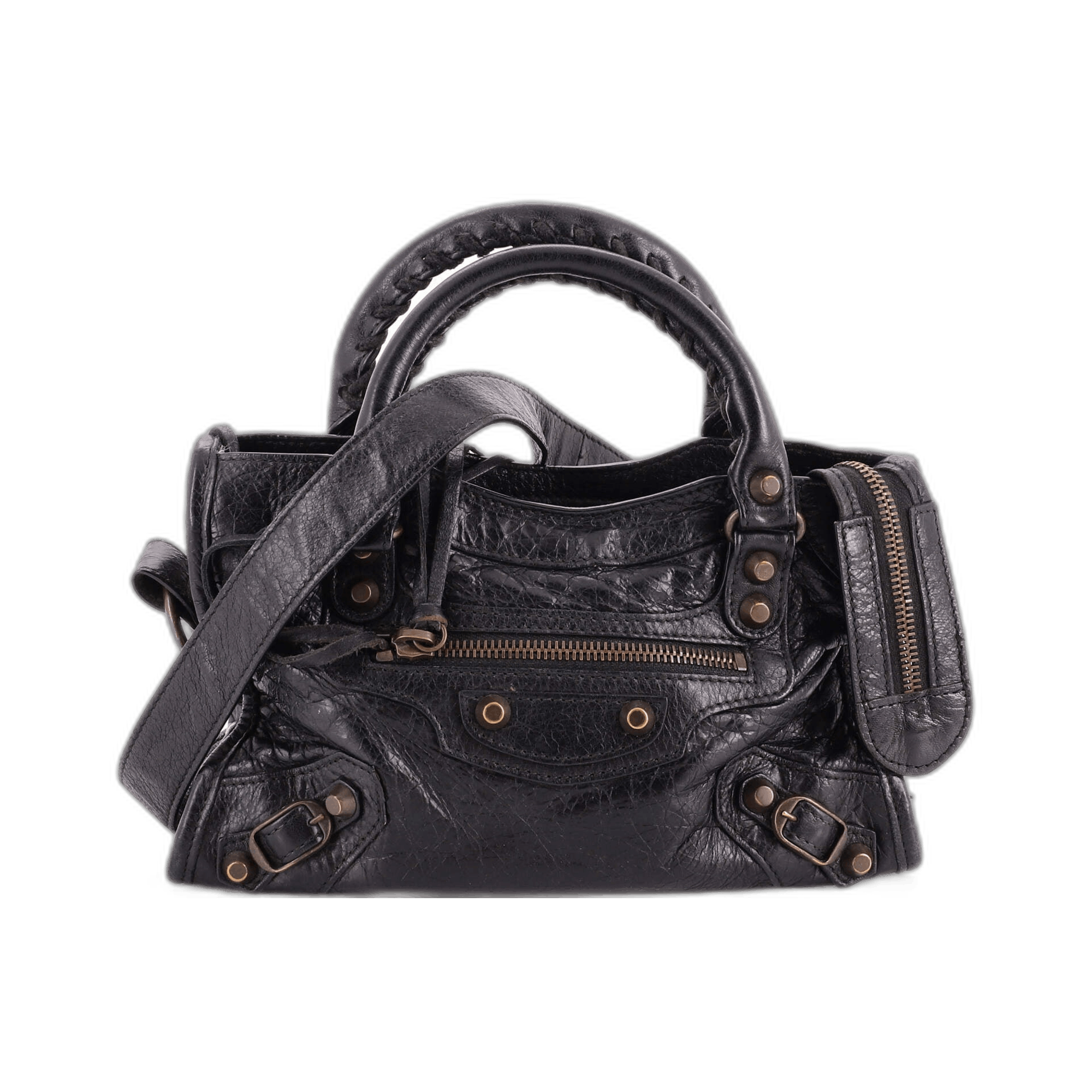
City Bag (Classic City) Mini City
Mini City
9.4" x 6.1" x 3.4"

The smallest standard City size, roughly 16 x 25 x 10cm, added later as a lighter everyday option. Trades lowest of the four sizes since it lacks the cult-favorite history of the original.

$700 – $1,200
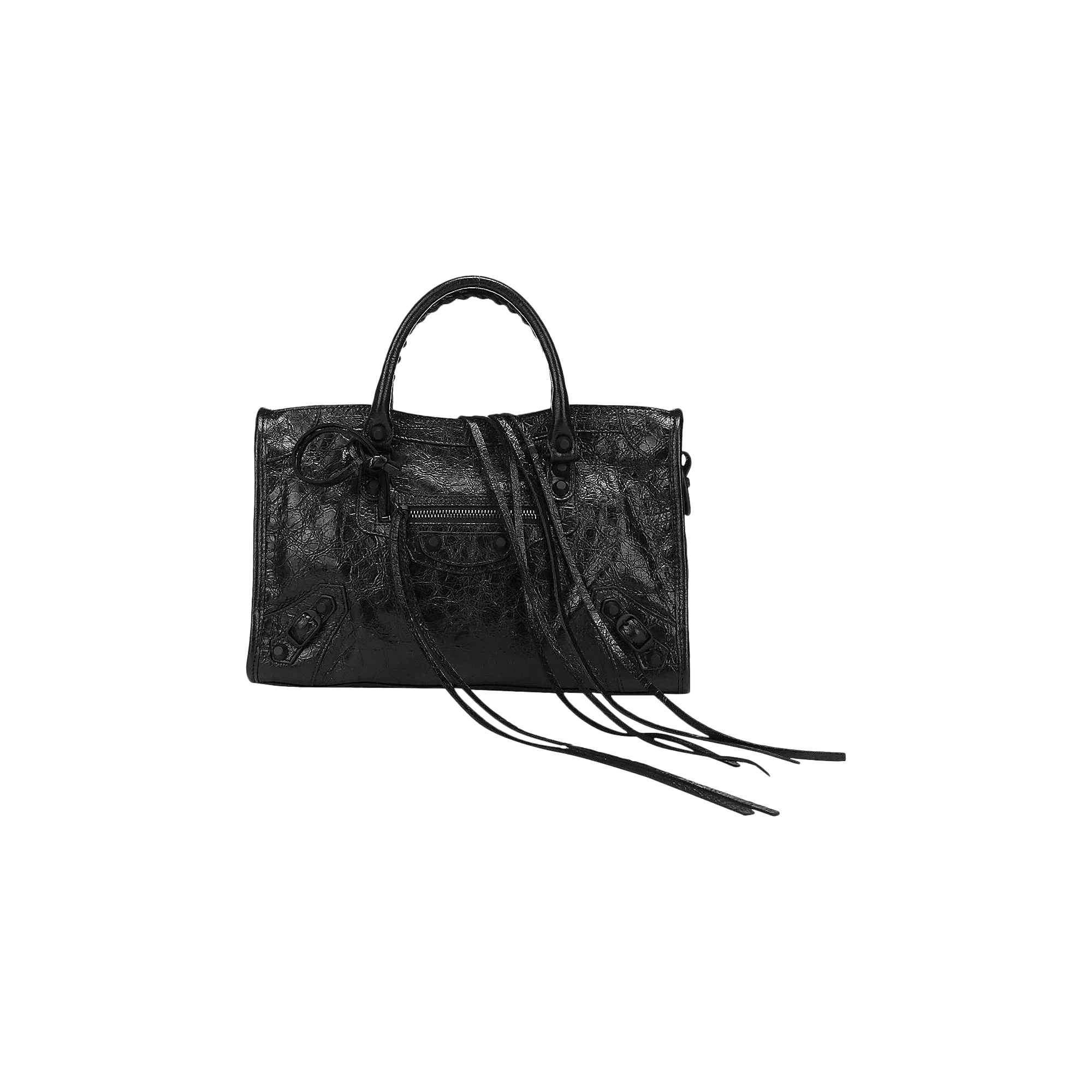
City Bag (Classic City) Small City
Small City
11.6" x 7.6" x 3.7"

An in-between size, roughly 21 x 30 x 10cm, added to bridge the gap between the Mini and the original Classic City.

$850 – $1,500
City Bag (Classic City) Classic City
Classic City
14.9" x 9.5" x 5.4"

The original 2001 silhouette, roughly 25 x 38 x 13cm, with smaller studs and a long dangling leather zip tassel. The most recognized and most consistently traded size on the resale market.

$1,100 – $2,100
Giant City
14.8" x 9.5" x 5.5"

An oversized version of the Classic silhouette with larger studs and a shorter, thumb-sized leather zip tab in place of the tassel. Lower production numbers relative to the Classic size support the highest resale prices of the four.

$1,400 – $2,600

Is the City Bag (Classic City) Worth Buying?

Across the four standard sizes, the Classic City (the original ~25x38cm silhouette in black lambskin) remains the most consistently traded on the resale market, generally reselling for $1,100-$2,100 against a current retail of roughly $1,890-$2,400 for that size, or about 60-70% retention. The rarer, larger Giant City can push past $2,000 and occasionally approaches retail in excellent condition, since fewer were produced relative to the Classic. The smaller Mini and Small City sizes, added later mainly to hit lower price points, trade lower in dollar terms and generally retain less as a percentage, since they lack the original's cult-favorite status. Overall demand and search volume for the style have climbed noticeably as the early-2000s revival has taken hold. Takeaway: if resale value matters, buy the Classic or Giant City in black lambskin, expect to recover roughly 60% or more of retail on a well-maintained example, versus a steeper drop-off on the newer, smaller sizes.

History of the City Bag (Classic City)

The City Bag began as an unnamed prototype that Nicolas Ghesquière called the "Motorcycle Lariat" when he showed it on Balenciaga's Fall/Winter 2001 runway, just four years into his tenure as creative director. Balenciaga's own executives were reportedly reluctant to put the slouchy, distressed lambskin bag into production at all, worried it looked too undone next to the structured, logo-driven bags of the era like the Fendi Baguette and the Dior Saddle. Only 25 examples were made for the initial run. Kate Moss changed that calculus: she asked Ghesquière for one straight off the runway, and once word of her interest reached the brand, Balenciaga committed to full production.

The bag was officially renamed "The City" in 2003, and over the following decade Balenciaga built out a full size family around the original silhouette: the compact Mini and Small Citys for buyers who wanted a lighter everyday bag, and the oversized Giant City, distinguished by larger studs and a stubby leather zip tab in place of the Classic's long tassel. Nicolas Ghesquière left the house in 2012, and the City continued largely unchanged through the Alexander Wang and Demna Gvasalia eras, a rare case of a Balenciaga design surviving multiple creative directors intact. In 2020, under Demna, the house even used the City's 20th anniversary to launch a companion silhouette, the structured Neo Classic, explicitly framed as an evolution rather than a replacement of the original.

Cultural Significance

The City Bag is one of the bags most credited with kicking off the 2000s "it bag" phenomenon, the idea that a single handbag could function as a cultural signal and a waitlist-worthy object at once. Kate Moss's early adoption made the slouchy, hardware-heavy silhouette a paparazzi and red-carpet fixture, and it was quickly picked up by other early-2000s style icons, cementing its place alongside the Fendi Baguette and the Dior Saddle as the defining arm candy of the decade.

The City's reputation cooled somewhat during the minimalist, logo-light 2010s, but it has come roaring back with the broader Y2K and early-2000s fashion revival of the 2020s, as a new generation of shoppers discovered the bag through archive-focused social media accounts and secondhand marketplaces. That renewed nostalgia, combined with Demna Gvasalia's own habit of referencing Ghesquière-era Balenciaga in his runway shows, has kept the Classic City relevant two decades after it debuted, rather than letting it fade into "vintage curiosity" status the way many other 2000s it-bags have.

FAQ

How much is a Balenciaga City Bag worth?
A pre-owned Classic City in black lambskin typically resells for $1,100-$2,100 depending on condition, hardware wear, and age, against a current retail price of roughly $1,890-$3,250 depending on size. The larger Giant City tends to command the highest resale prices, while the smaller Mini and Small sizes trade lower.
What sizes does the Balenciaga City Bag come in?
The City comes in four standard sizes: Mini City (the smallest), Small City, the original Classic City (the ~2001 silhouette with a long leather zip tassel), and the oversized Giant City, which has larger studs and a short zip tab instead of the Classic's tassel.
Why is the City Bag also called the Motorcycle bag?
Nicolas Ghesquière originally showed the design as the "Motorcycle Lariat" on Balenciaga's Fall/Winter 2001 runway. Balenciaga officially renamed it "The City" in 2003, but "Motorcycle bag" remains a common nickname among collectors referencing its biker-inspired studs and buckles.
Is the Balenciaga City Bag a good investment?
The Classic and Giant City sizes hold value well for a non-limited leather bag, generally retaining 60-75% of retail thanks to sustained demand from the 2000s fashion revival. It's a stronger buy-and-hold than most current Balenciaga styles, though it won't appreciate the way genuinely rare vintage colorways or early-production examples can.
What's the difference between the City Bag and the Neo Classic?
The City is Balenciaga's original 2001 design: a soft, slouchy, distressed lambskin bag. The Neo Classic, launched in 2020 for the City's 20th anniversary, uses smooth structured calfskin and a braided handle for a firmer, more polished take on the same DNA.