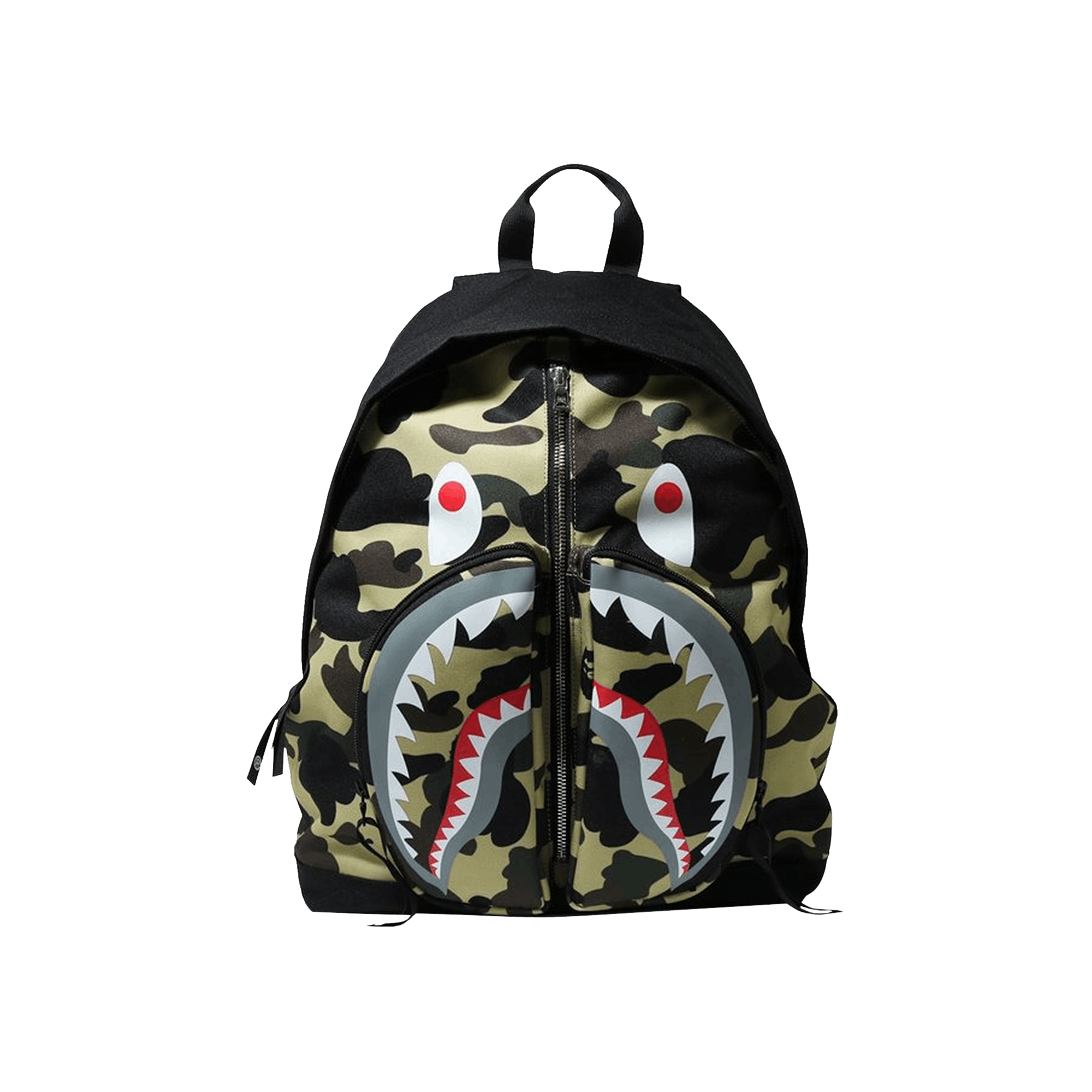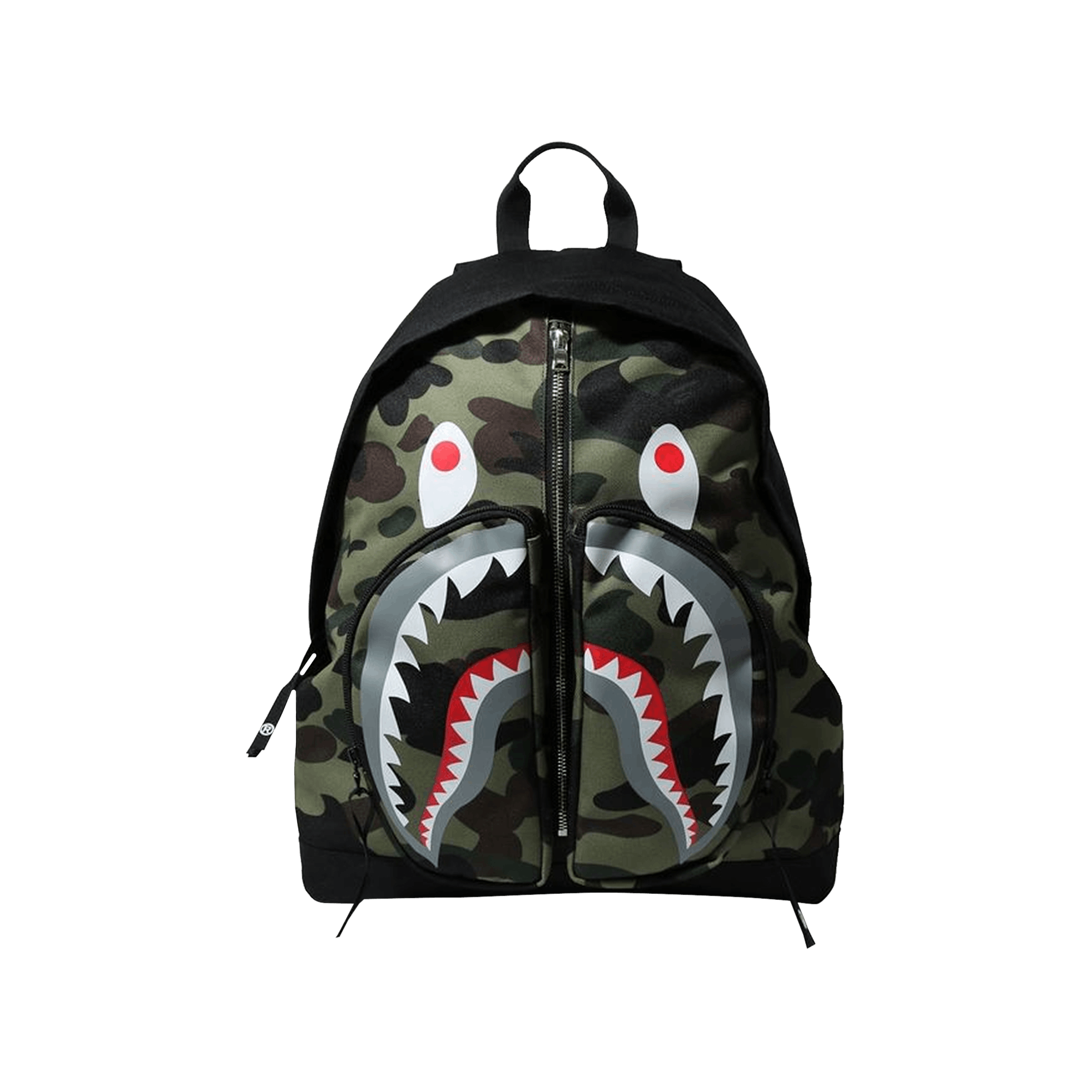
Shark-mouth transfer print graphicLarge graphic wrapping the bag to resemble the Shark hoodie face.A detail resale buyers and authenticators check (Front pocket/main panel where the mouth graphic sits), correct shape, finish, and placement here support a higher verified resale value.
1st Camo pattern printBAPE's signature camo pattern used as the print base.A detail resale buyers and authenticators check (Visible camo panel area), correct shape, finish, and placement here support a higher verified resale value.
Reflective tape trim on front pocketA strip of reflective material along the top of the front zip pocket.A detail resale buyers and authenticators check (Top edge of front pocket), correct shape, finish, and placement here support a higher verified resale value.
Woven brand labelFabric label with "A BATHING APE" branding sewn at the base of the front pocket.A detail resale buyers and authenticators check (Bottom of front pocket), correct shape, finish, and placement here support a higher verified resale value.
Logo accents on side pocketsSmall text/logo graphics on the side pockets.A detail resale buyers and authenticators check (Side pocket panels), correct shape, finish, and placement here support a higher verified resale value.
Rolled webbing top carry handleA fabric webbing loop handle at the top.A detail resale buyers and authenticators check (Top of bag), correct shape, finish, and placement here support a higher verified resale value.
Cushioned mesh back panelBreathable padded panel against the wearer's back.A detail resale buyers and authenticators check (Rear panel), correct shape, finish, and placement here support a higher verified resale value.
1st Camo Shark Day Pack
BAPE
Volatile
MaterialPrinted canvas body with cushioned mesh back panel
HardwareZip pull with reflective tape trim
Categorybackpack
The 1st Camo Shark Day Pack applies BAPE's shark-mouth graphic and signature 1st Camo pattern to a full backpack silhouette, complete with reflective trim on the front pocket and a cushioned mesh back panel. It's the flagship expression of BAPE's most recognized graphic and a continuously restocked part of the core Shark Collection.