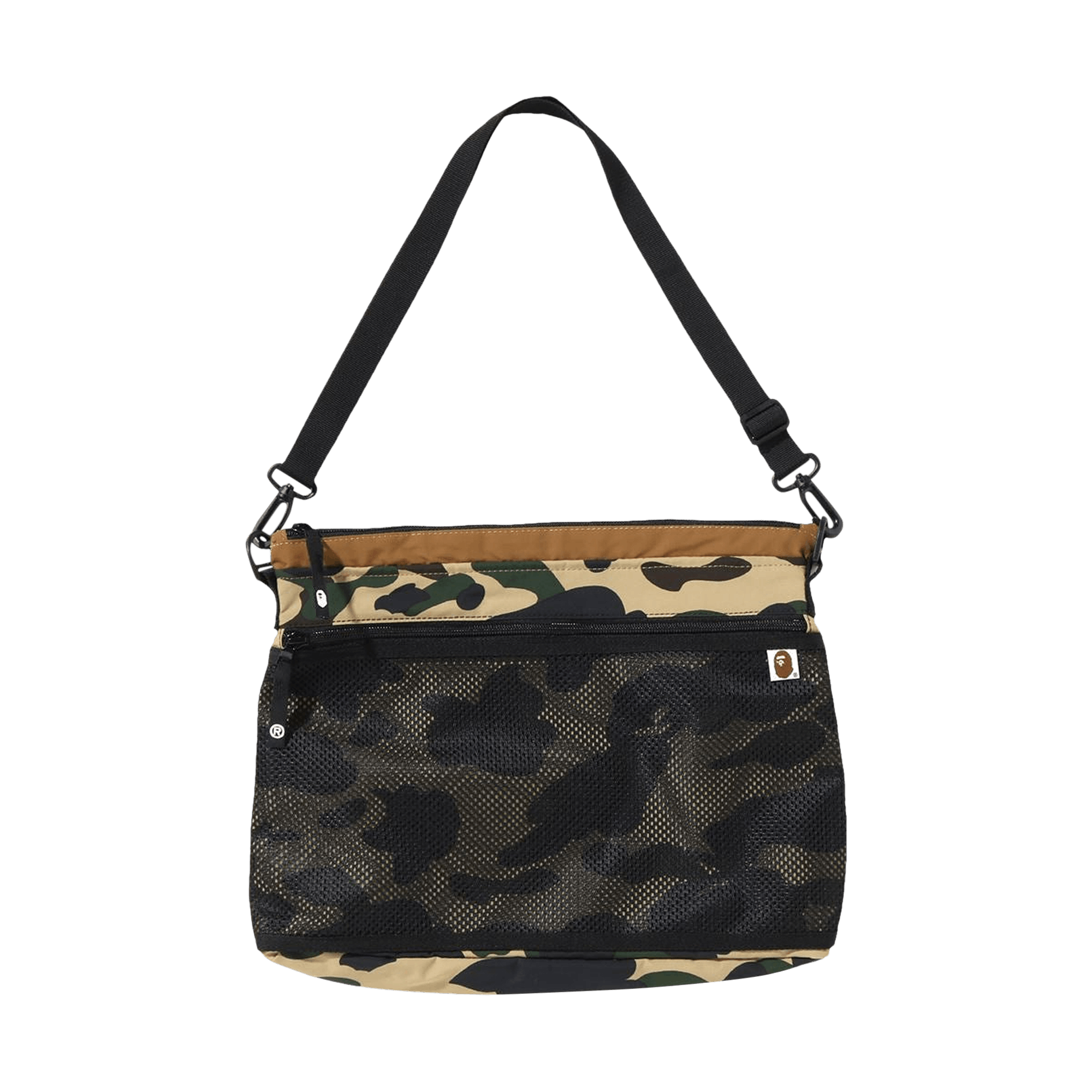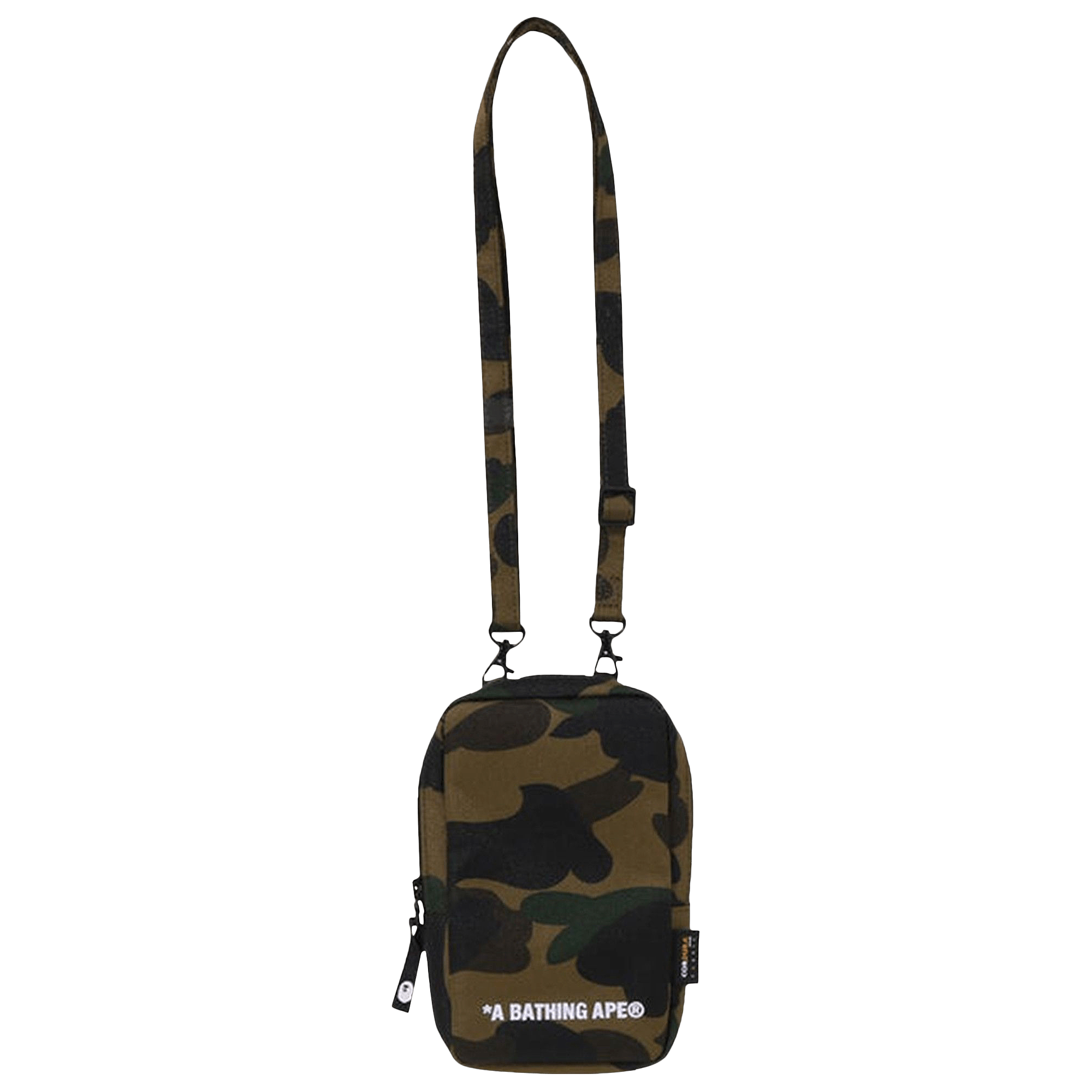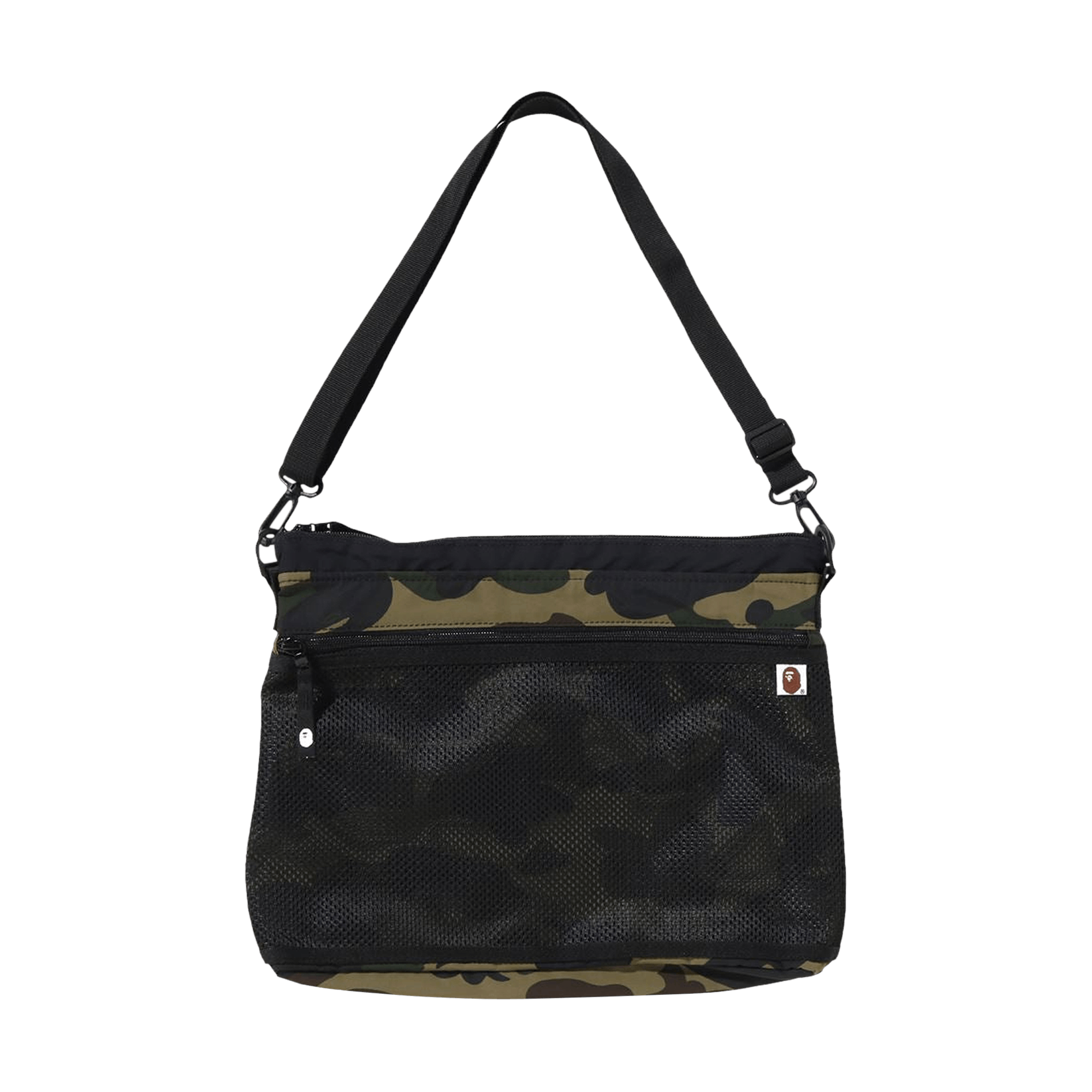
The 1st Camo Shoulder Bag pairs BAPE's signature camo print with a detachable, convertible strap that lets it double as a standalone pouch. Offered in Cordura nylon and leather-flap versions, it's produced across several sub-lines, including an elevated BAPE x Porter collaboration with upgraded construction and materials.
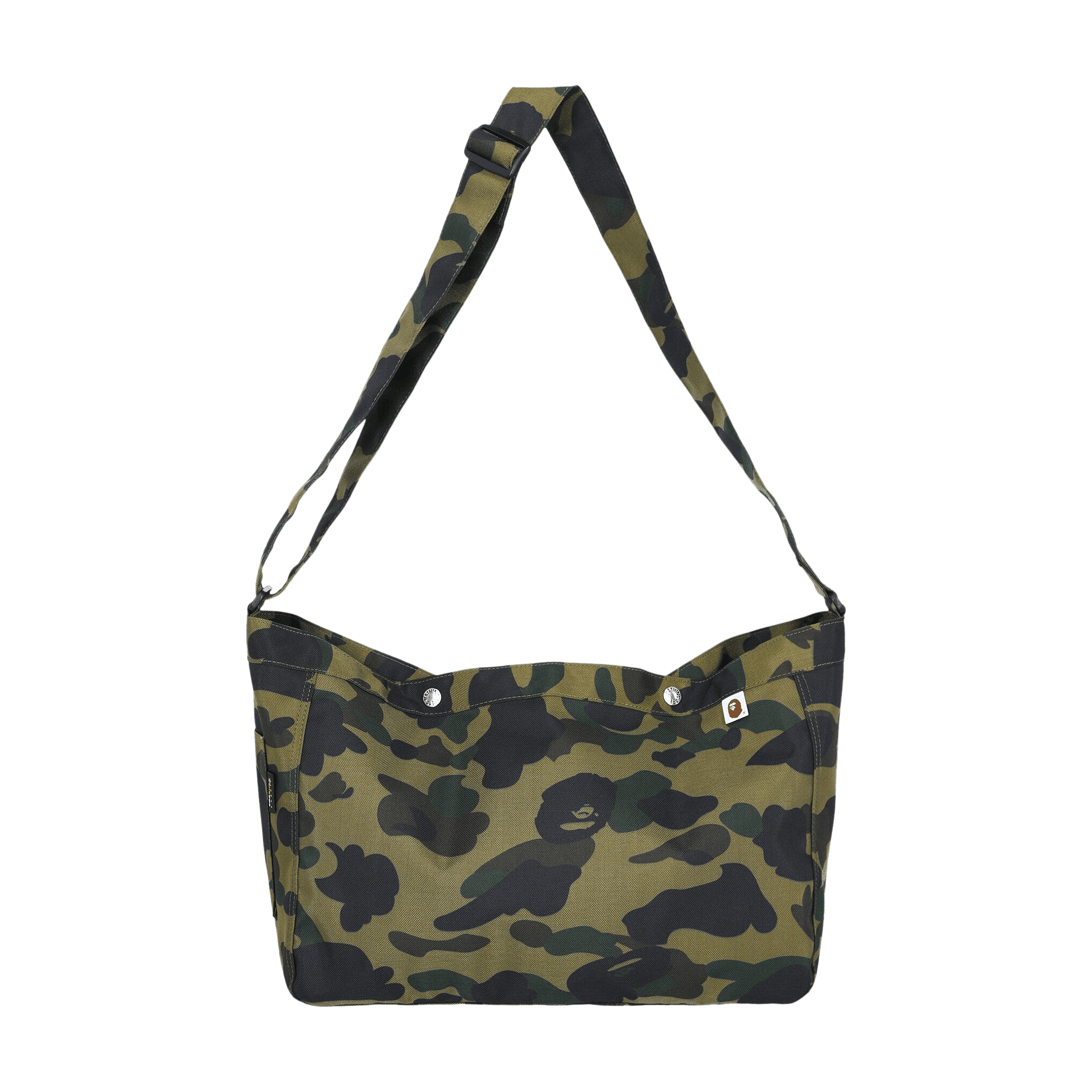
The original 1996 Olive Drab colorway and the most commonly restocked version of this bag. Resells closest to the standard retail price.
The other original 1996 1st Camo colorway. Less frequently restocked than Green, which supports a consistent resale premium.
A smaller, phone-bag-sized version of the same silhouette in Cordura 1st Camo, sold as its own standing catalog item.
A collaboration with Japanese bag maker Porter (Yoshida & Co.) featuring upgraded Cordura construction and Porter-branded hardware on the same shoulder-bag shape. Commands the biggest resale premium in this family.
At $299 retail, the standard Green 1st Camo Shoulder Bag tends to resell close to or modestly below its original price, with recent StockX sales in the roughly $240–$280 range, typical for a mainline, regularly-restocked colorway. Yellow runs noticeably higher, with asks around $320+ reflecting its comparative scarcity versus Green. The real outlier is the BAPE x Porter collaboration version of this same silhouette: its upgraded Cordura construction and Porter hardware push resale into the $350–$650 range, a 15–20% or greater premium over the standard bag's retail price. In short, this is a case where the collaboration line, not the colorway alone, drives most of the resale upside, buyers chasing appreciation should prioritize a verified Porter-tagged piece over a mainline Green or Yellow release.
BAPE (A Bathing Ape) was founded in 1993 by Tomoaki "Nigo" Nagao in Tokyo's Ura-Harajuku district, and the 1st Camo pattern, debuted in 1996 in Green (Olive Drab) and Yellow (Sand Yellow), became the label's foundational print, deliberately abstracted from military camouflage so it could function as a proprietary, trademarkable BAPE motif rather than a generic pattern anyone could copy. Bags followed the apparel line as BAPE expanded through the 2000s streetwear boom, with the Shoulder Bag emerging as one of the simplest, most utilitarian ways to carry the camo print day to day.
Porter, the bag and accessories division of Japanese luggage maker Yoshida & Co., has produced elevated versions of BAPE's core bag shapes since the 2000s, including this Shoulder Bag, pairing BAPE's camo graphics with Porter's reinforced Cordura construction and hardware. That collaboration has continued across BAPE's 2011 change of ownership to Hong Kong's I.T Group, and BAPE x Porter pieces remain the version of this bag most sought after by collectors relative to the standard, mainline release.
1st Camo bags like this one rose alongside 2000s hip-hop's embrace of BAPE, driven heavily by Nigo's friendship with Pharrell Williams and their joint label Billionaire Boys Club, plus early adoption by Kanye West, Lil Wayne, and the Diplomats. A$AP Mob and other 2010s rap acts carried that association into a new generation, keeping BAPE camo one of streetwear's most recognizable status signals.
In Japan, the same print represents the Ura-Harajuku scene BAPE came out of alongside labels like Undercover and Neighborhood, and the line-up-for-hours hype culture that scene pioneered well before "hypebeast" became a common term. That combination of Japanese subcultural credibility and American hip-hop cosign keeps 1st Camo pieces, including simple everyday shapes like this shoulder bag, circulating actively in resale culture.