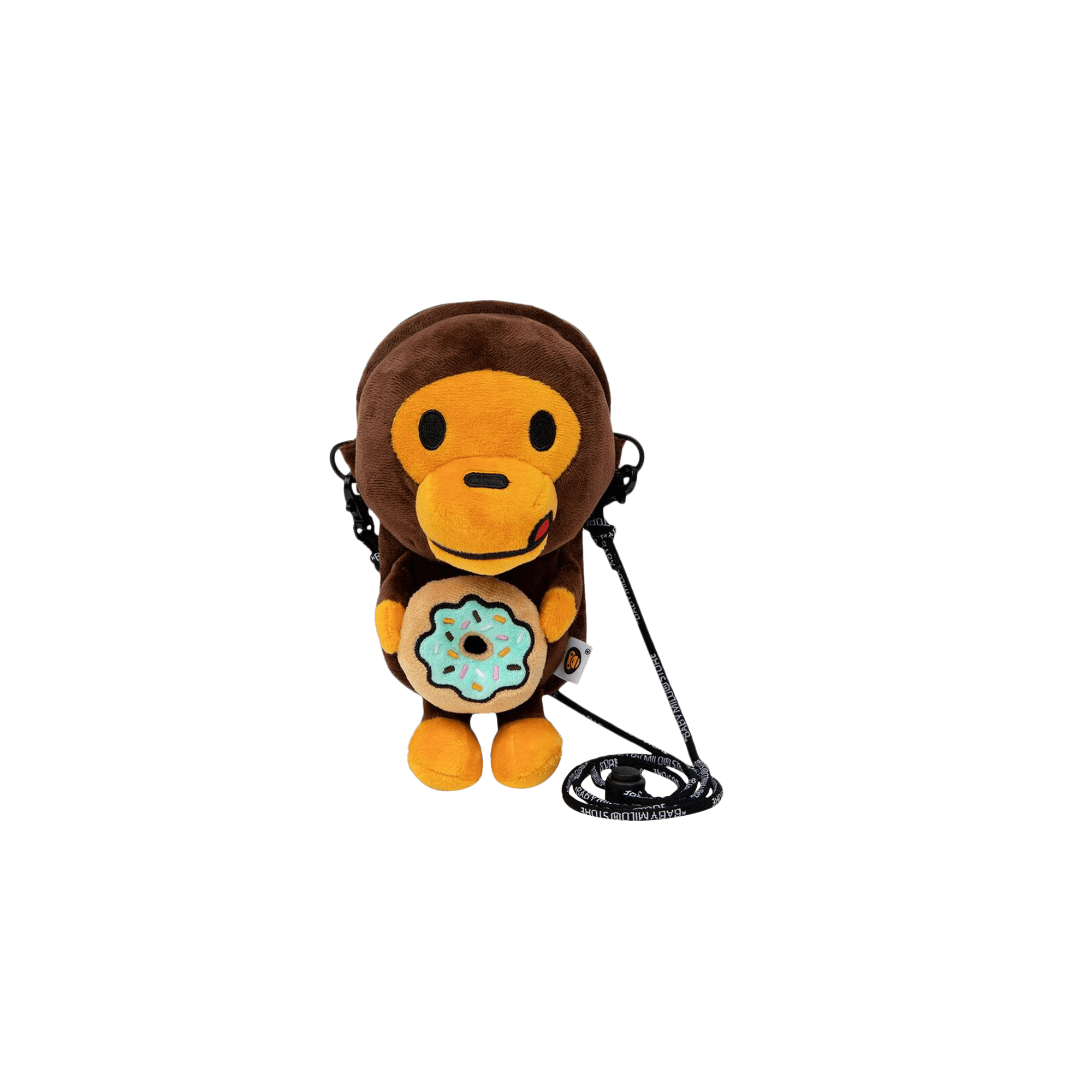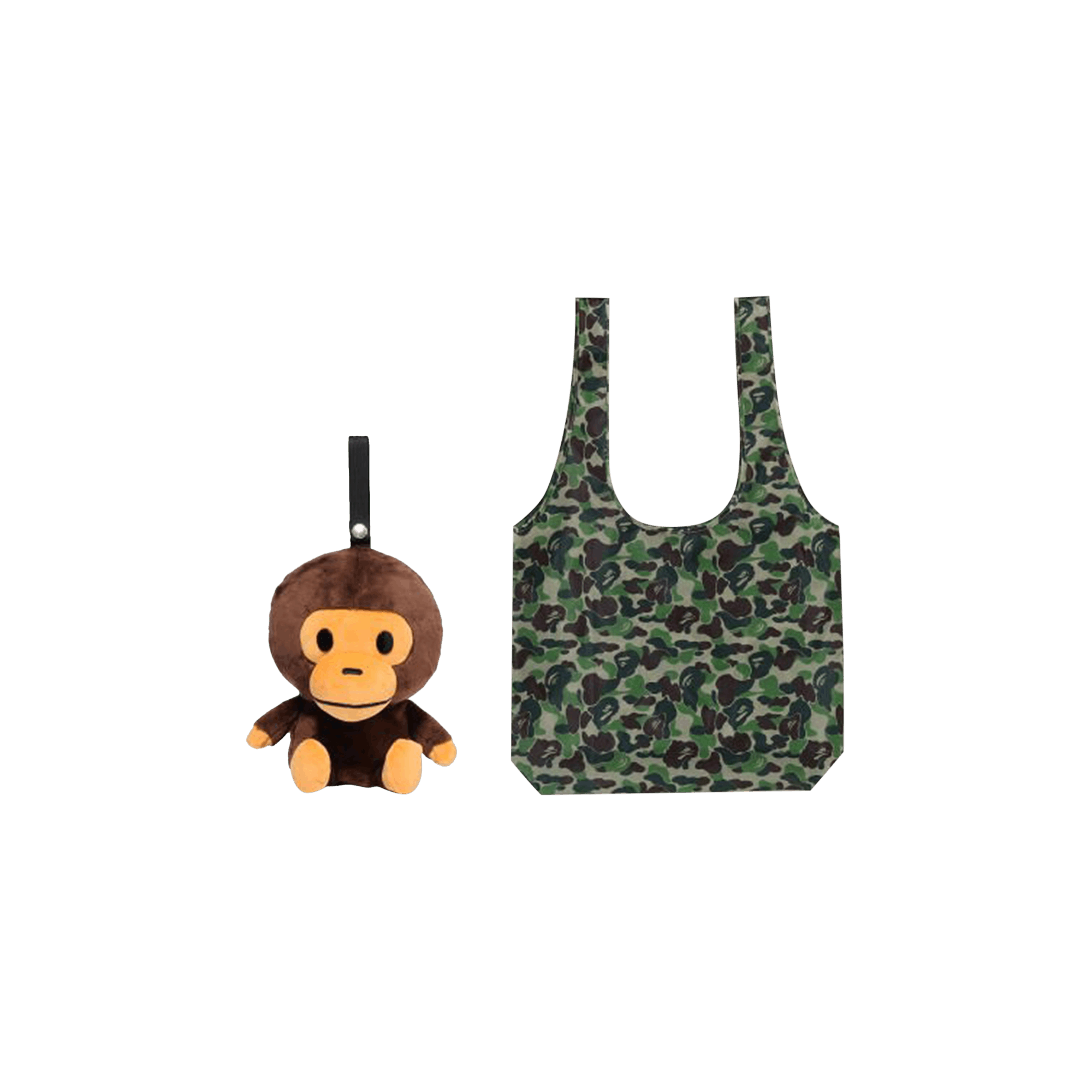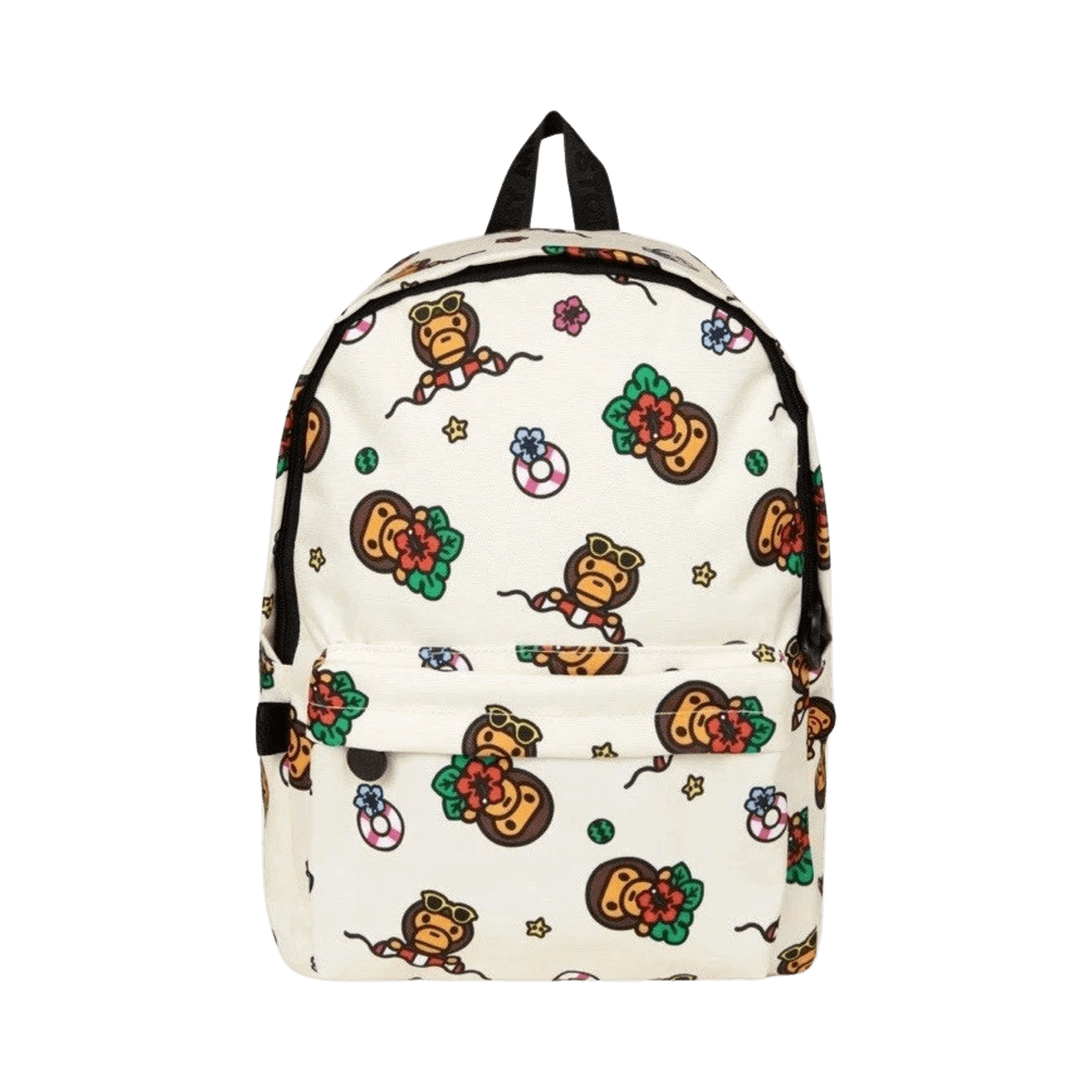
The Baby Milo line applies BAPE's mascot character across plush crossbody bags, canvas totes, and daypacks, typically finished with PVC trim and, on some styles, a transparent PVC window panel. It offers a softer, more colorful counterpoint to BAPE's tougher camo and shark-branded pieces.
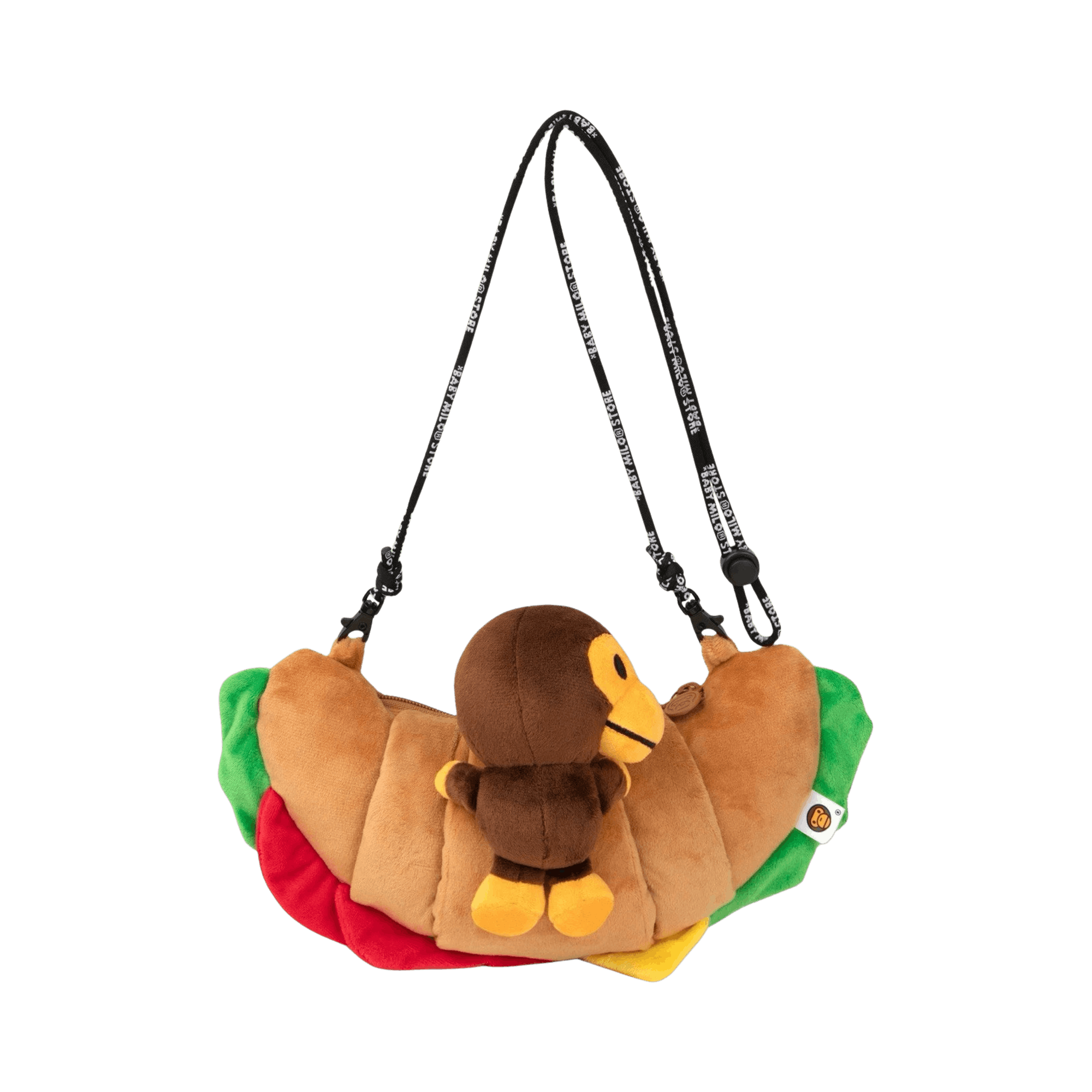
Padded, textured plush crossbody and doll-chain shoulder styles, including fur-trimmed mini backpacks. The most collectible Baby Milo shape, with the strongest resale premiums due to smaller production runs.
Small pouches and novelty shapes like the Donut Mobile Bag, sized for a phone and small essentials. The most affordable entry point into the Baby Milo bag line.
A canvas tote printed with the Baby Milo character, offered as a simpler, everyday carry option within the line.
Full-size Baby Milo backpacks, including Baby Milo Store-branded releases, applying the character graphic to a standard daypack silhouette.
Baby Milo bags retail in the $75–$140 range and frequently resell above that original price, which is unusual for BAPE's more basic accessory-tier products. Compact pouches and mobile bags (like the Donut Mobile Bag) tend to resell for roughly $60–$180, close to or modestly above retail depending on the print. Plush and fur-trimmed styles, such as the Baby Milo Fur Mini Backpack, show the strongest premiums, recent StockX asks for plush crossbody and doll-chain shoulder styles have reached $300–$375, a 100%+ premium over their original retail tags, driven by smaller production runs and character-collector demand. Full-size Baby Milo backpacks and totes generally land in between, around $140–$300. The takeaway: if you're buying for resale upside rather than everyday use, the plush and novelty-shaped styles are the better bet, since the character-collector demand for those pieces has consistently outpaced supply more than it has for the simpler tote and mobile-bag styles.
Baby Milo is BAPE's mascot character, a cartoon ape cub introduced by founder Nigo in the late 1990s as a softer counterpart to the brand's harder streetwear image, drawing visual inspiration from Curious George and other classic children's-book illustration styles. Where BAPE's camo and Shark lines target core streetwear collectors, Baby Milo was built to be more approachable, sold through dedicated Baby Milo Store locations and licensed into a wide range of products, including apparel, plush toys, and eventually the crossbody bags, totes, and backpacks that make up this line.
The bag line expanded through the 2000s and 2010s as BAPE diversified beyond apparel, and it continued through the brand's 2011 sale to Hong Kong's I.T Group, with new Baby Milo bag styles, including furry plush backpacks and clear-PVC-panel pouches, released regularly in the years since. Because Baby Milo bags are priced well below BAPE's core camo bags and marketed to a broader, younger audience, they function as one of the brand's most accessible entry points into bag ownership.
Baby Milo's soft, plush aesthetic has made it a favorite in Japan's kawaii-adjacent streetwear crossover and has attracted a different audience than BAPE's harder hip-hop-associated camo pieces, including collectors of designer toys and character merchandise alongside traditional streetwear buyers. Collaborations pairing Baby Milo with other characters and brands over the years have kept the mascot culturally relevant well outside of BAPE's core customer base.
On resale platforms, Baby Milo bags benefit from the same Ura-Harajuku hype-culture dynamics as the rest of BAPE's catalog, but at a lower price point that makes them attractive to younger or newer collectors. Because certain plush and novelty-shaped styles (like fur-trimmed backpacks) are produced in smaller runs than BAPE's core camo bags, they can sell out quickly and trade actively on StockX shortly after release.