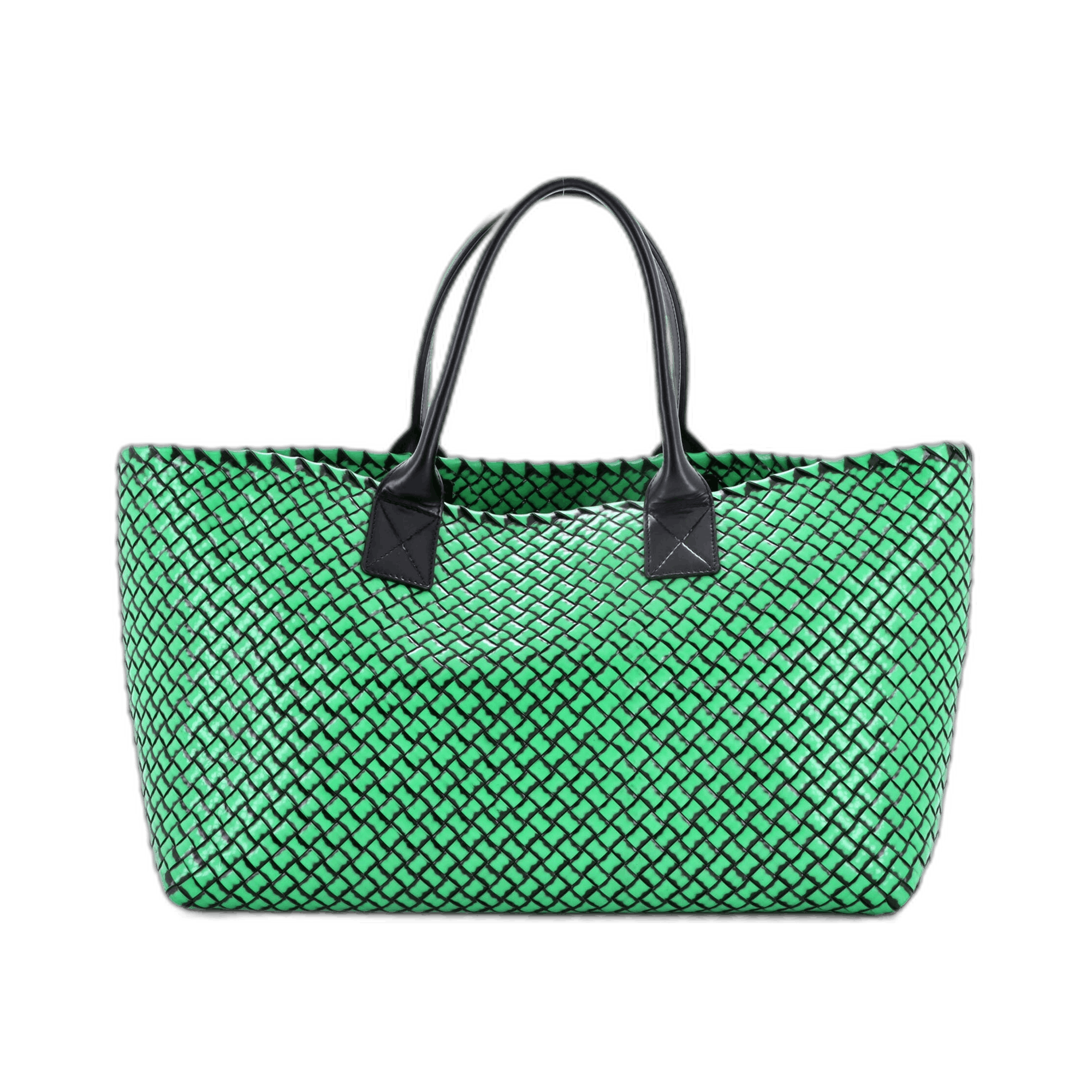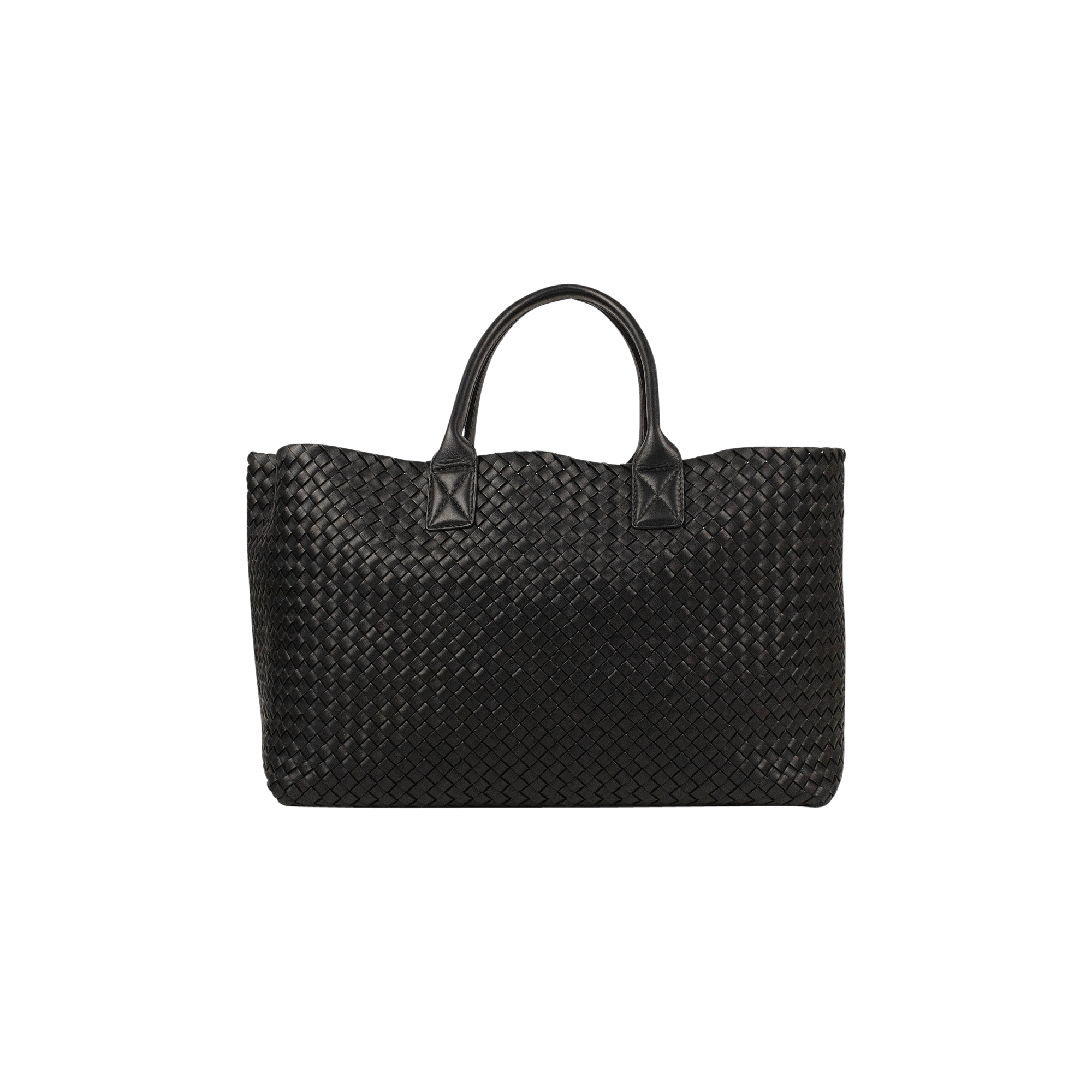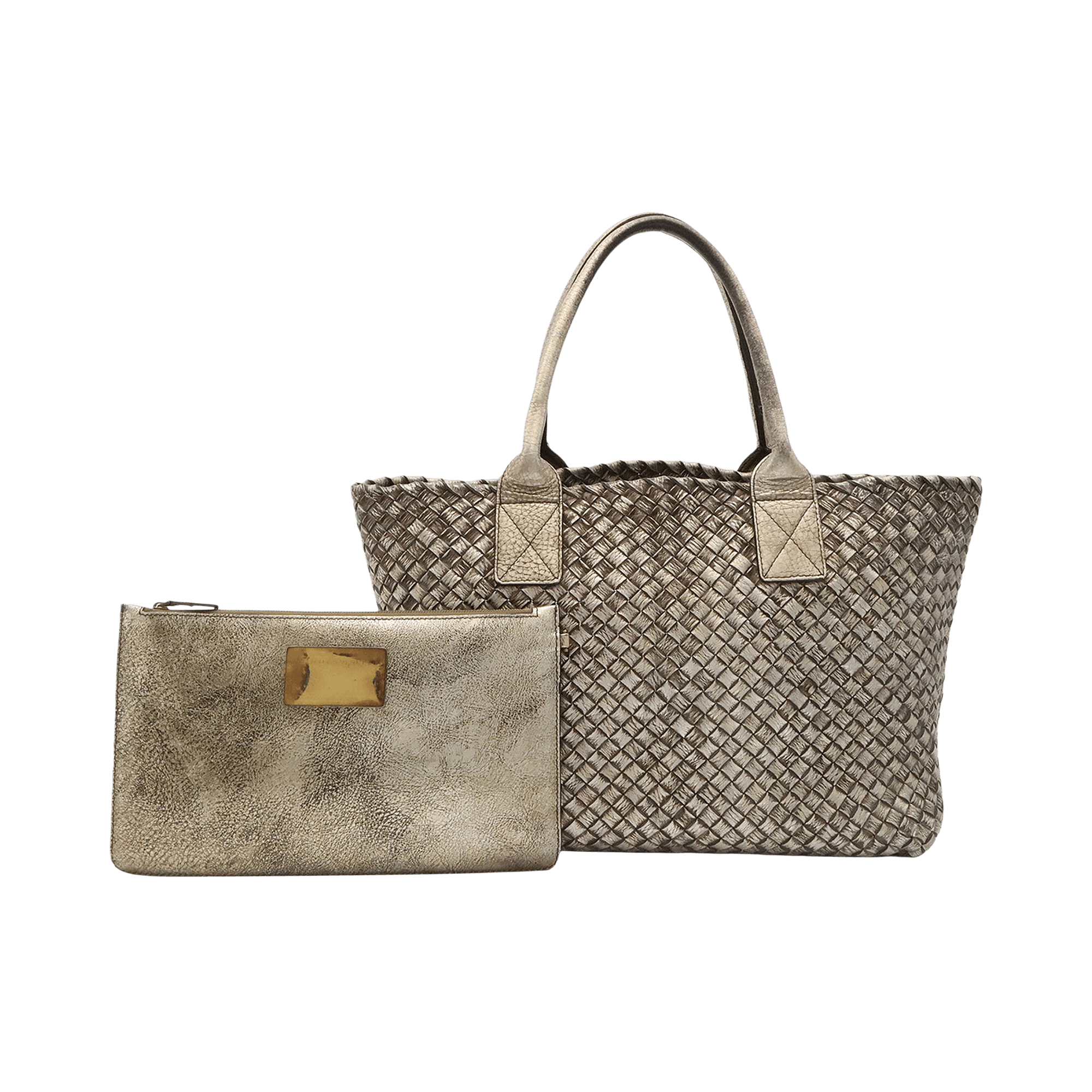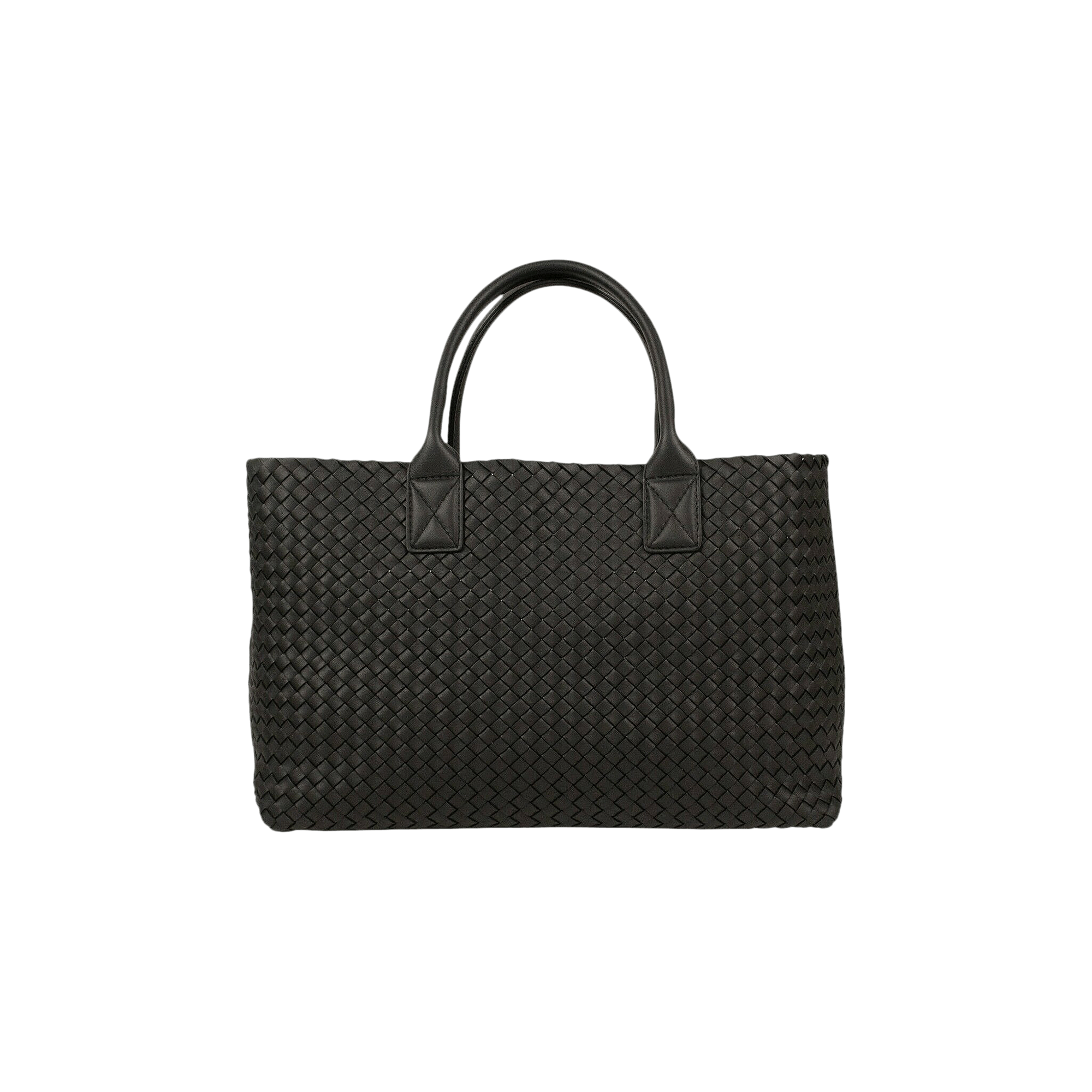
The Cabat is Bottega Veneta's tote bag, designed by Tomas Maier in 2001 as the first bag in the house's history to carry its own standalone name. It is constructed from hand-woven, double-faced intrecciato leather with no lining, no metal hardware, and hand-finished raw edges, an extreme expression of the brand's founding philosophy of craftsmanship over branding. It remains the clearest embodiment of Bottega Veneta's quiet-luxury identity, predating the term by roughly two decades.
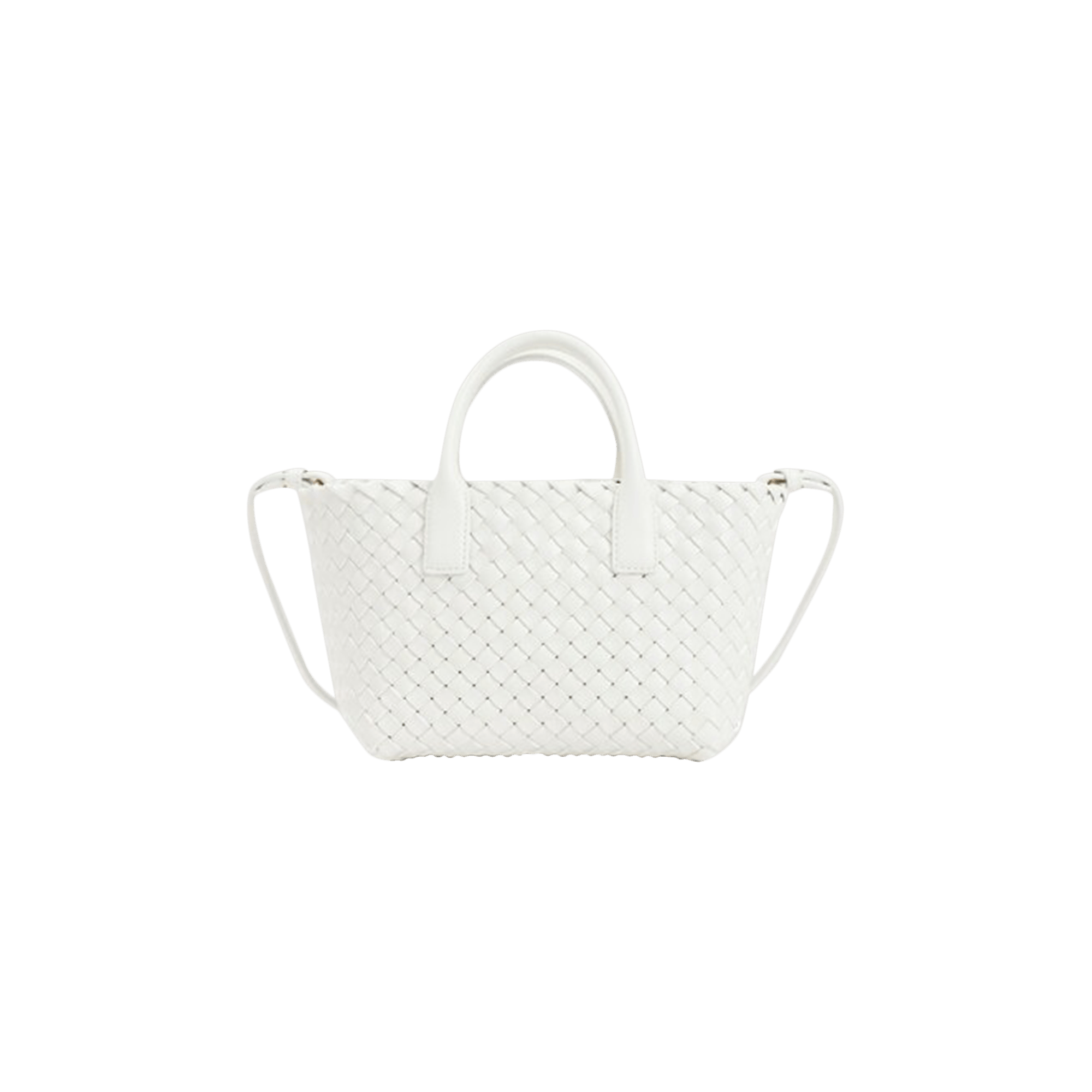
The smallest Cabat, sized closer to a top-handle bag than a full tote.
The standard everyday Cabat tote size.
The largest Cabat, sized for full-day or travel carry and the size most often produced in exotic skins.
The standard, most widely available Cabat material.
A natural, untreated leather that develops a patina with age and handling, in keeping with the Cabat's raw-edge construction.
Made-to-order exotic-skin Cabats sold only in boutique, accounting for the style's highest retail and resale prices.
The Cabat is one of the few Bottega Veneta bags whose resale value is driven almost entirely by material and craftsmanship rather than size or season. A Mini or Medium Cabat in standard nappa or vachetta leather typically resells for $4,500-$8,000, roughly 60-70% of its $6,200-$9,000 retail price, while exotic-skin Large Cabats, which retail as high as $54,200, can resell for $15,000-$20,000 or more used, still a meaningful discount but reflecting genuinely scarce, largely made-to-order production. Because the bag is barely marketed and rarely discounted at retail, resale prices track skin type and hand-craftsmanship more than trend cycles or creative-director era. Bottom line: the Cabat is a buy-and-hold piece for collectors who value rarity over liquidity; expect to recoup a strong majority of your investment in exotic skins and a more moderate share in core leather.
Tomas Maier designed the Cabat in 2001, the same year he joined Bottega Veneta as creative director and the same year Gucci Group acquired the house. It was the first Bottega Veneta bag ever given its own standalone name rather than being identified only by style number, a decision that signaled how central the piece was meant to be to Maier's reinvention of the brand around craftsmanship. Each Cabat is hand-woven from roughly 100 double-faced leather strips with no fabric lining, no metal hardware, and deliberately raw, hand-finished edges; for years, a single artisan wove and finished an entire bag from start to finish rather than passing it along an assembly line.
The Cabat's silhouette has barely changed in the 25 years since its debut, even as Bottega Veneta cycled through creative directors from Maier to Daniel Lee to Matthieu Blazy to Louise Trotter. What has evolved is the range of materials it's offered in: originally available mainly in nappa and vachetta leather, the Cabat now extends to exotic skins like crocodile and python at the top of the price range, and it is typically sold as a made-to-order, in-boutique piece rather than a standard retail SKU.
The Cabat has always been the purest expression of Bottega Veneta's "when your own initials are enough" philosophy: it carries no visible branding of any kind, relying entirely on the intrecciato weave to signal what it is. That anonymity has made it a cult favorite among fashion insiders and longtime BV clients who value the bag precisely because most people would never recognize its price tag.
Unlike hype-driven Bottega Veneta styles such as the Pouch or Cassette, the Cabat has never depended on a single creative director or cultural moment for relevance; it predates the modern resale market and the term "quiet luxury" by two decades. Collectors and longtime BV clients regard it as the house's flagship piece of craftsmanship, and vintage early-2000s examples in particular are sought after as historically significant pieces from the Maier era.