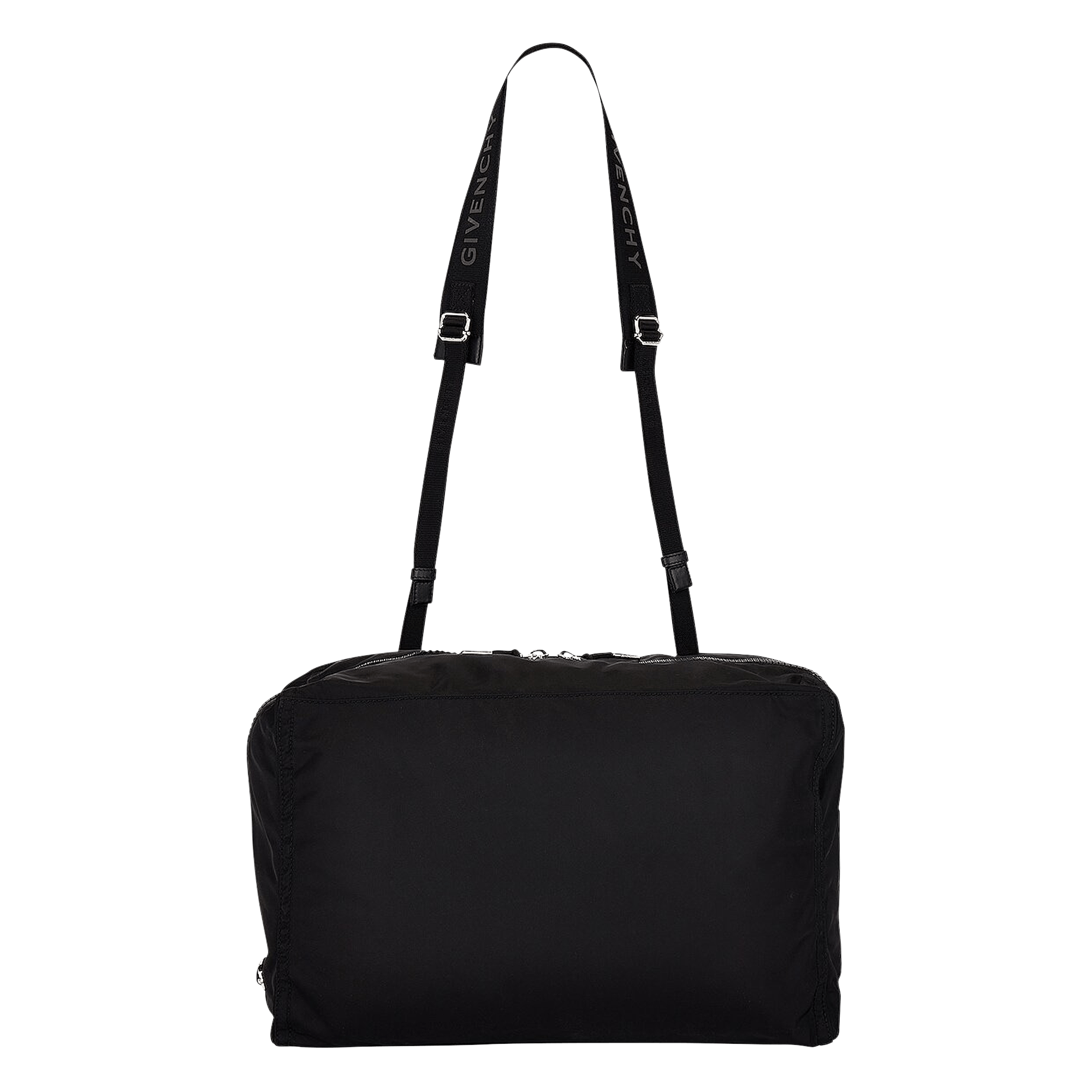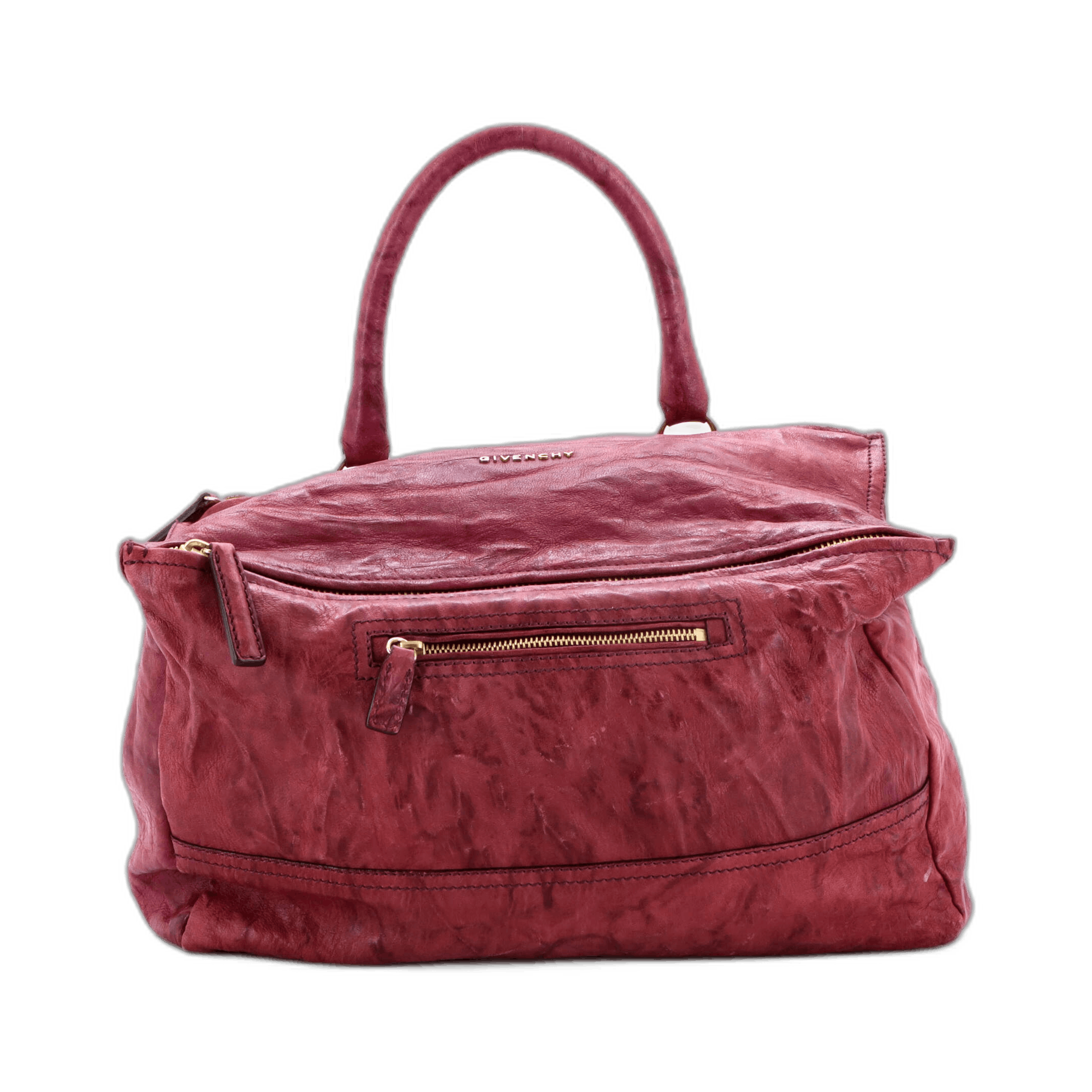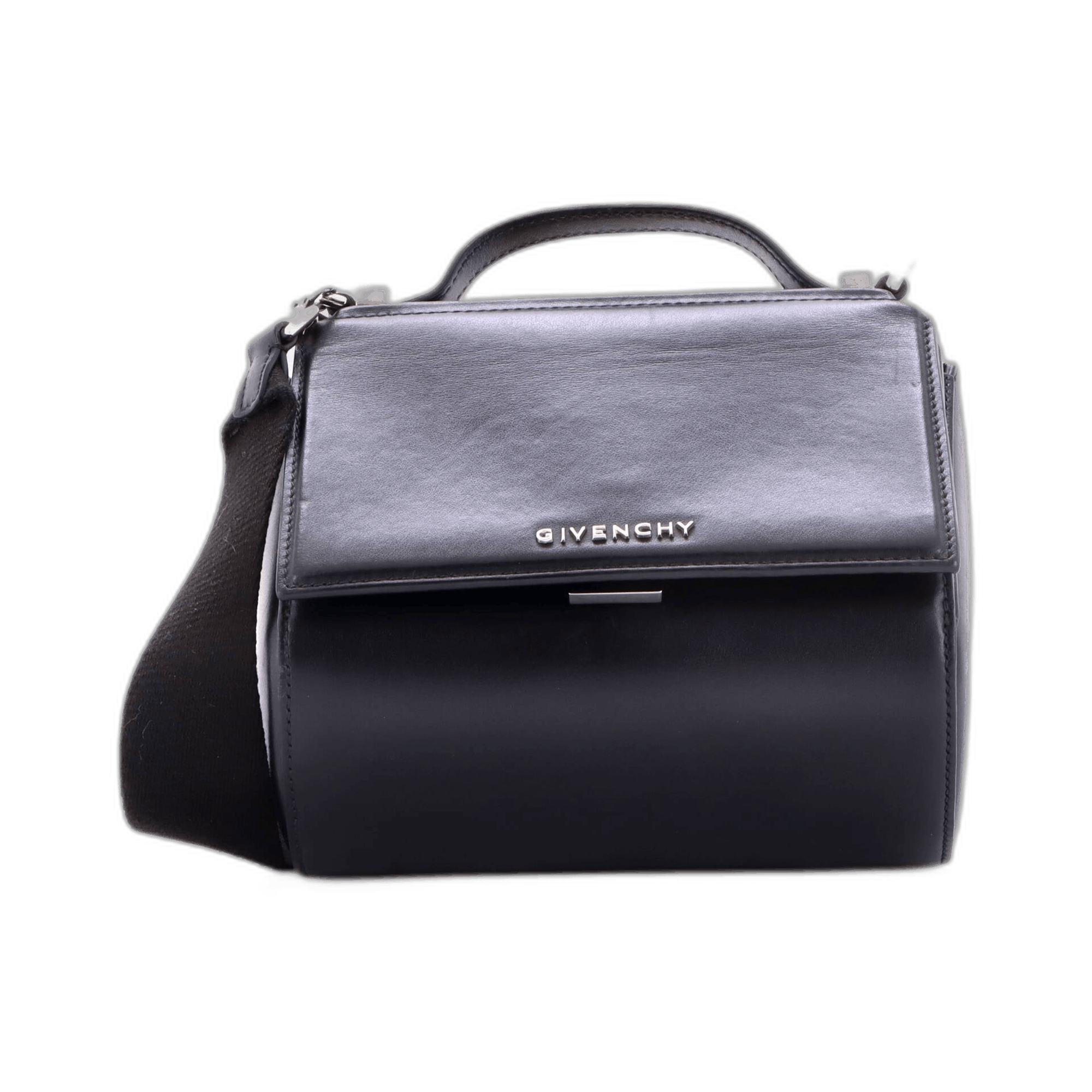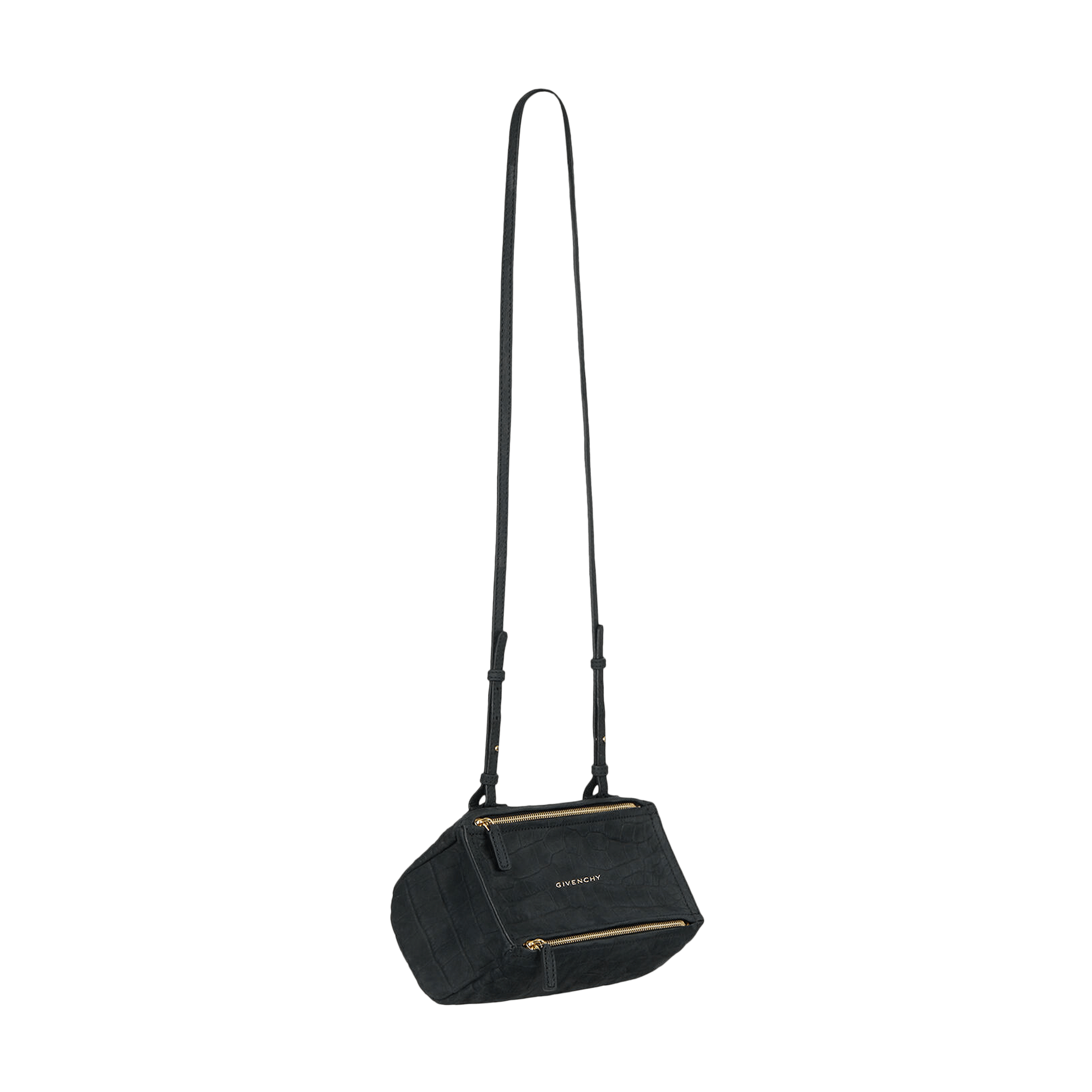
The Pandora is one of Givenchy's signature crossbody and shoulder bags, introduced in 2009 under creative director Riccardo Tisci. Its defining trait is a versatile, structured silhouette offered with a detachable 4G logo guitar strap and, on select editions, gold pyramid-stud hardware.
Kim Kardashian's close association with the Mini Pandora, particularly in grey, helped drive the style's popularity, and it remains one of the highest-volume Givenchy bags on both retail and resale.
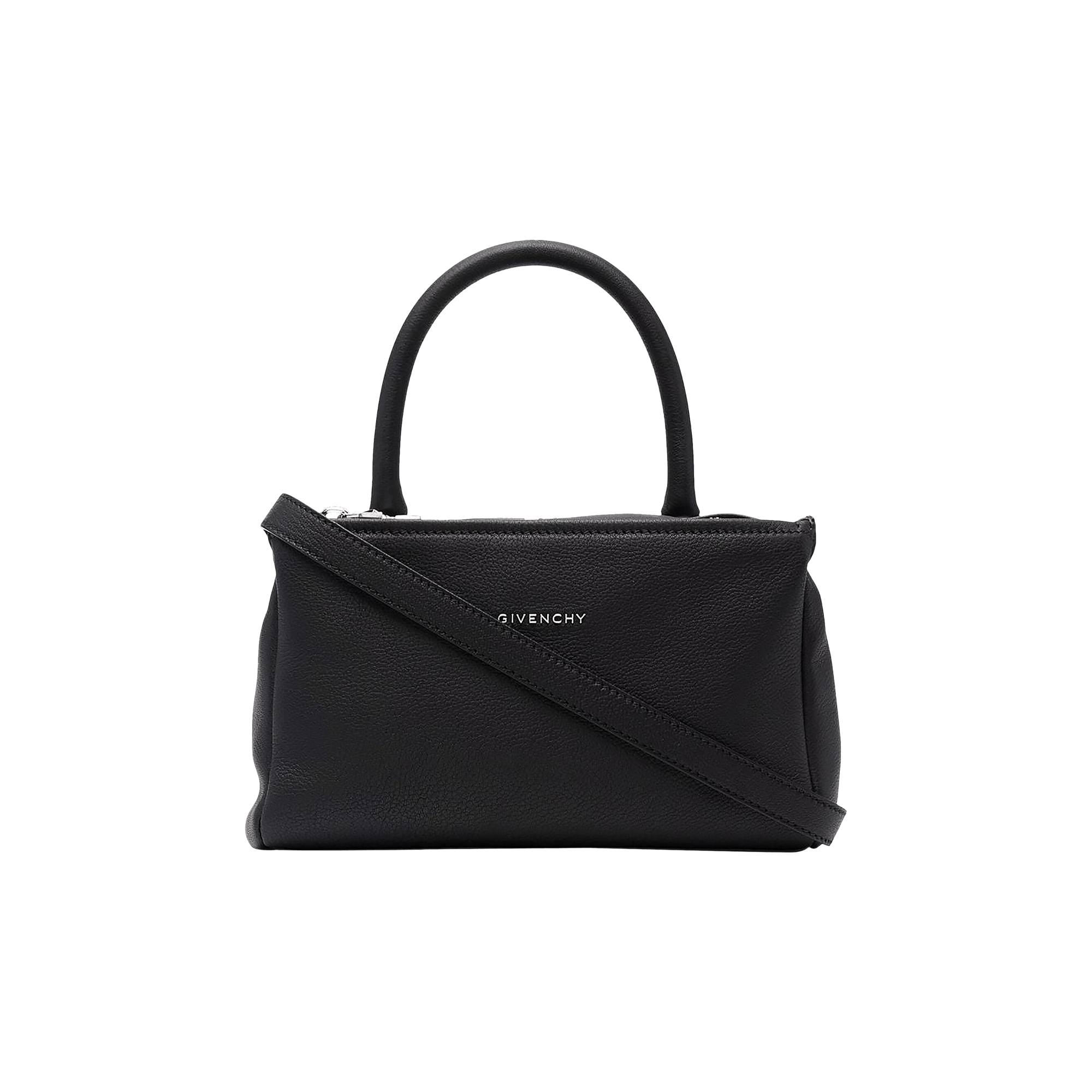
The size most associated with Kim Kardashian's grey Pandora and the line's biggest cultural driver. Compact crossbody proportions and the strongest relative resale demand in the range.
A step up from the Mini with more everyday capacity while keeping the crossbody-friendly proportions that made the line popular.
The largest commonly produced size, with dual zip closures and enough capacity for daily work essentials. Highest resale ceiling of the standard size run.
The largest current Pandora size; an earlier, even larger version was discontinued and the line was relabeled around this size. Produced in smaller numbers than the Mini or Medium.
A more rigidly structured, boxier version of the Pandora built from grained leather, sold alongside the original softer-sided silhouette. Comes in Mini and Medium sizes with the same detachable 4G strap.
The Pandora retails from roughly $1,190 for the Mini to $2,150 for the Medium and Pandora Box variants, and typically resells for $450–$1,300, or about 35–55% of MSRP, depending on size, hardware, and condition. The Mini, boosted by its Kim Kardashian association, holds the strongest demand relative to its price point and often sells toward the higher end of its range, while the Large sits at the lower end of retention since it's a less frequently requested size on resale. Studded editions with the gold pyramid hardware command a modest premium over plain leather versions of the same size, generally 10–15% more, because they're viewed as the more distinctive, harder-to-find colorway. The takeaway: a clean Mini or Small in black or grey leather is the safest resale bet in the line, while studded pieces are worth seeking out specifically if you want a Pandora with upside beyond the standard 35–55% retention band.
Riccardo Tisci introduced the Pandora for Fall/Winter 2009, the second major bag design of his Givenchy tenure after the Nightingale. Its name was chosen to reflect the bag's versatility, meant to evoke the idea of a box that could be carried and worn in more ways than any Givenchy bag before it: by the top handle, on a shoulder, or crossbody via the detachable, adjustable 4G guitar strap. The original silhouette had a boxy but not rigidly structured shape with a slanted dual-zip top, a softer take on the geometric bag construction Tisci would later push further with the Antigona in 2011.
Givenchy later introduced the Pandora Box, a more structured, rigid variant built from grained leather, sold alongside the original softer-sided Pandora rather than replacing it. Studded editions, finished with gold pyramid studs across the front face and top corners, became some of the line's most collected colorways. Sizing evolved over time as well: an early oversized Large was discontinued and effectively folded into a relabeled, slightly smaller Large, while the Mini and Medium have remained the most consistently produced sizes throughout the line's run. The Pandora remains part of Givenchy's current handbag offering, still sold new alongside more recent lines like the GV3 and 4G.
The Pandora's biggest cultural driver has been Kim Kardashian, who was photographed carrying a grey Mini Pandora on a near-weekly basis during the early-to-mid 2010s, to the point that the grey Mini became closely identified with her personal style during that period. That level of repeated, recognizable carry gave the Pandora sustained visibility well beyond a single launch season or red-carpet moment.
Alongside the Nightingale and Antigona, the Pandora is one of the three Tisci-era bags most often cited as defining Givenchy's rise as a commercial handbag house, and its combination of hardware options (from clean leather to pyramid-stud editions) gave it a wider stylistic range than the Antigona's more uniform silhouette. It remains one of the highest-volume Givenchy styles on resale platforms today, reflecting how many were sold across its now 15-plus-year production run.