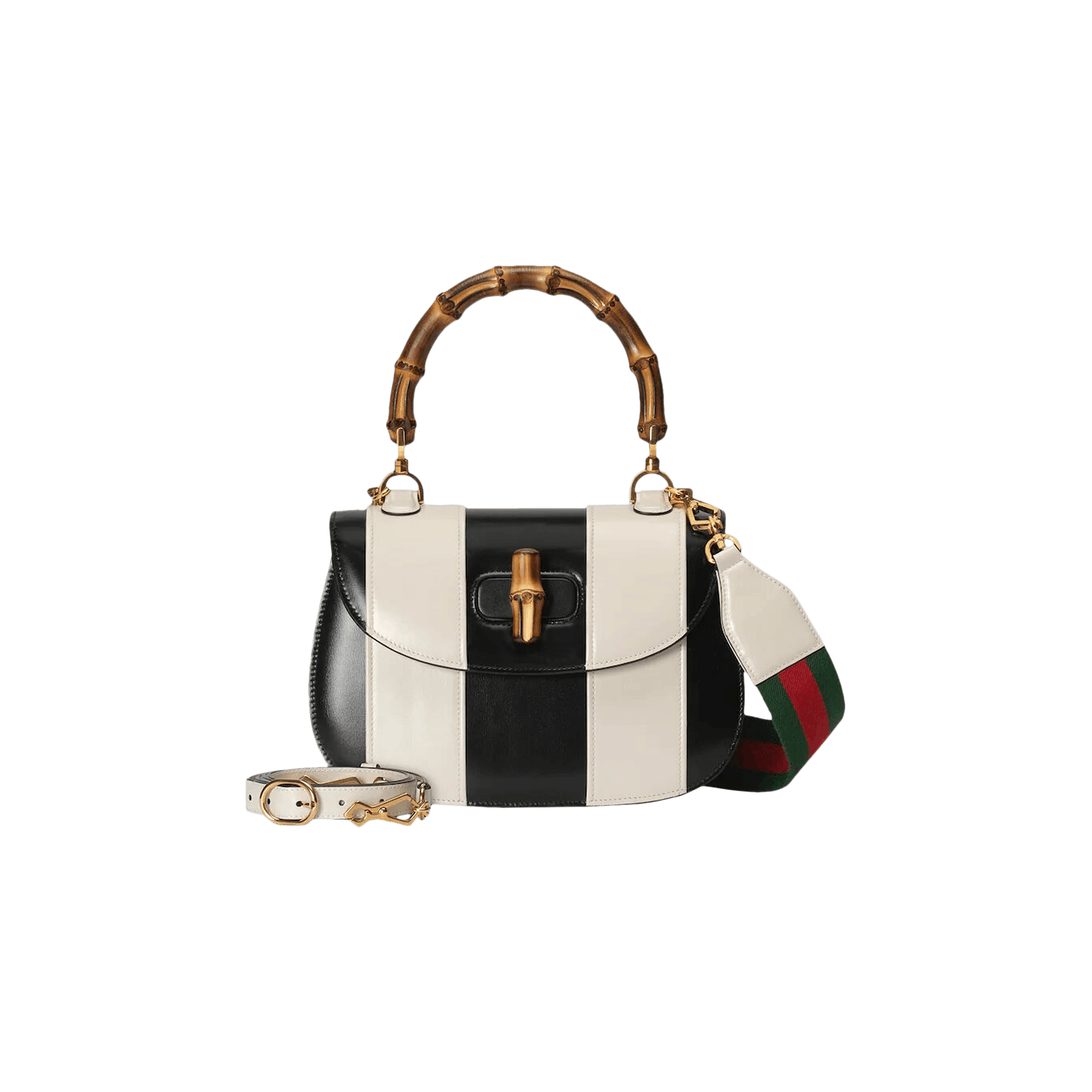
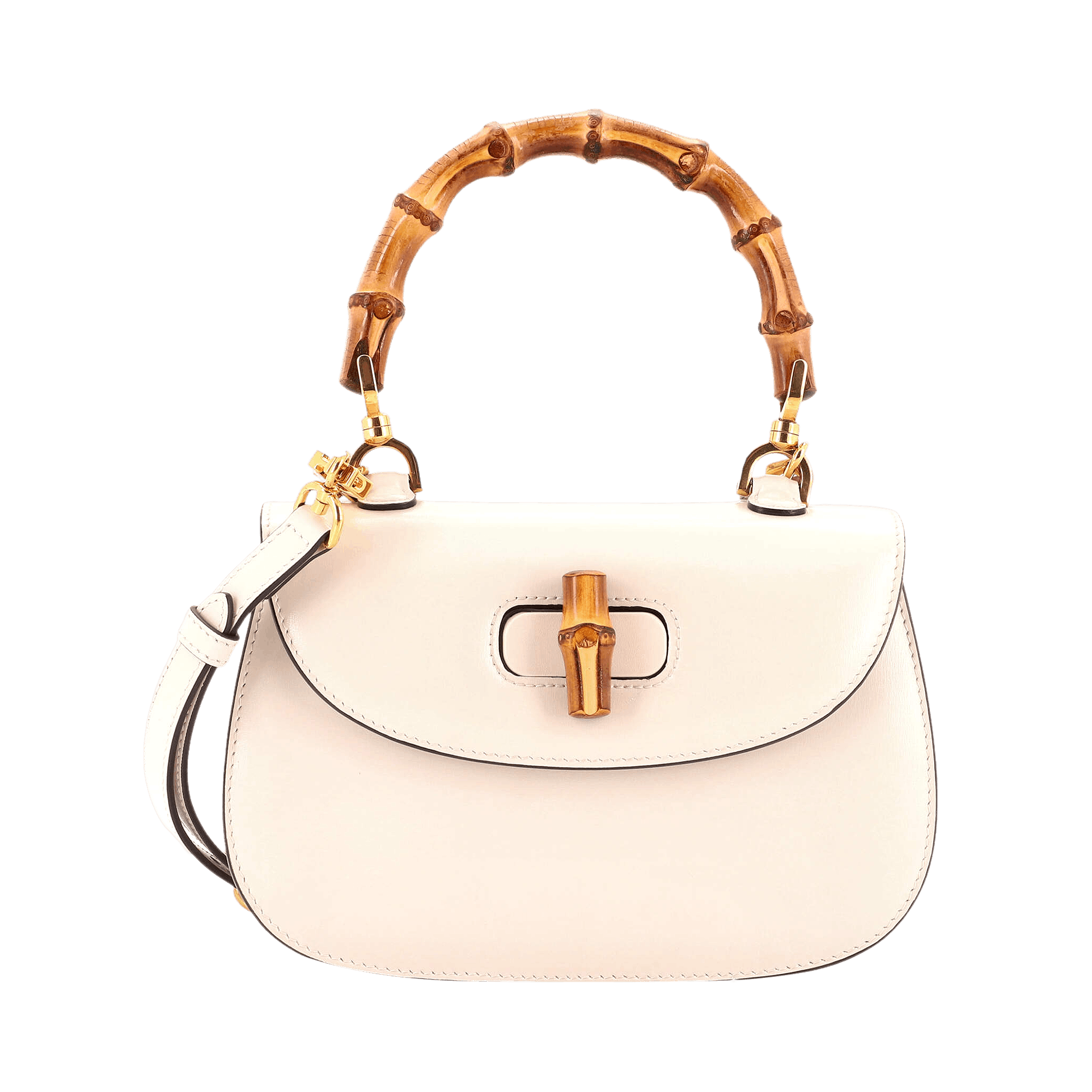
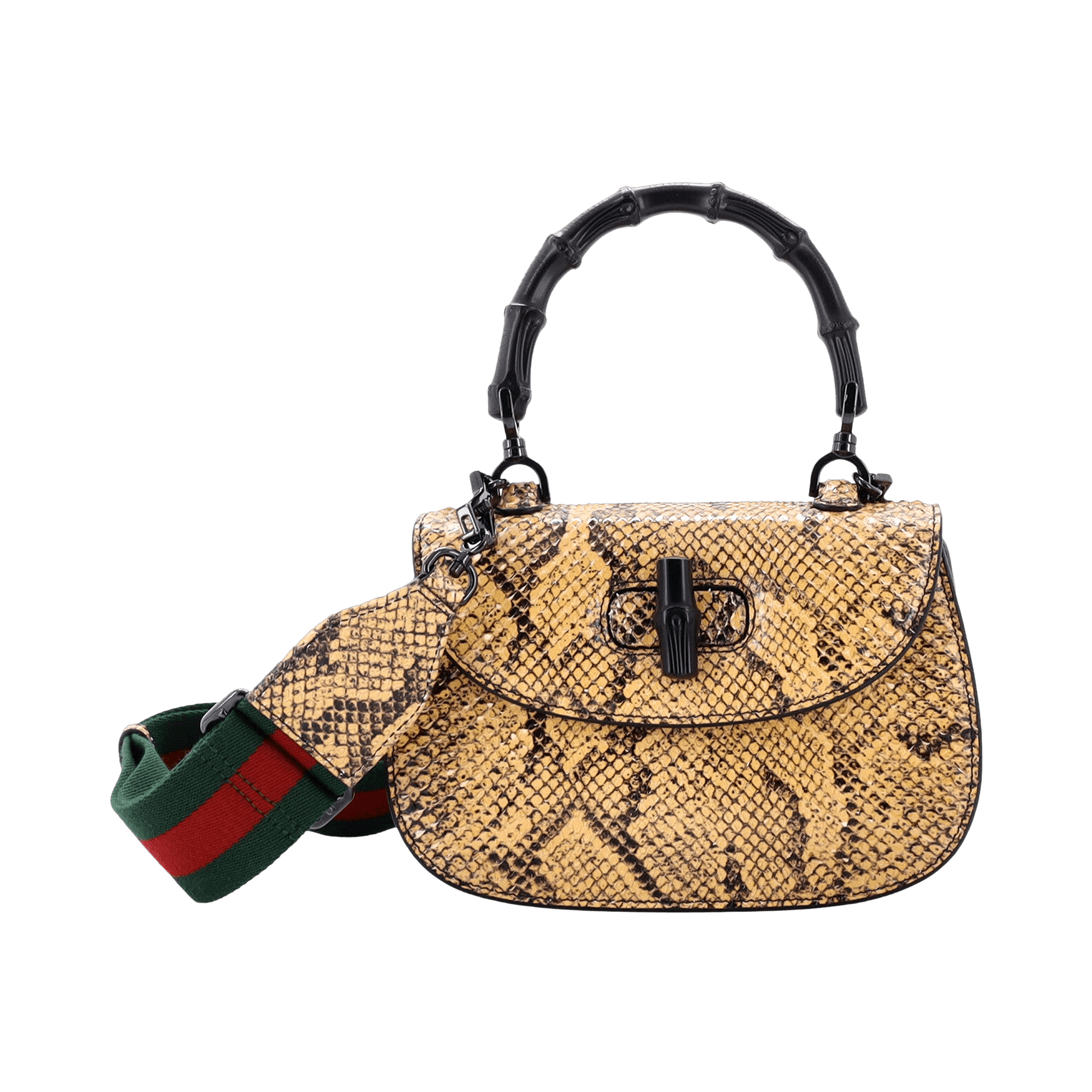
The Bamboo 1947 dates to Gucci's original bamboo-handled handbag, created in 1947 when wartime leather and metal shortages pushed the house to shape bamboo over an open flame as a substitute material, and relaunched as part of the Aria collection in 2022. Its leather body is defined by the signature bamboo handle and a rotating bamboo turn-lock closure, both carried over from the original postwar design. It was carried by Grace Kelly, Elizabeth Taylor, and Princess Diana, cementing its status as one of Gucci's most historically significant bags.
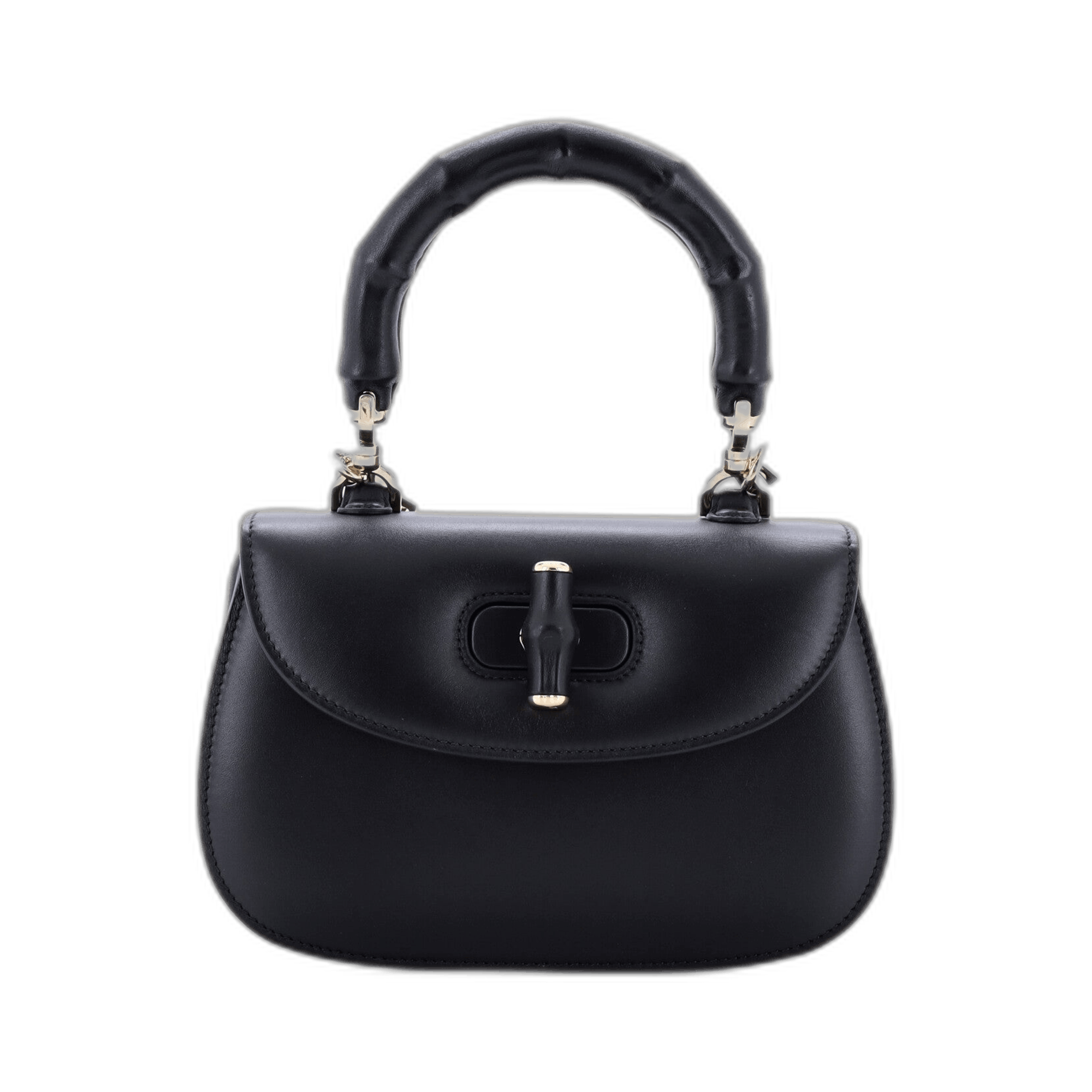
The smallest size in the current line, built for evening or occasion carry alongside the signature bamboo handle.
The most versatile size, sized for daily use with the detachable shoulder strap and the classic bamboo turn-lock.
The largest current size, closest in proportion to the original 1947 silhouette and suited to work or travel carry.
The standard calfskin finish and the most widely produced version of the Bamboo 1947.
GG Supreme monogram canvas paired with leather trim, offered as a lower-price alternative to full leather.
A glossed leather finish offered seasonally in select colorways.
Limited-run exotic-skin versions that command the highest resale premiums in the line due to material scarcity.
At $4,300-$5,600 retail, the Bamboo 1947 sits toward the top of Gucci's core handbag lineup, and resale runs $1,500-$3,200 depending on size and material, a retention rate of roughly 35-55%. The smaller Mini and Small sizes hold value best because they see the most everyday use and turn over fastest on resale platforms, while exotic-skin versions (python, ostrich) can resell above $3,000 even in the secondary market thanks to material scarcity. As a relaunched heritage piece riding the broader quiet-luxury wave, it holds up better than most Alessandro Michele-era logo pieces, but the high retail entry point means buyers should treat it as a long-term hold rather than a quick resale flip.
The Bamboo bag debuted in 1947 in postwar Florence, when Gucci's artisans faced a severe shortage of leather and metal due to wartime rationing. Rather than compromise, the house's craftsmen developed a technique of heating raw bamboo canes over an open flame until pliable, then bending and shaping them into a semicircular handle before lacquering the surface for strength and shine. The method was so distinctive that Gucci patented it, and to this day the bamboo handles are still hand-shaped by a small team of specially trained artisans in Florence, using largely the same process devised in 1947.
The style went through several reinterpretations over the following decades, including the Bamboo Indy in 2007 and the New Bamboo line under Frida Giannini, each updating proportions and materials while preserving the signature handle. Its most direct offshoot arrived in 1991, when Gucci introduced the Diana bag, a bamboo-handled tote that took on its own identity after Princess Diana made it a fixture of her off-duty wardrobe. Alessandro Michele returned to the original 1947 silhouette directly in 2022, relaunching it as the Bamboo 1947 within his Aria collection, restoring the rounded, structured shape of the postwar original alongside modern leathers, GG canvas, and exotic-skin options.
The Bamboo bag became a fixture of mid-century glamour almost immediately after its release. Grace Kelly and Elizabeth Taylor were photographed carrying it throughout the 1950s and 1960s, and Ingrid Bergman clutched one in Roberto Rossellini's 1954 film Viaggio in Italia. It later appeared in Michelangelo Antonioni's Le Amiche and his 1966 film Blow-Up, cementing its place in the visual language of European postwar cinema and jet-set style.
Princess Diana extended the bag's cultural reach decades later, carrying the bamboo-handled Diana tote to and from the gym and on countless off-duty outings in the early 1990s, which turned the silhouette into tabloid-documented shorthand for understated royal style. That dual legacy, old Hollywood on one end and the British royal family on the other, is part of why Michele's 2022 Aria-collection relaunch of the original 1947 shape found an audience immediately: it arrived pre-loaded with more than seventy years of documented cultural history, something few "reissued" bags can claim.