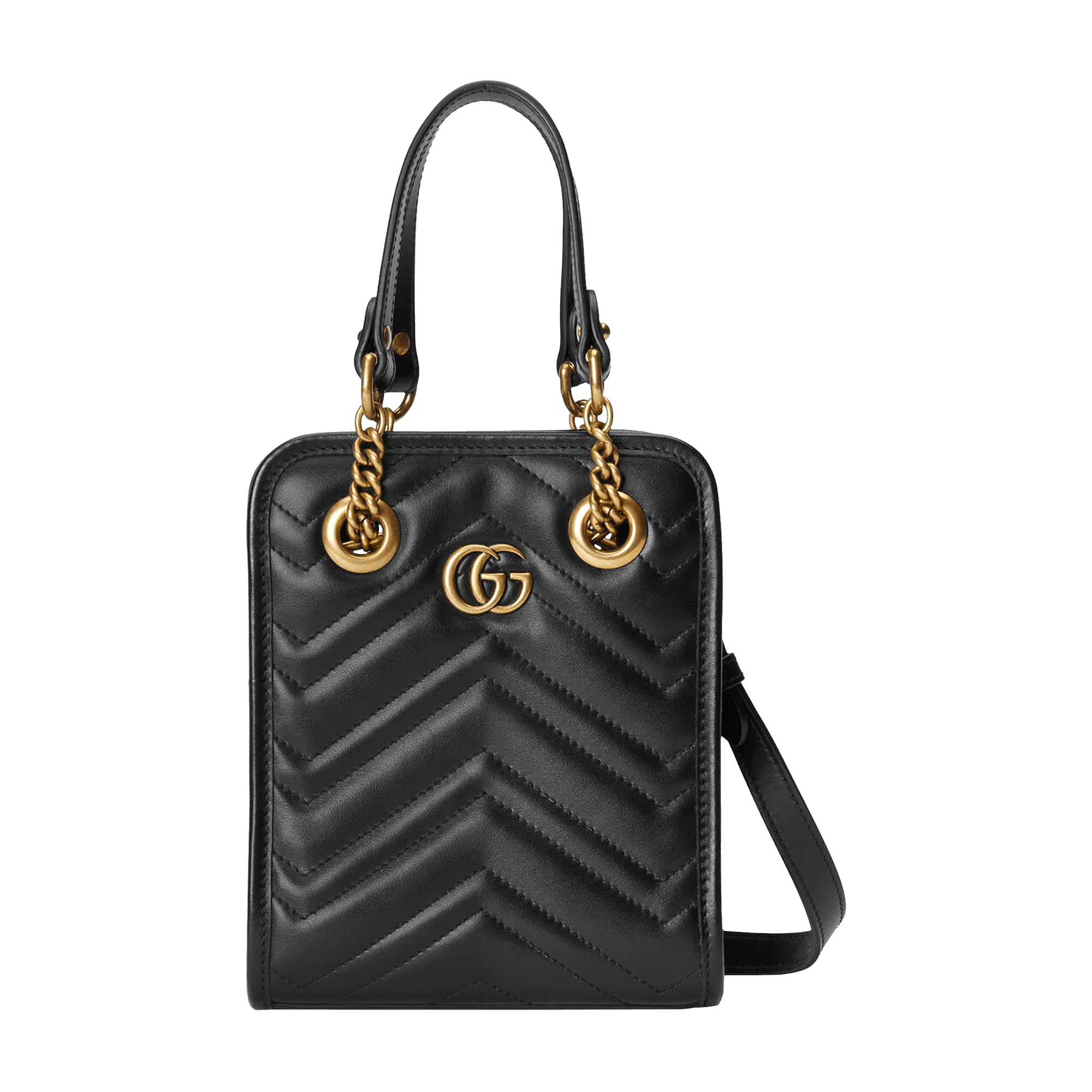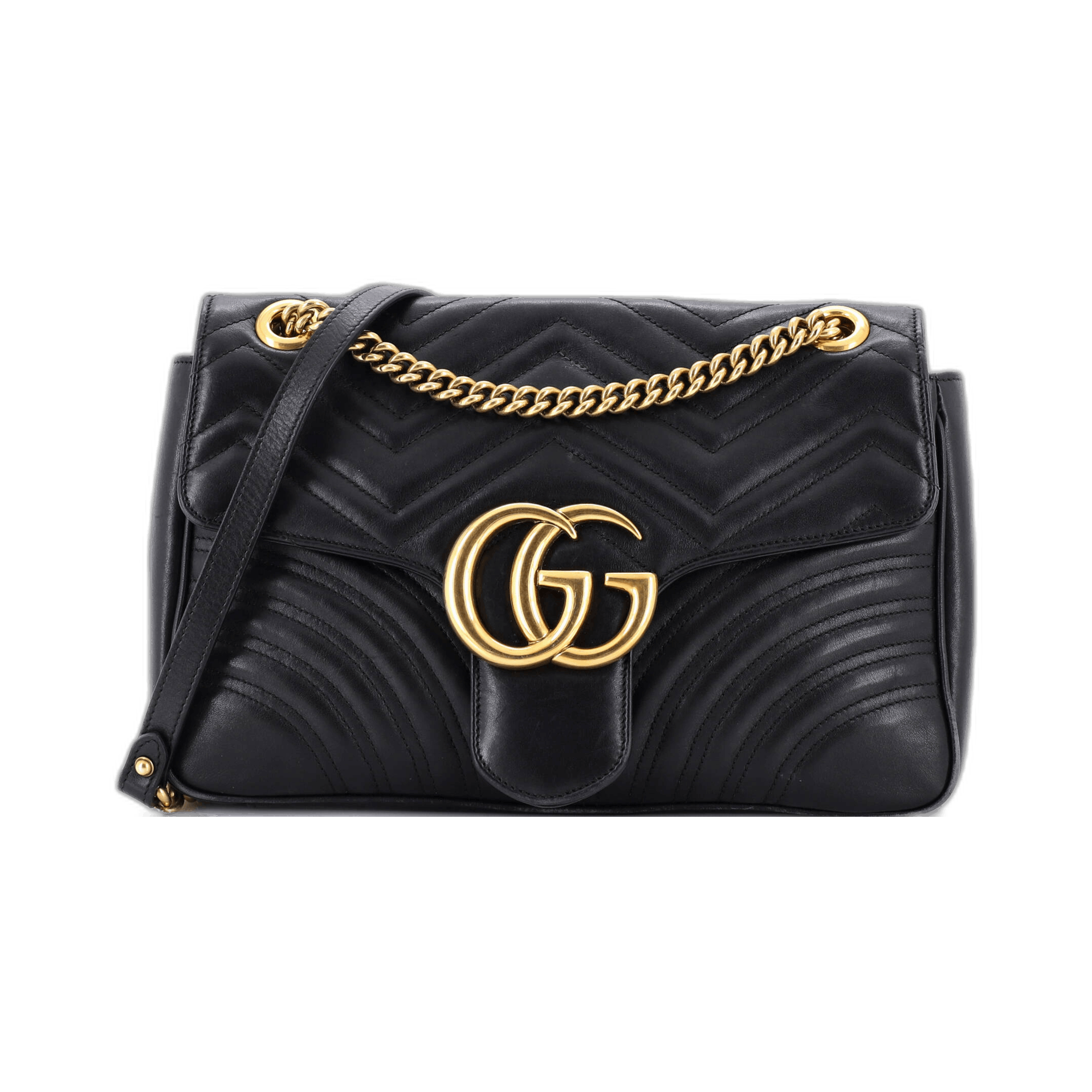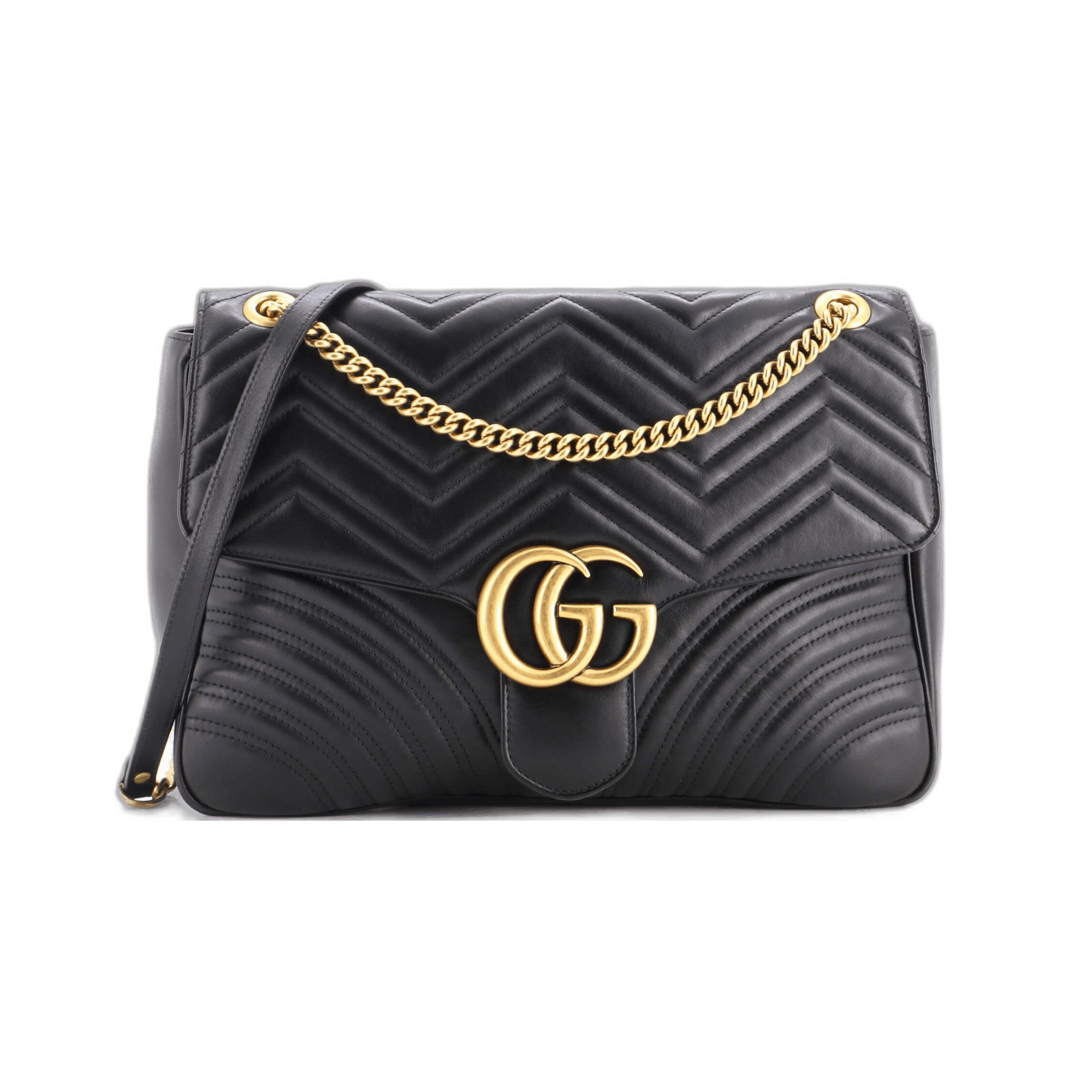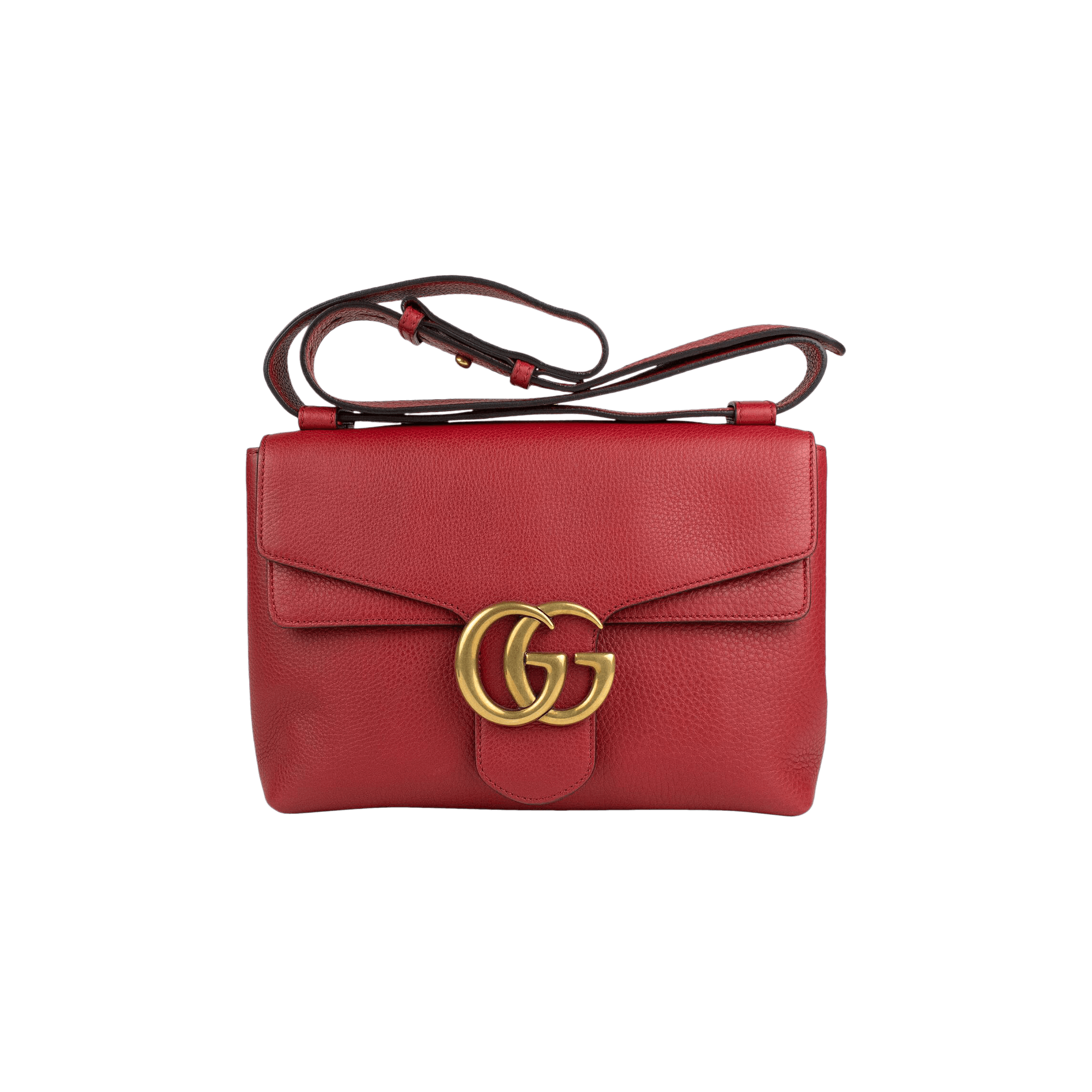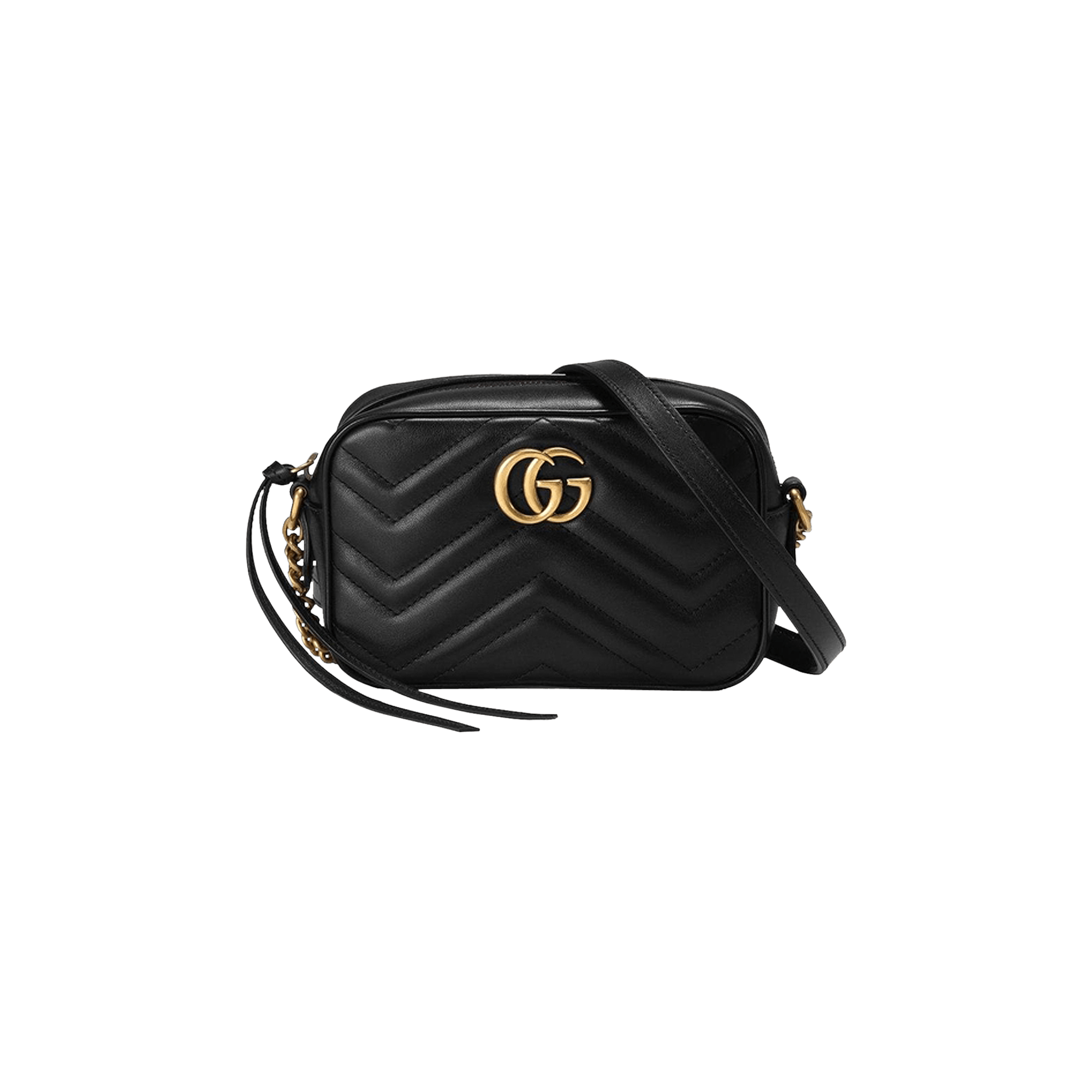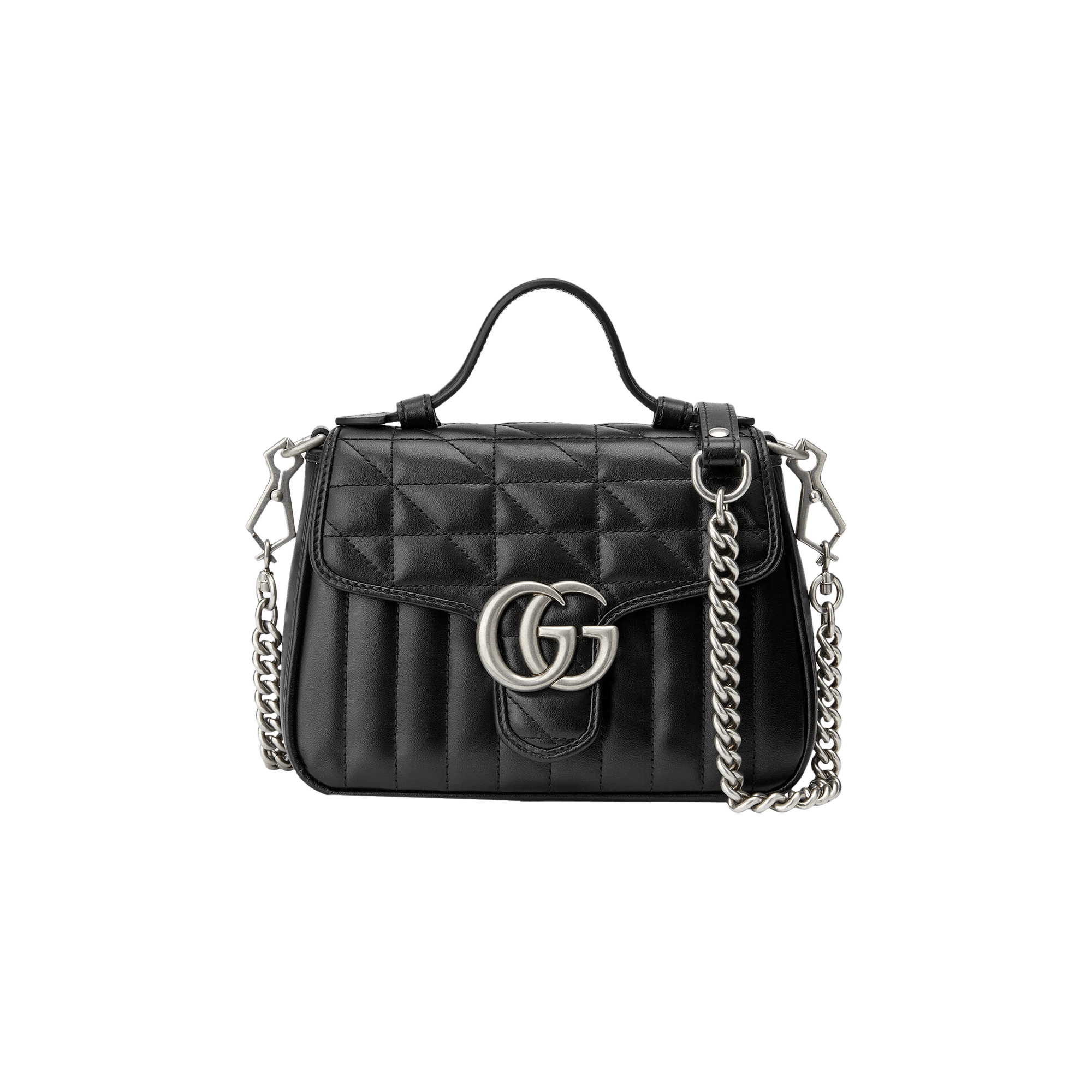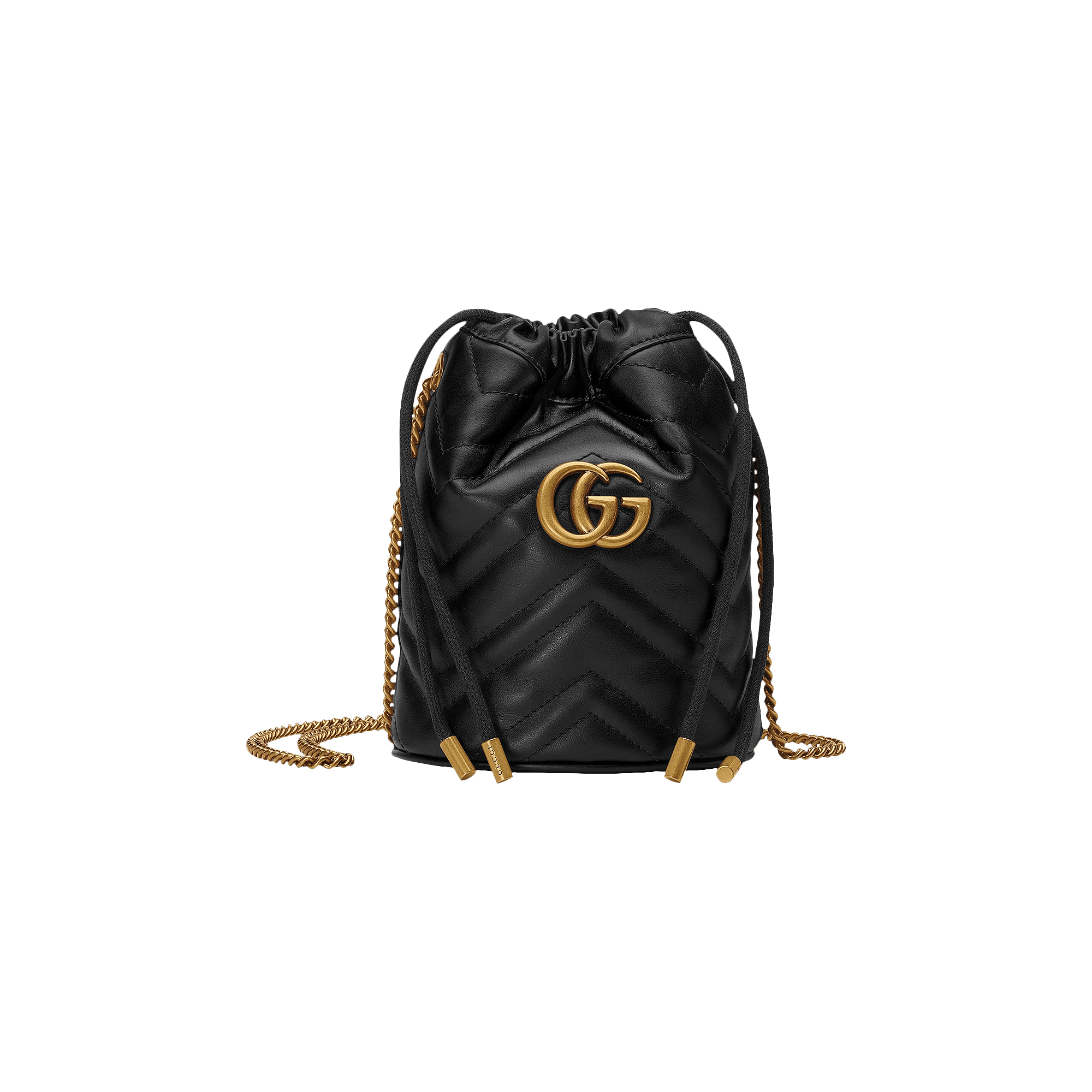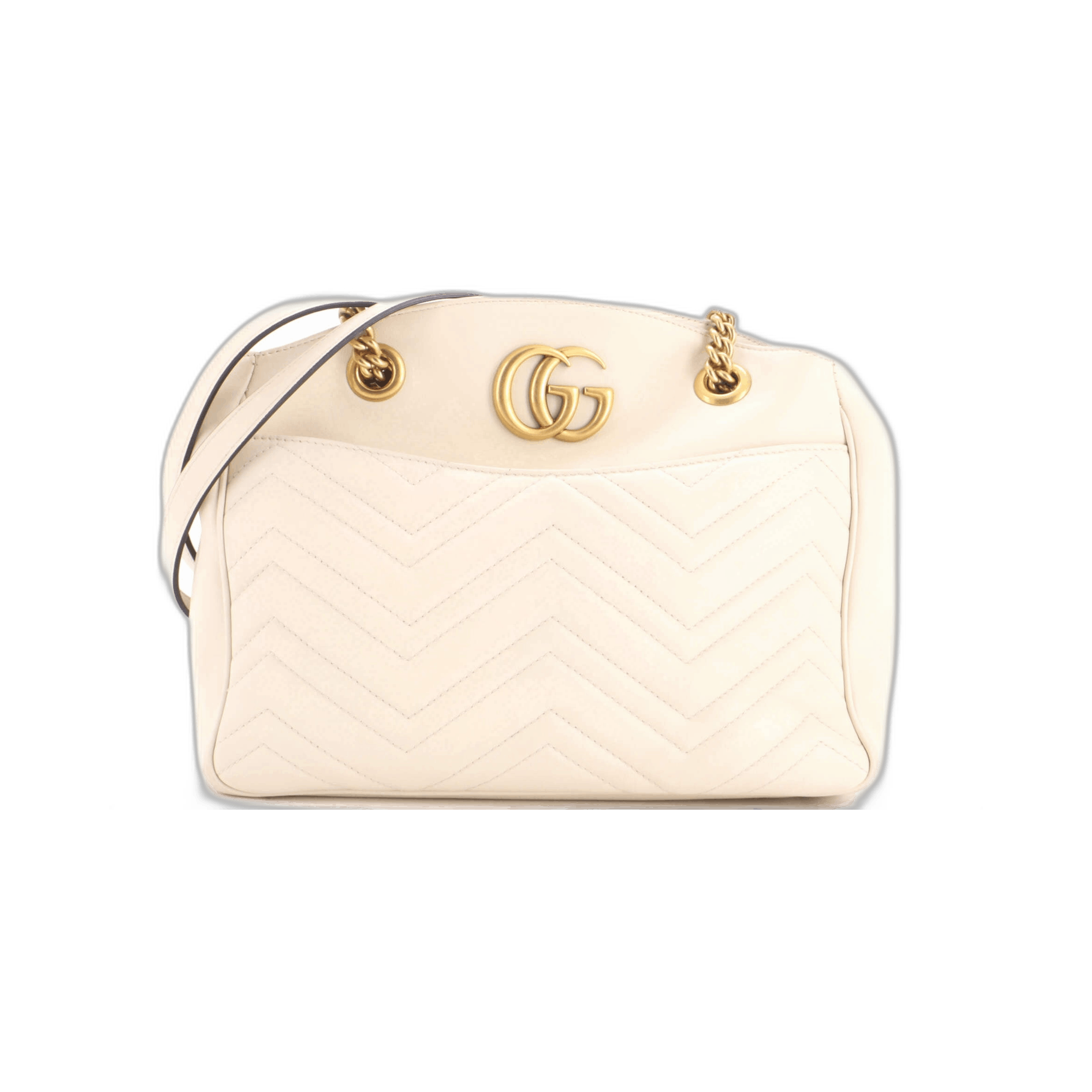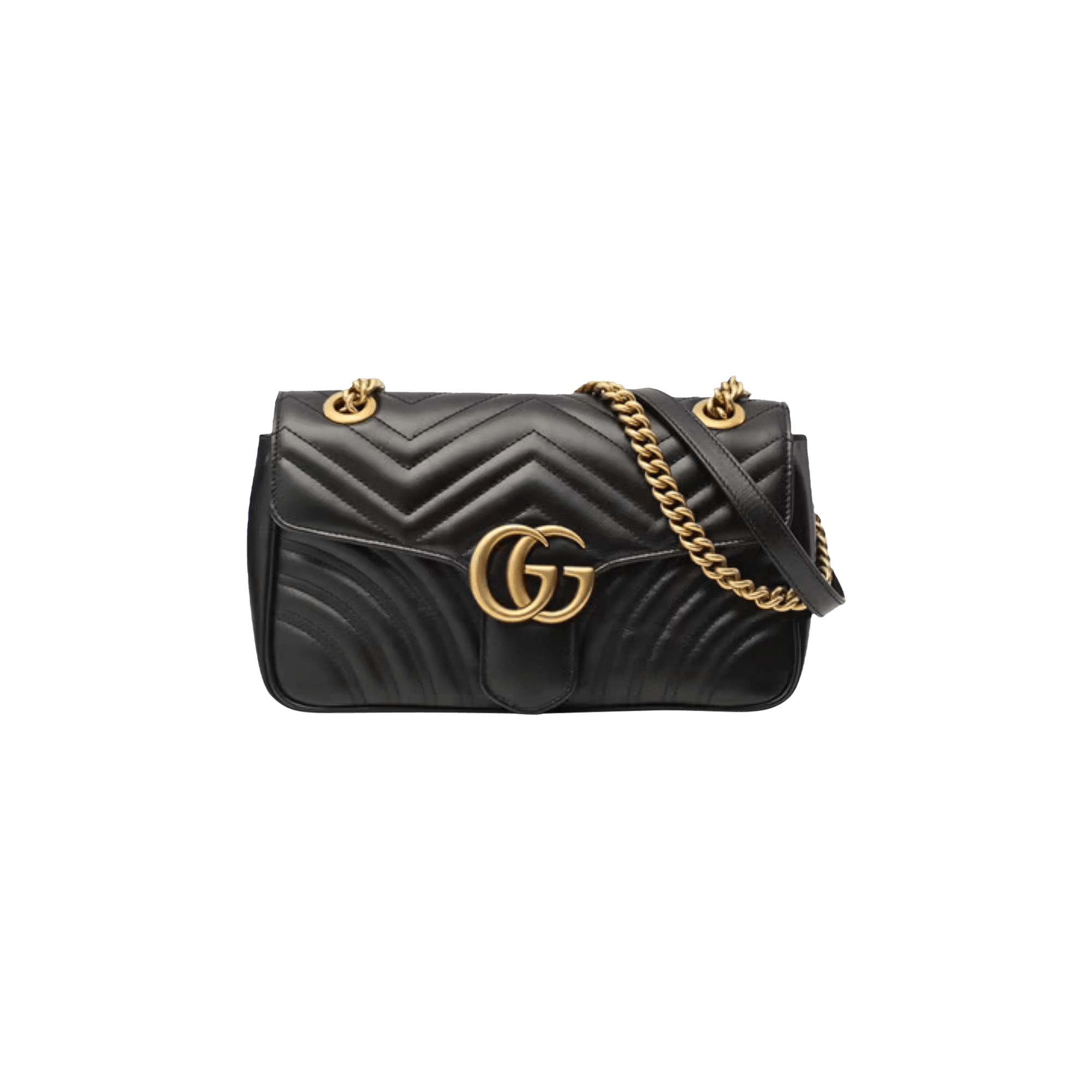
The GG Marmont is one of Gucci's core handbag lines, introduced by Alessandro Michele for Fall/Winter 2016 as part of his broader reinvention of the house. Its diamond-quilted matelassé leather body is anchored by the antique gold-tone Double G spring-clasp closure, a hardware detail borrowed from Gucci's 1970s archives. The bag is widely credited as central to Gucci's dramatic sales turnaround in the years following its release.
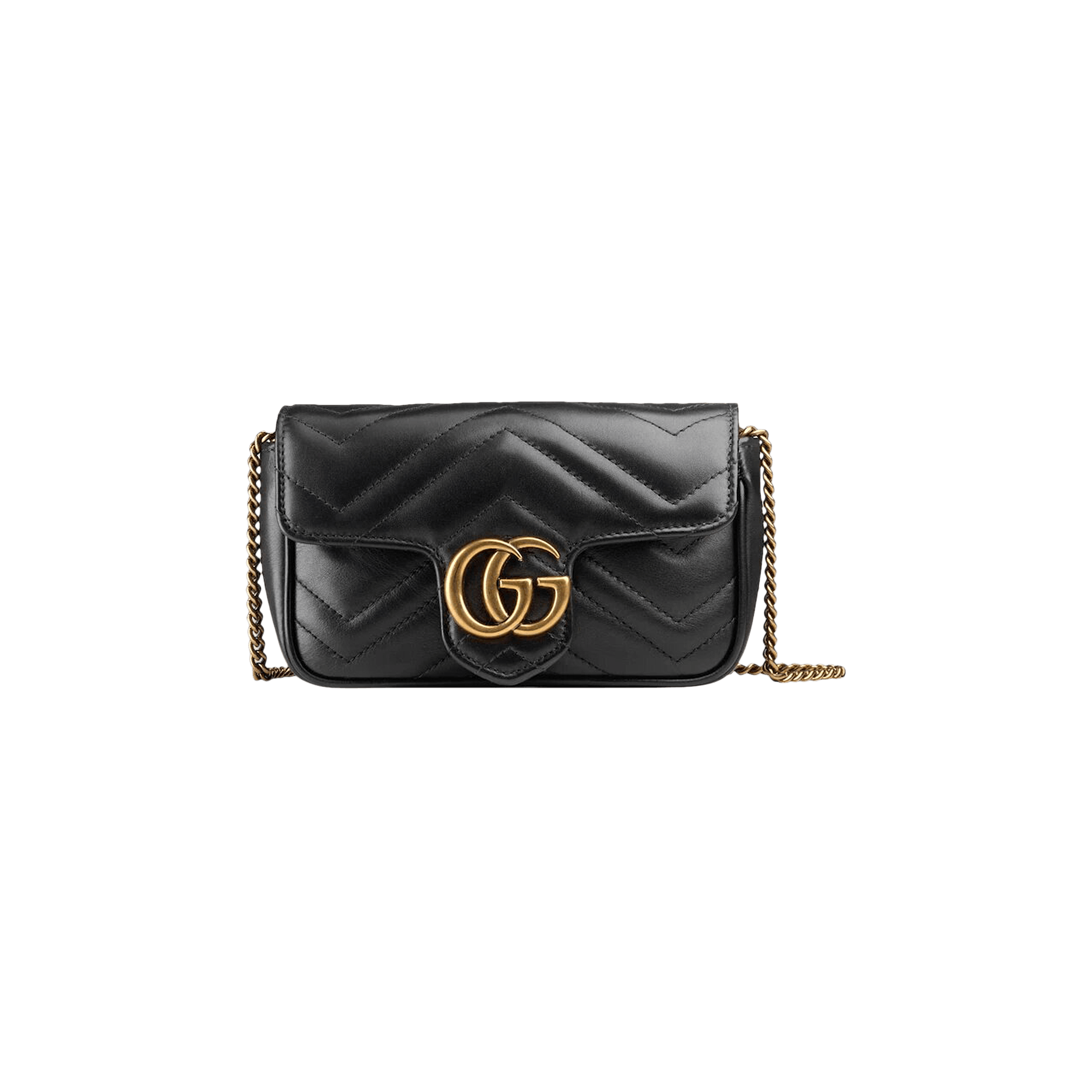
The smallest and most affordable size, popular as an entry point into the line.
A slightly larger crossbody-friendly size, one of the most frequently listed sizes on resale platforms.
The best-selling and most recognizable GG Marmont size, considered the line's default configuration.
A roomier everyday size offering more capacity than the Small while keeping the same matelassé and hardware details.
The largest shoulder-bag size in the line, suited to work and travel carry.
A compact waist-bag configuration carrying the matelassé quilting and Double G hardware.
A boxy, structured crossbody format built around the GG Marmont's signature details.
A structured top-handle version offering a more formal alternative to the chain-strap shoulder bag.
A cinched, drawstring-top configuration in the matelassé leather.
A two-strap backpack format offering the most hands-free capacity in the line.
The largest carry-style variant, built for work or overnight use.
The GG Marmont is Gucci's most consistently liquid resale bag, averaging around 70% of retail across sizes and colorways, with the black-and-antique-gold combination performing best. On a $2,400-$2,600 retail Small, that translates to roughly $1,000-$1,700 on resale platforms like Fashionphile and The RealReal, while the entry-level Super Mini typically clears $500-$900. Its high production volume caps how far it can appreciate, but that same volume guarantees deep, reliable demand on the resale side, making it one of the safer 'buy now, sell later' plays in the Gucci catalog rather than a speculative one.
Alessandro Michele introduced the GG Marmont for Fall/Winter 2016, roughly a year after the Dionysus, as a quieter, more wearable counterpart built around archival Gucci codes rather than new motifs. The diamond-quilted matelassé leather references chevron stitching Gucci used across the 1970s, and the antique gold-tone Double G spring-clasp hardware is a direct pull from the house's 1970s accessories archive, one of several moves Michele made to root his maximalist aesthetic in genuine Gucci history rather than invented iconography.
Because it launched with a wide, accessible size range and price point relative to the rest of the collection, the GG Marmont scaled into stores faster than almost any other bag in Gucci's history, expanding within a few seasons into top-handle, tote, bucket, belt-bag, and camera-bag configurations. Industry analysts and Gucci's own parent company, Kering, repeatedly pointed to the GG Marmont's volume as a key driver of the brand's turnaround in the back half of the 2010s, when Gucci's revenue nearly doubled under Michele's direction.
The GG Marmont's combination of a recognizable but understated logo and a lower price point than the Dionysus or Soho disco bag made it Gucci's most broadly worn style of the Michele era, appearing across street style, red carpets, and everyday outfits in roughly equal measure rather than being confined to editorial moments. It became a common first Gucci bag for many buyers, a role it still plays today.
Its cultural footprint has proven more durable than louder Michele-era pieces precisely because it never depended on a single viral moment: it built its reputation through sheer ubiquity and consistent styling advice from fashion media, which continues to name it one of the most versatile designer bags on the market years after its debut.