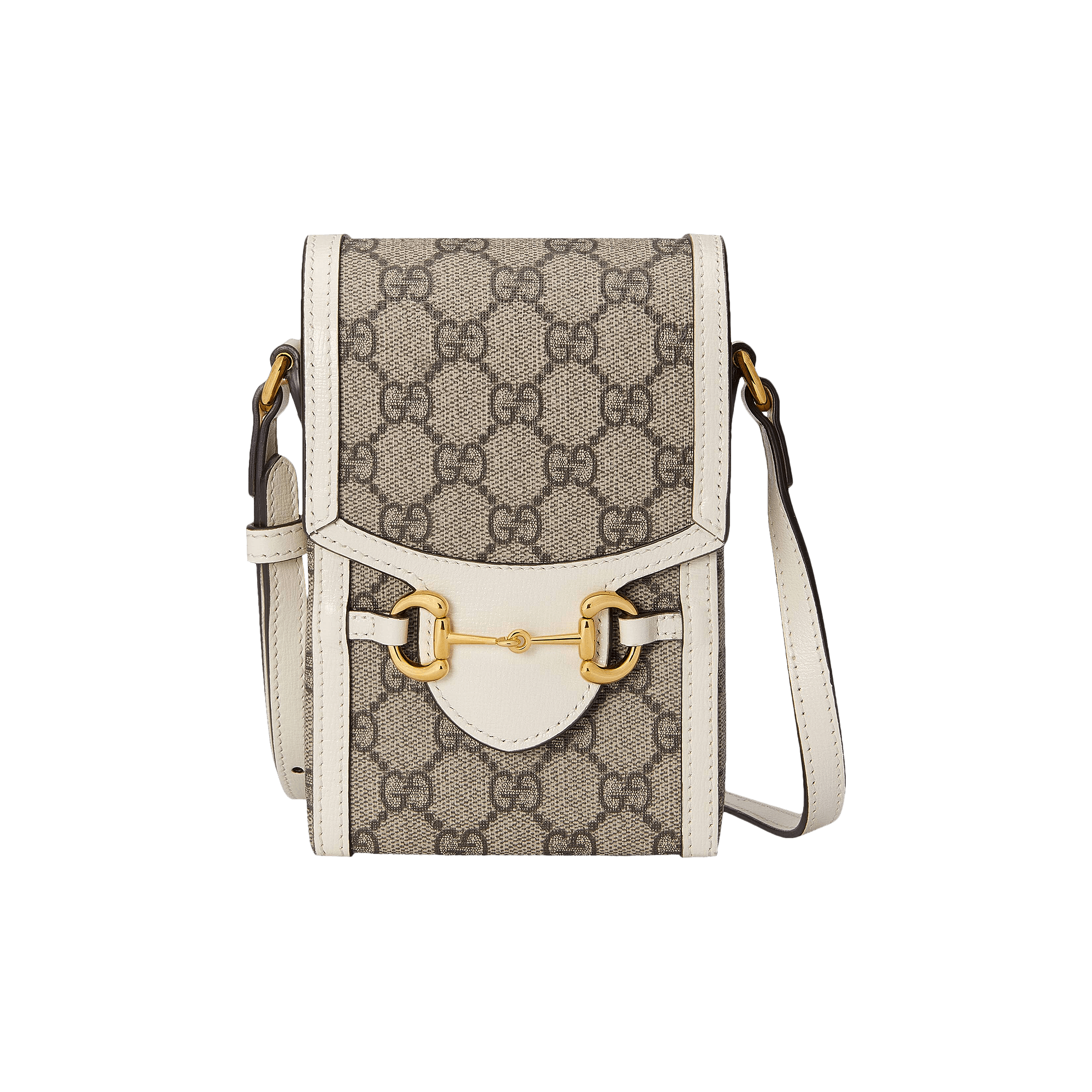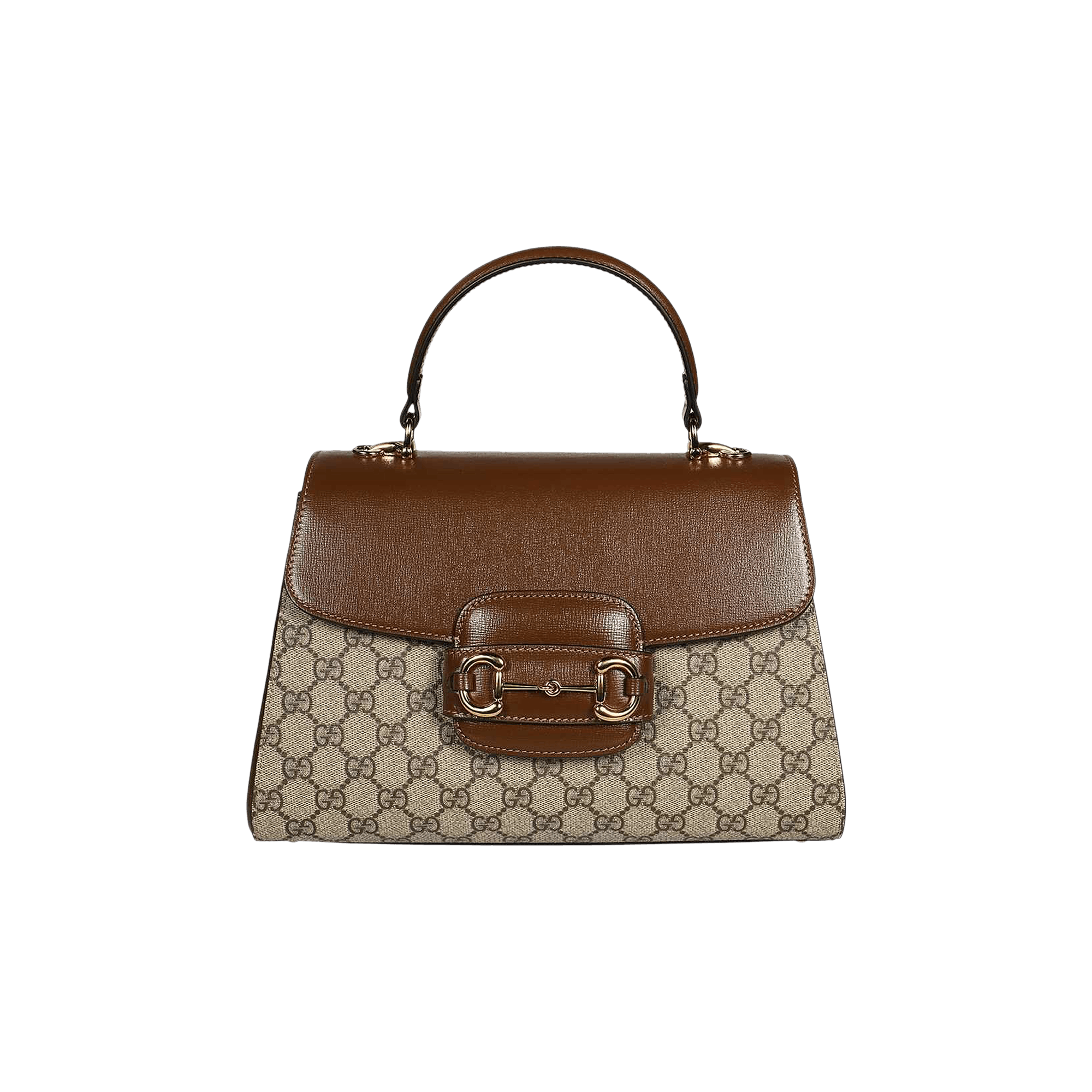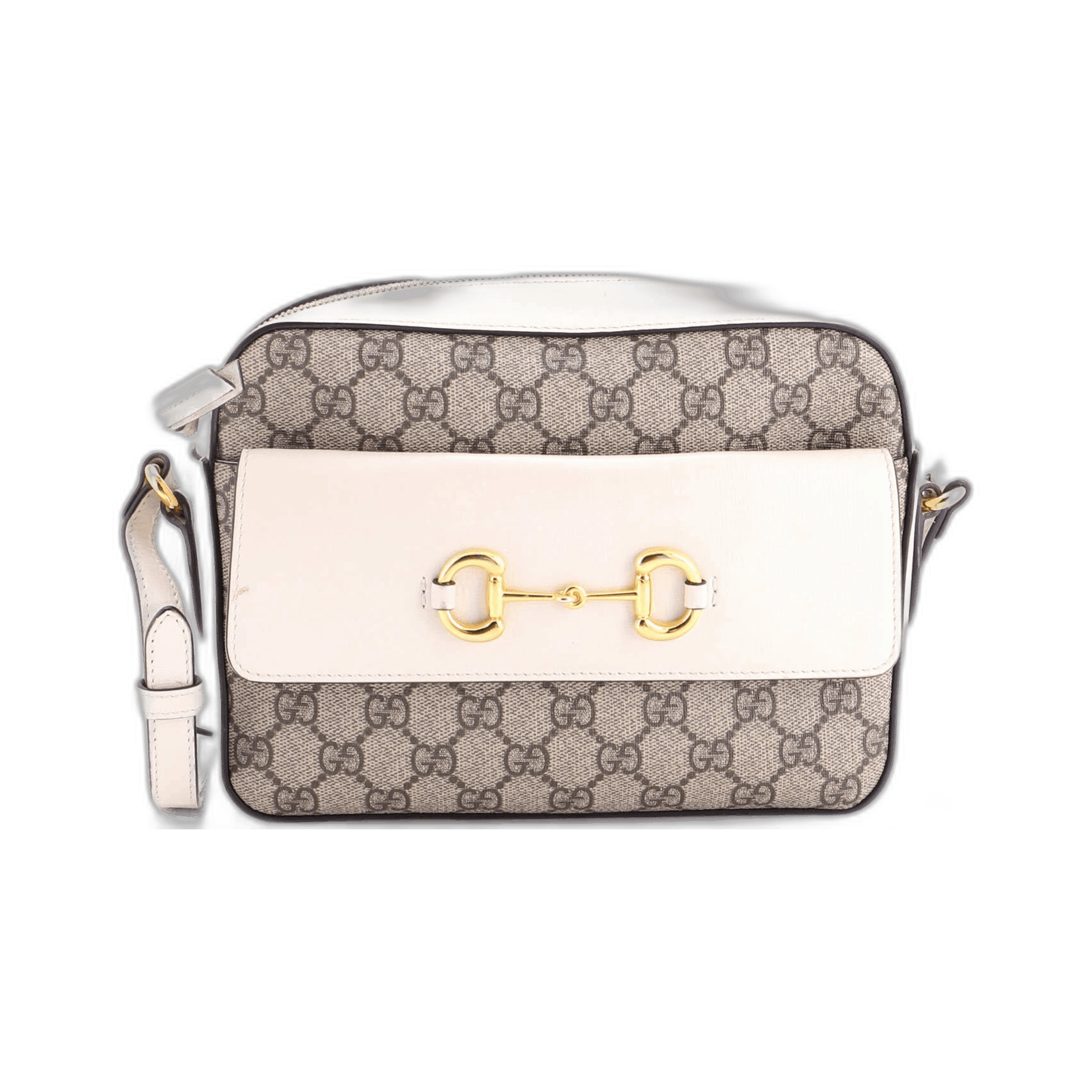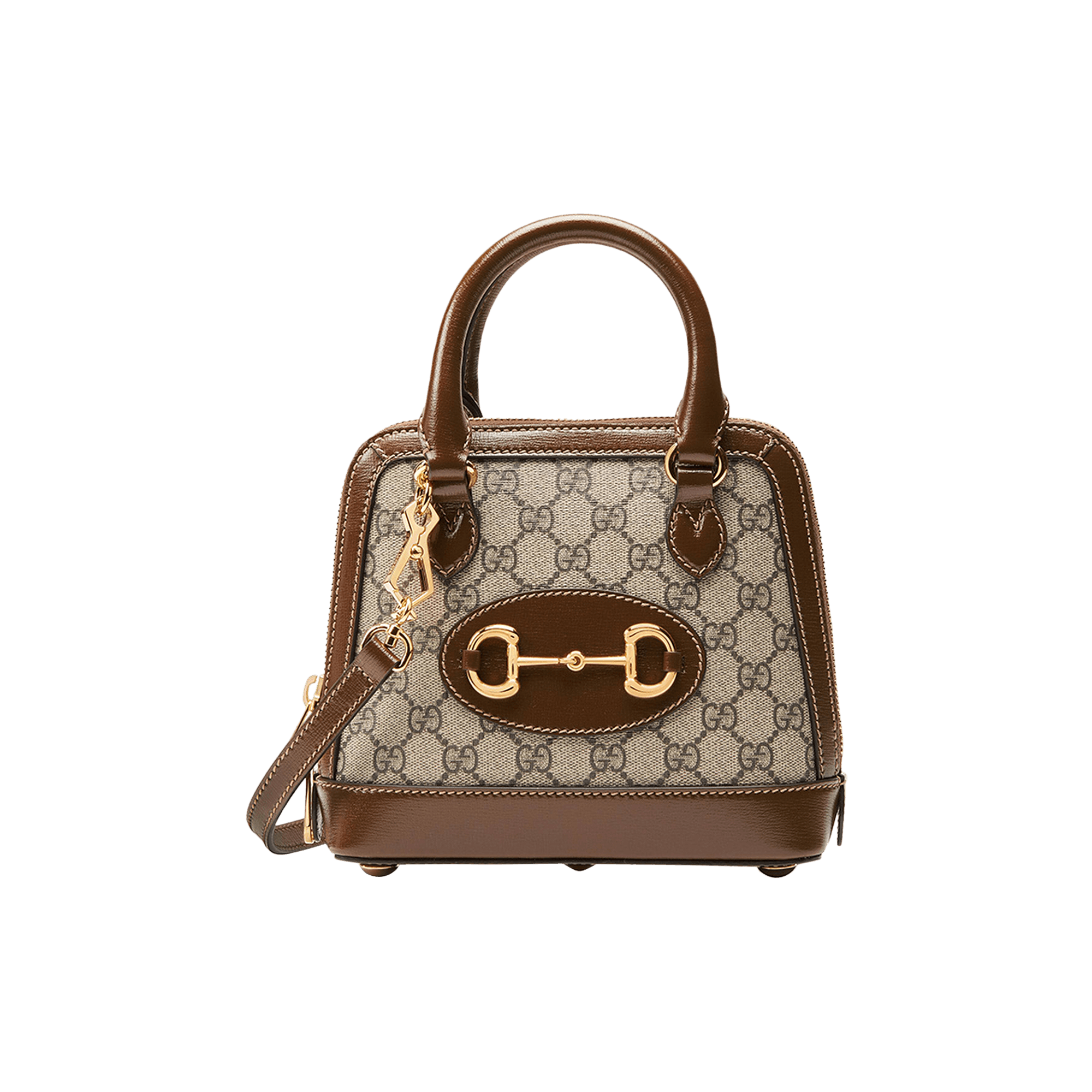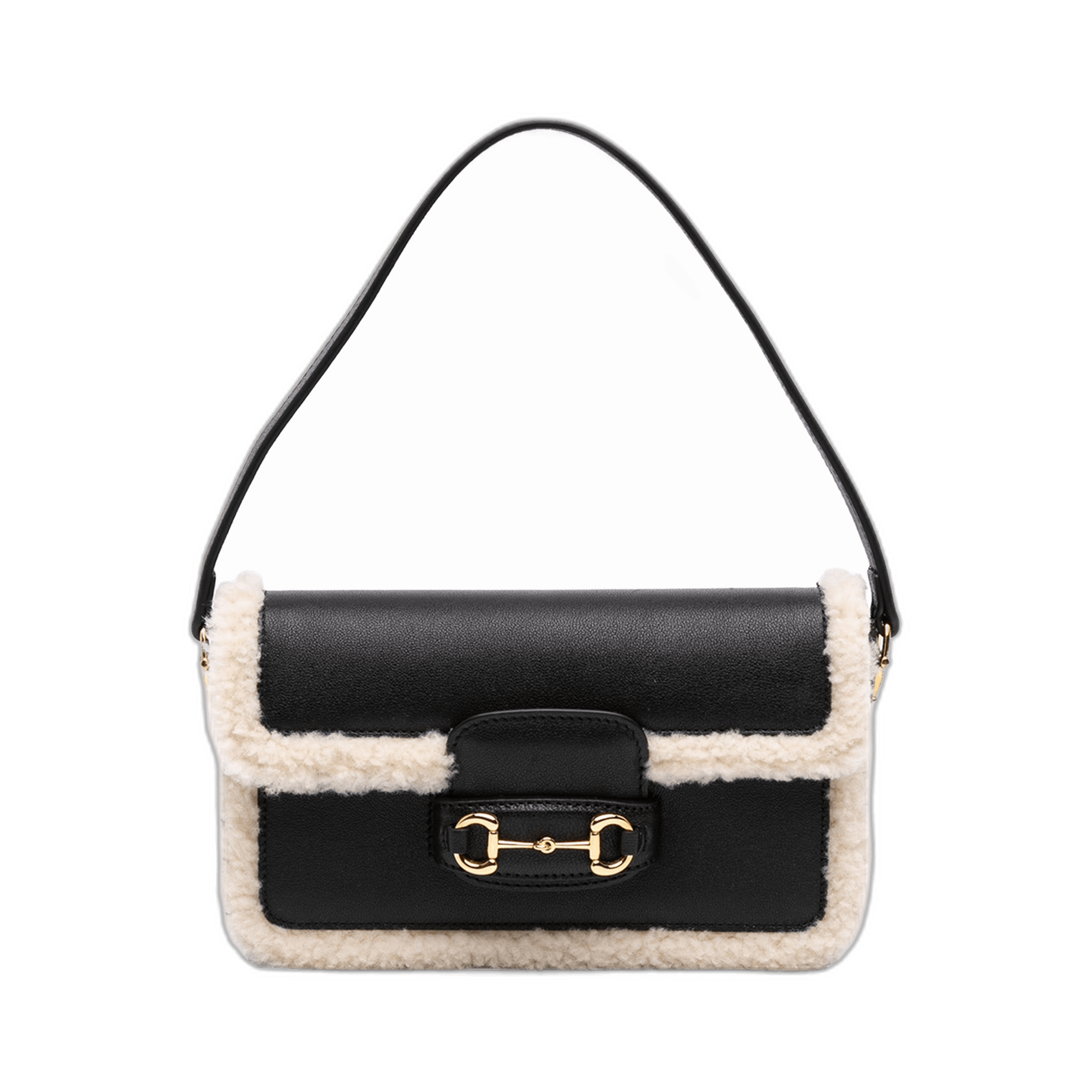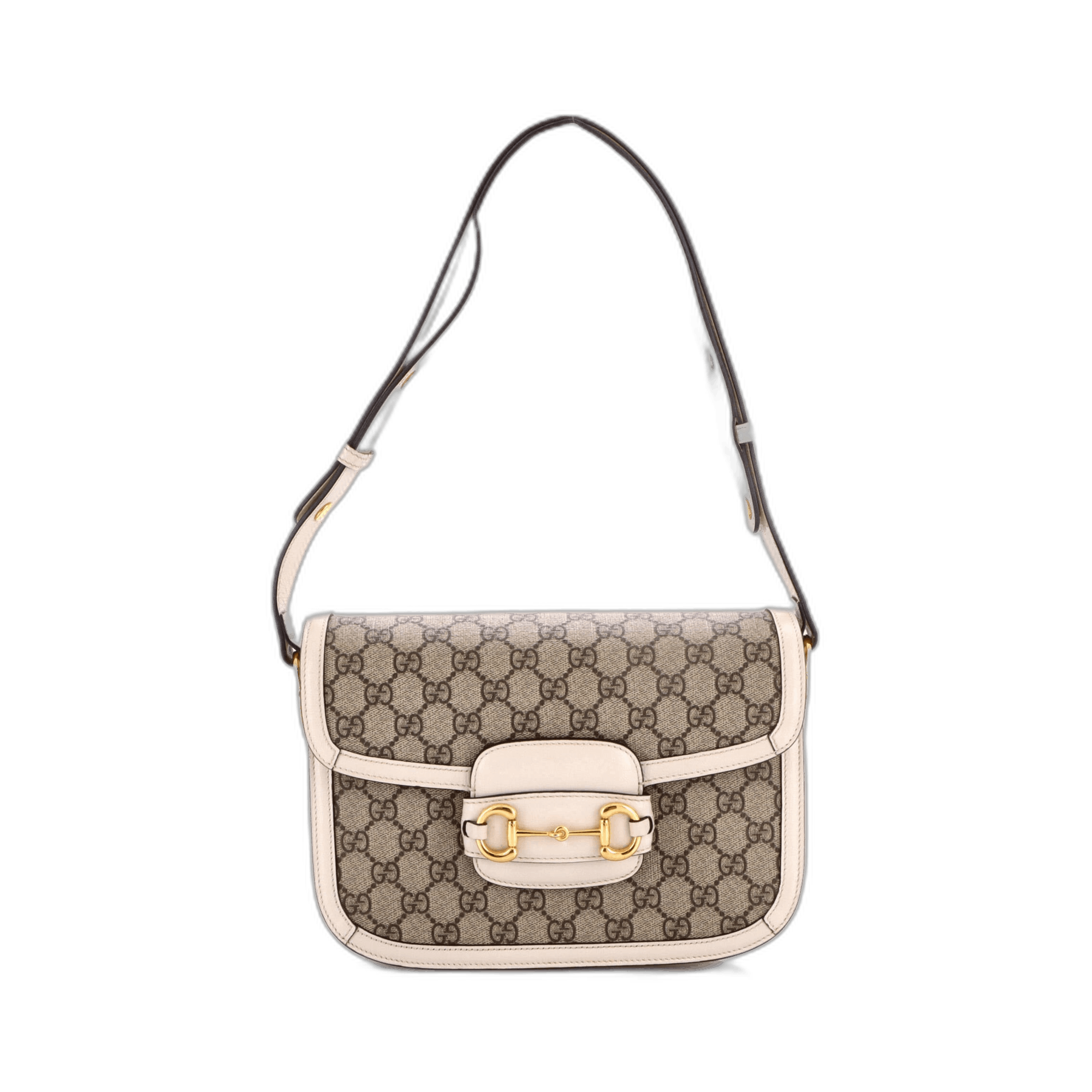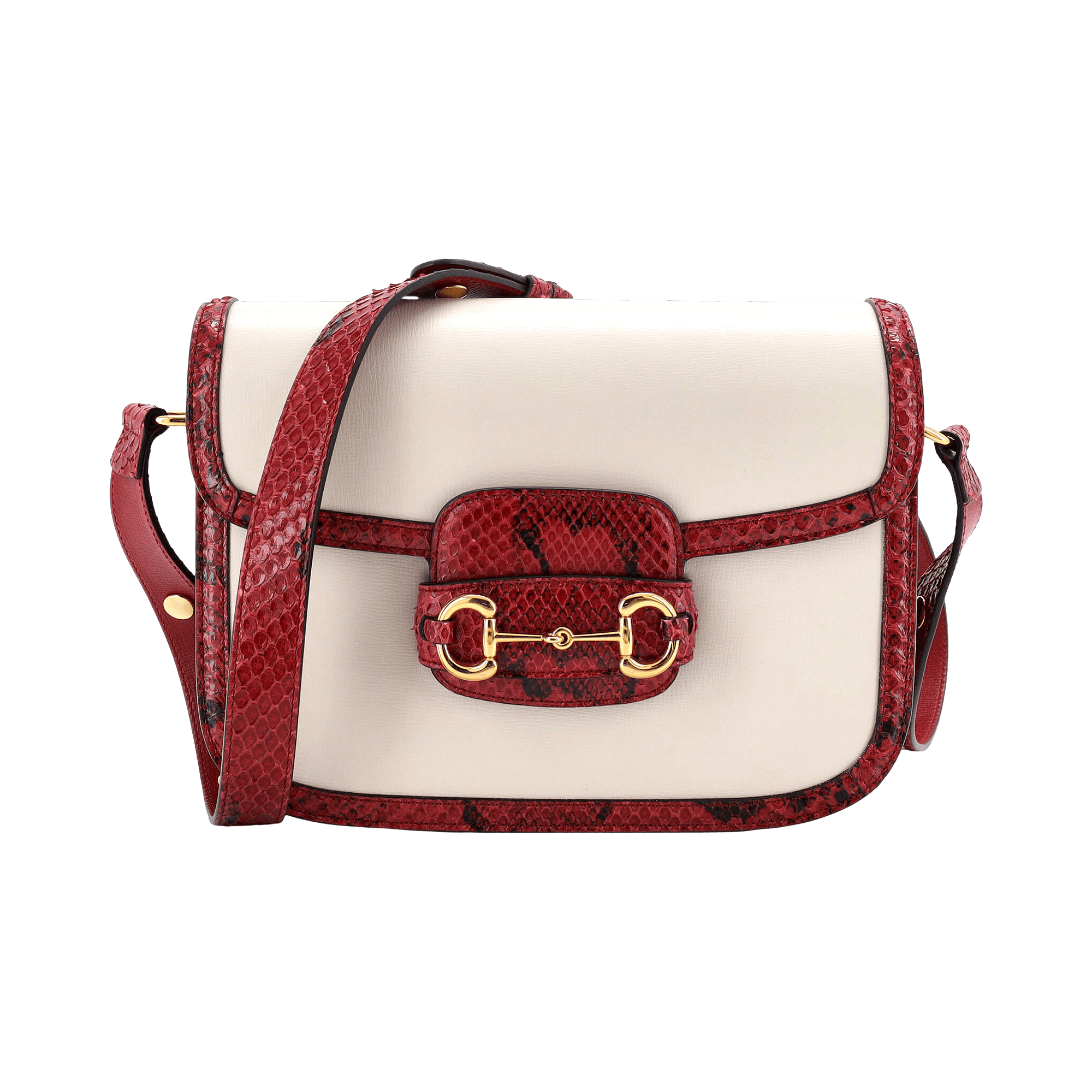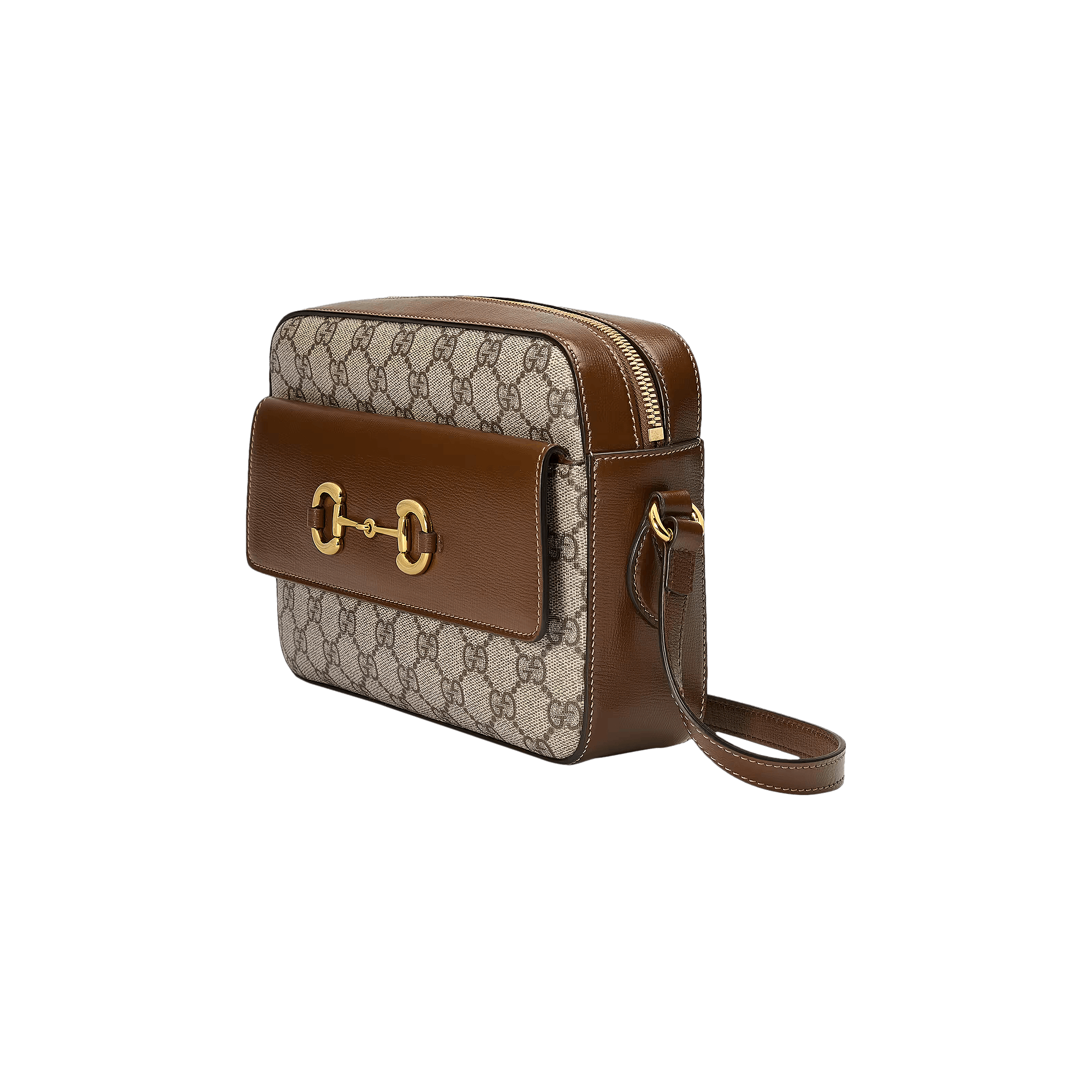
The Horsebit 1955 takes its name from the equestrian horsebit hardware Gucci first introduced in 1955, one of the house's oldest continuously used design codes, though the bag itself was relaunched in 2019 and debuted on the Cruise 2020 runway. Its GG Supreme canvas body is trimmed in leather and closed with a tab-and-magnet mechanism concealed beneath the signature horsebit hardware. Its understated, logo-light presentation has made it a favorite of the broader quiet-luxury movement.
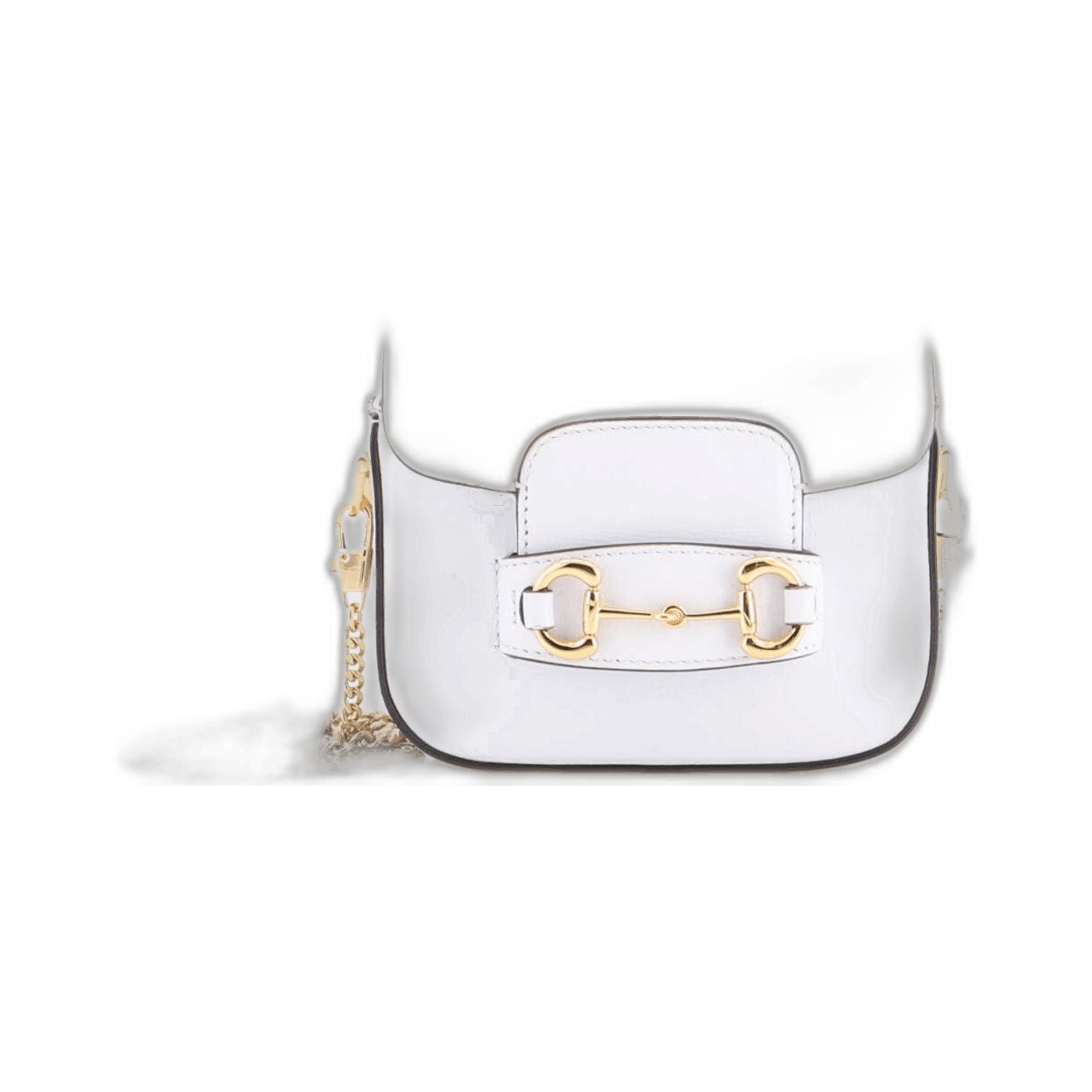
The smallest size, a compact crossbody suited to essentials-only carry.
A slightly larger crossbody format, one of the more frequently listed sizes on resale platforms.
A versatile daily-carry size balancing capacity with the crossbody-friendly proportions of the line.
The largest standard size, offering the most everyday capacity while retaining the adjustable-strap mechanism.
A boxy, structured crossbody format built around the horsebit hardware.
A structured top-handle configuration offering a more formal alternative to the shoulder bag.
A compact wallet-format bag with a chain strap, the most affordable entry point into the line.
A full-leather version offered as an alternative to the standard GG Supreme canvas.
The standard GG Supreme monogram canvas with leather trim, the most widely produced version.
Limited-run exotic-skin versions that command the highest resale premiums in the line.
The Horsebit 1955 is one of the few Gucci bags with a genuinely appreciating resale trend, with reports of roughly 5-10% annual value increases since its 2020 debut. On a Medium retailing for $3,200-$3,600, resale currently runs $1,400-$2,400, while the smaller Nano and Mini sizes clear $500-$1,100. That appreciation is closely tied to the quiet-luxury shift: as buyers move away from logo-heavy pieces, a 70-year-old hardware detail with real documented history is proving more durable than seasonal prints. For a buyer today, it's one of the more defensible 'buy and hold' picks in Gucci's current lineup rather than a straightforward depreciating fashion purchase.
Gucci's horsebit hardware, a metal double ring joined by a bar mimicking the snaffle bit of a horse's bridle, first appeared on the house's 1953 loafer, a tribute by Guccio Gucci's sons to their father's fascination with equestrian style, formed during his years working the lobby of London's Savoy Hotel. Two years later, in 1955, Gucci carried the same hardware onto a handbag for the first time, and the horsebit has remained in continuous use across the house's leather goods ever since, making it one of Gucci's two or three oldest design codes still in active production, alongside the bamboo handle and the green-red-green Web stripe.
The bag itself went through long stretches out of the spotlight, serving as a hardware detail on various handbag lines through the Tom Ford and Frida Giannini years, before Alessandro Michele relaunched it directly as the Horsebit 1955 in 2019, debuting the redesigned bag on the Cruise 2020 runway show staged at the Musée des Arts Forains in Paris. The relaunch kept the horsebit hardware and its tab-and-magnet closure but rebuilt the bag around GG Supreme canvas and leather trim aimed at a younger, logo-light customer.
The original 1953 loafer and 1955 handbag hardware built Gucci's reputation with the mid-century jet set and European royalty, who prized the equestrian reference as a marker of old-money taste rather than logo-driven status. That reputation is part of why the 2019 relaunch found an audience so quickly: it offered a documented, decades-old Gucci code at a moment when shoppers were turning away from the loud monogram prints of the Michele era.
Since its 2020 debut, the Horsebit 1955 has been positioned by Gucci's own marketing and by fashion press as a quiet-luxury alternative to the Dionysus and GG Marmont, and it has benefited directly from that broader shift in taste. Its understated hardware and low branding have made it a recurring pick in "logo-free investment bag" roundups, a category of coverage that barely existed when the bag first launched.