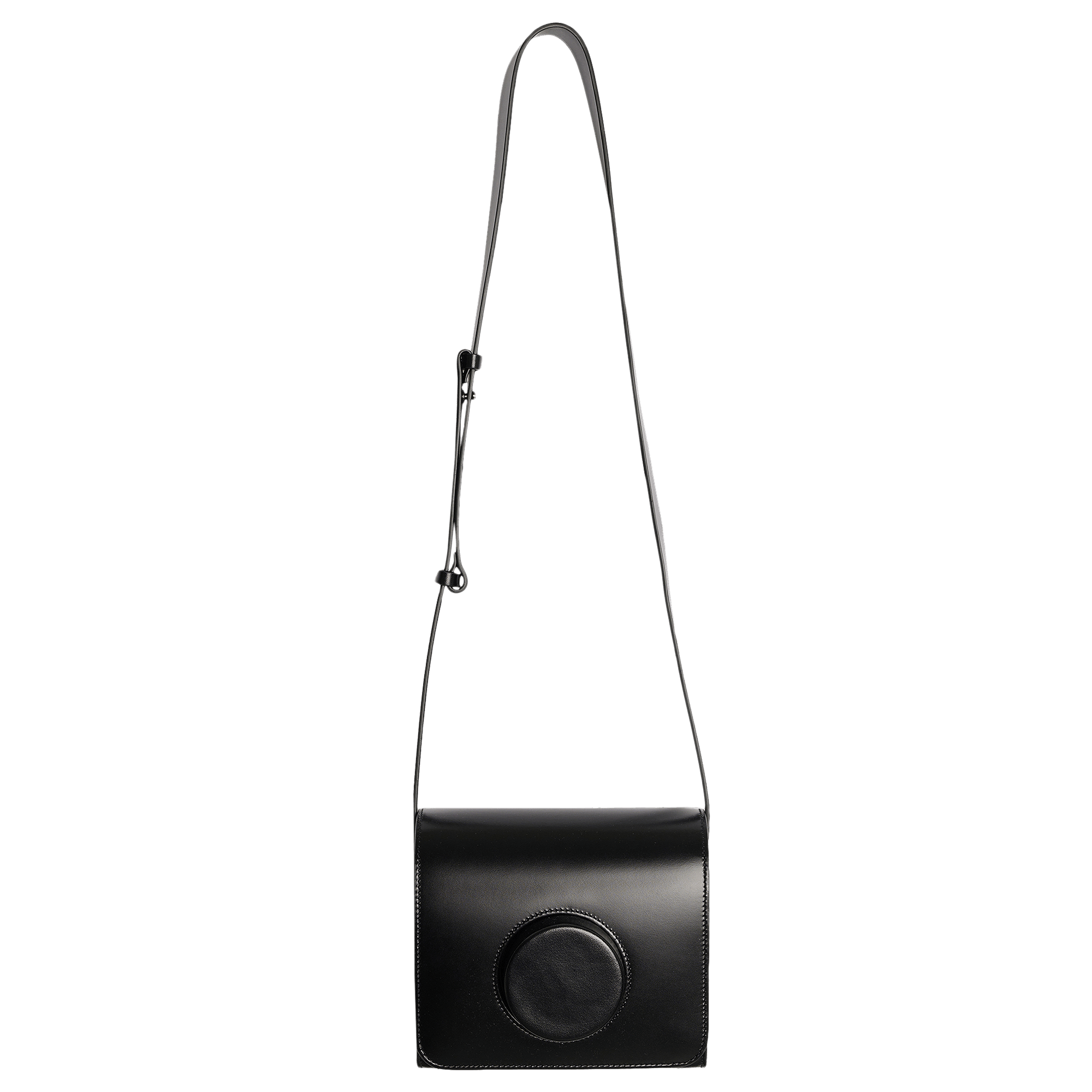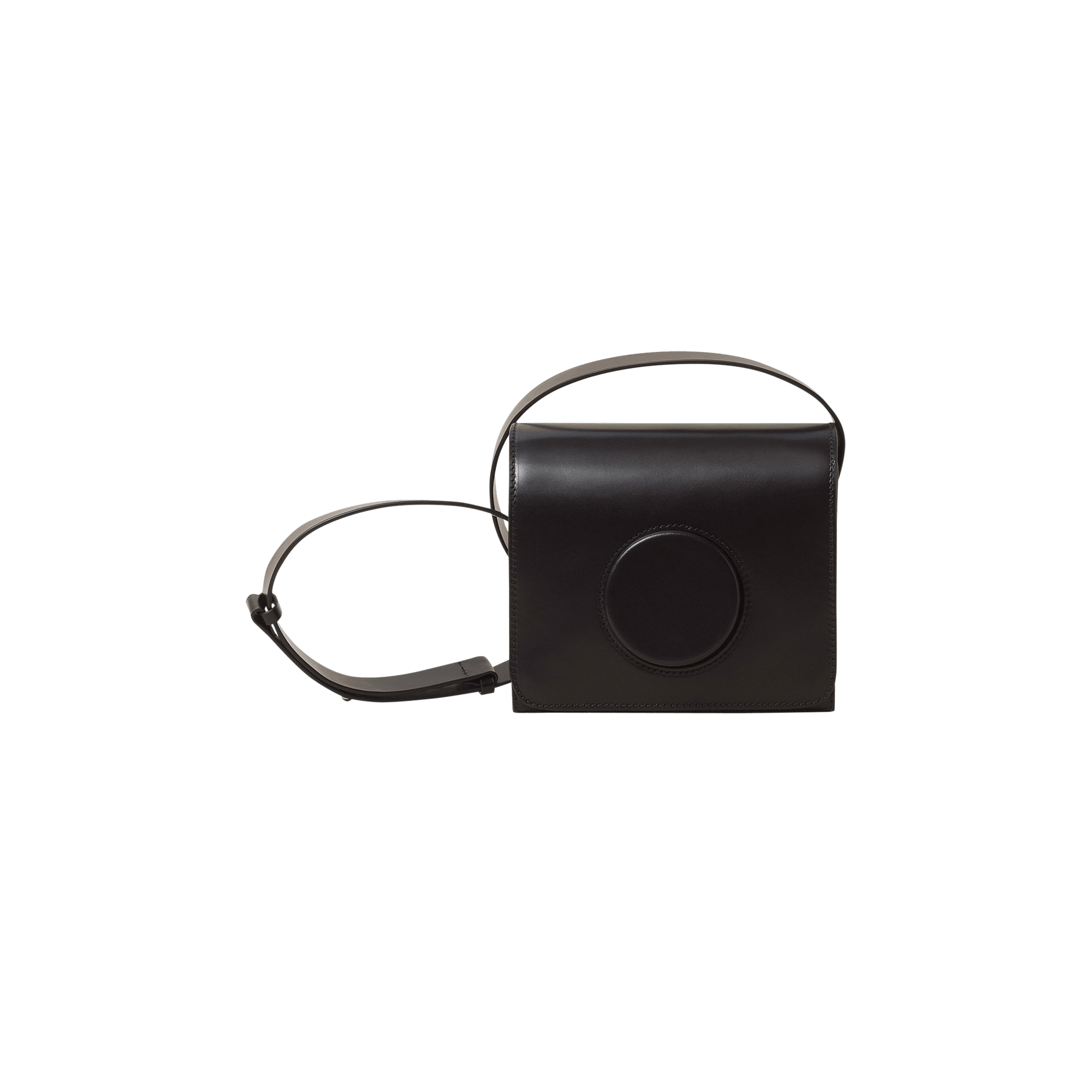
The Camera Bag is a lens-shaped shoulder bag closed by a concealed magnetic latch rather than a zipper or clasp, made in smooth leather with a cotton canvas lining and a long adjustable crossbody strap. It's offered in Mini and Medium sizes, with black sold as a year-round core color alongside rotating seasonal shades. Lemaire counts it as one of just three bags in its official "Iconic Collection."
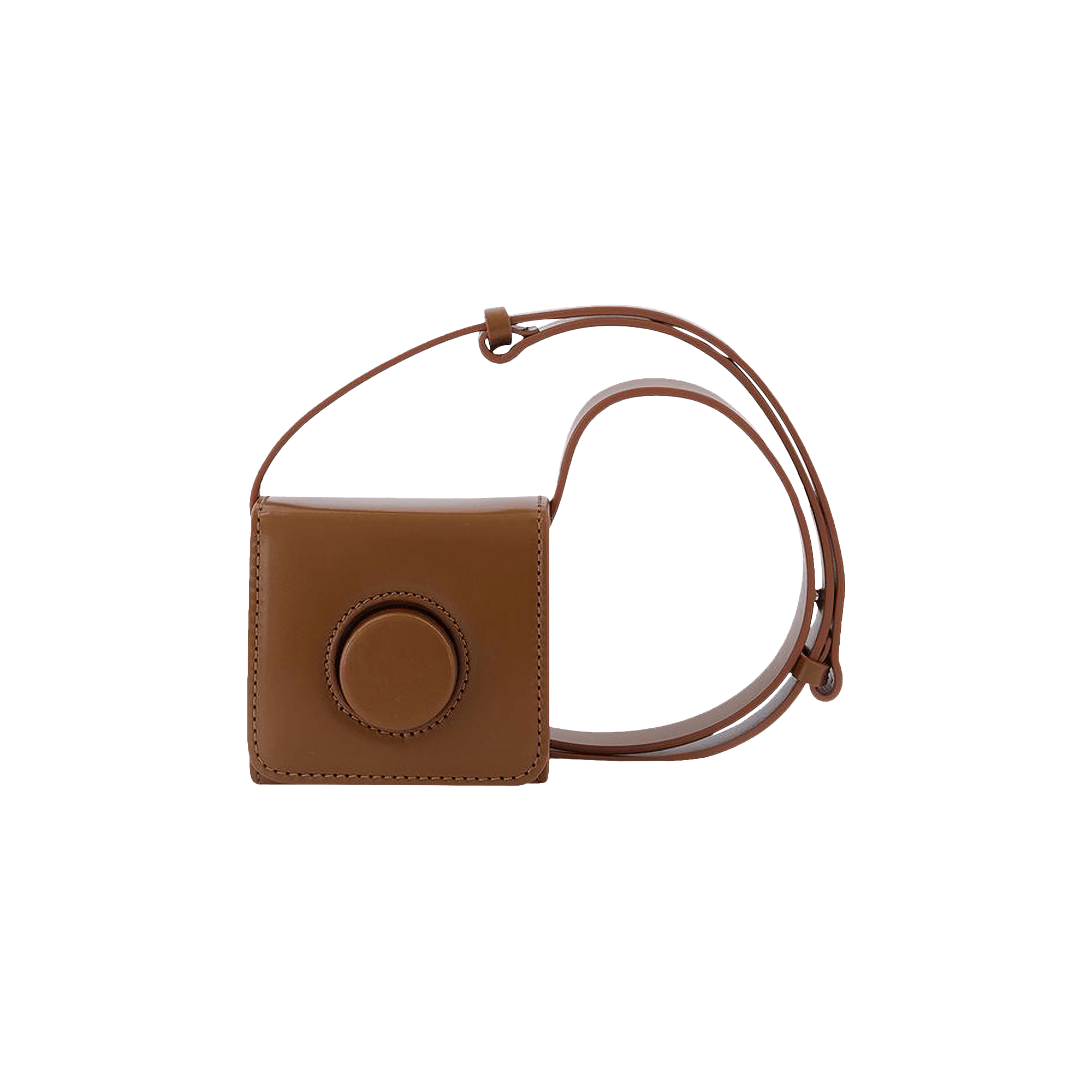
The smaller of the two sizes, worn crossbody or close to the neck. Fits only small essentials, the size favored for evening or minimal-carry wear.
The larger standard size, with room for daily essentials. The more practical of the two for everyday use, and the pricier of the two at retail and on resale.
The Mini Camera Bag retails around $1,195 and the larger standard Camera Bag around $1,810. Used examples on resale platforms like Vestiaire Collective, The RealReal, and Grailed typically trade at roughly 40-60% of original retail, putting realistic resale ranges at about $500-$750 for the Mini and $700-$1,050 for the larger size, a genuine size-driven spread, with the bigger bag holding more dollars even at a similar percentage discount. Core black examples tend to sit at the higher end of these ranges, while seasonal or brighter colorways depreciate faster once they're out of season. The takeaway: the Camera Bag is a buy-to-use piece rather than a value play, expect to recover under two-thirds of what you paid, and prioritize black or another core neutral if resale value matters to you.
The Camera Bag is one of just three styles in Lemaire's official "Iconic Collection," the small, tightly curated group of pieces the house treats as permanent, always-in-production designs rather than seasonal releases. It takes its name and lens-shaped silhouette from vintage camera cases, but the closure is entirely modern: a hand-molded leather "lens" panel conceals a magnet, so the bag opens and closes with no visible zip, clasp, or metal hardware at all. That absence of hardware is a direct expression of the design language Christophe Lemaire and Sarah-Linh Tran have built the house's accessories around since Tran joined as co-designer in 2011, bags read as soft, sculptural objects first, and only reveal their function on closer inspection.
The bag has been offered in two core sizes, a compact Mini and a larger standard/Medium version, cut from smooth calfskin leather with a cotton canvas lining and an adjustable, extra-long crossbody strap. Black has remained the one color Lemaire keeps in permanent rotation across both sizes, while shades like roasted pecan, dark chocolate, and seasonal brights cycle in and out each season. Alongside the Croissant Bag and the brand's Twisted trousers, the Camera Bag anchors the Iconic Collection as one of Lemaire's most consistently available, most repeatedly restocked designs.
Within fashion-insider circles, the Camera Bag is one of the pieces most often cited as proof of Lemaire's specific design fluency: the hand-molded lens closure and hidden magnet are frequently called out in reviews and styling round-ups as the kind of detail that rewards a second look rather than announcing itself from across a room. It shows up regularly in editorial styling and on the minimalist-fashion corners of Instagram and Pinterest, usually worn slung across the body or, on the Mini, close to the neck.
Unlike bags built around celebrity dressing or logo recognition, the Camera Bag's following skews toward people who already know Lemaire, stylists, editors, and shoppers at stockists like Dover Street Market, SSENSE, and 24S who are drawn to the same understated, hardware-free design language associated with labels like The Row and Toteme. It has never had a viral, sold-out-overnight moment the way the Croissant Bag has, but it has held a steady place as one of the house's most recognizable non-Croissant silhouettes.