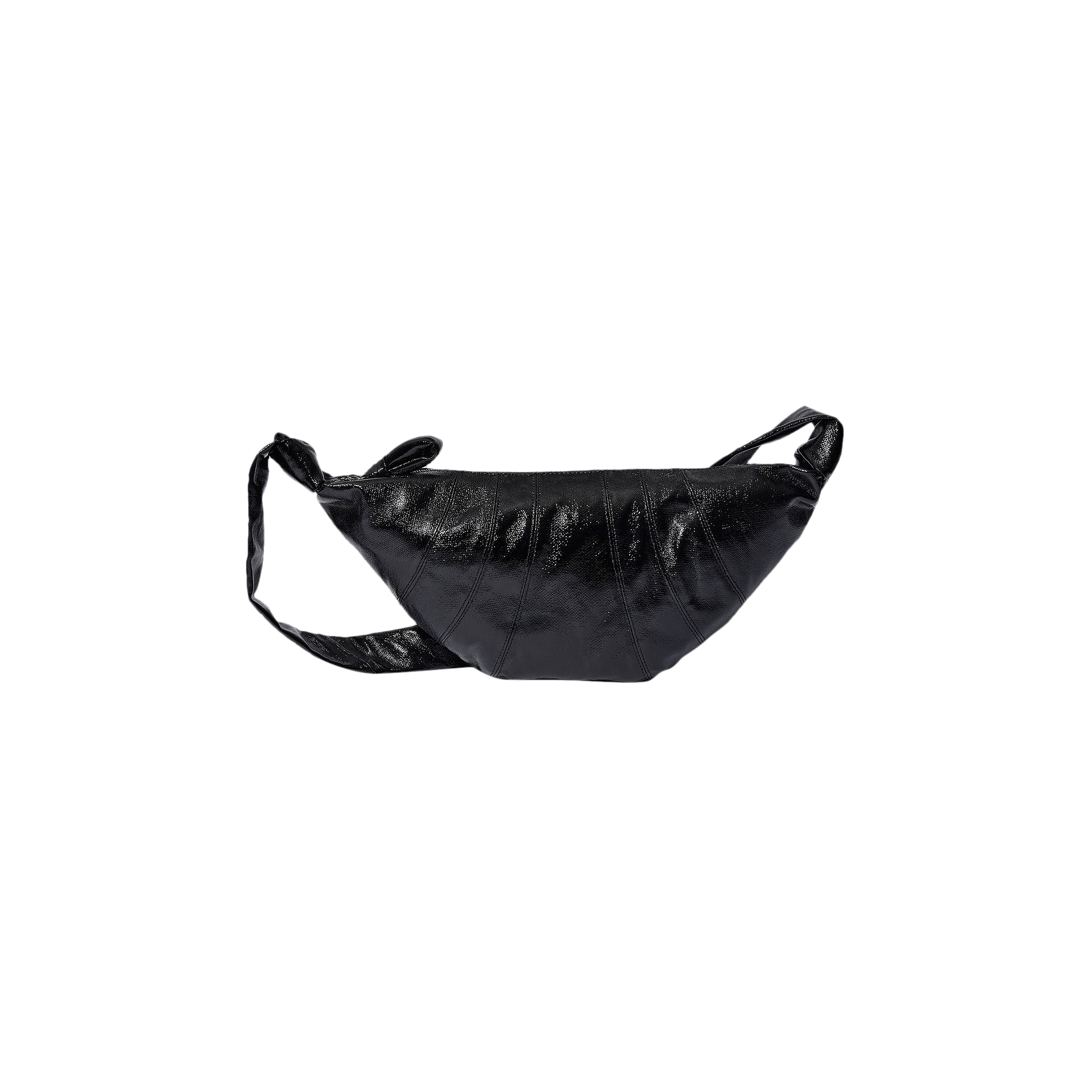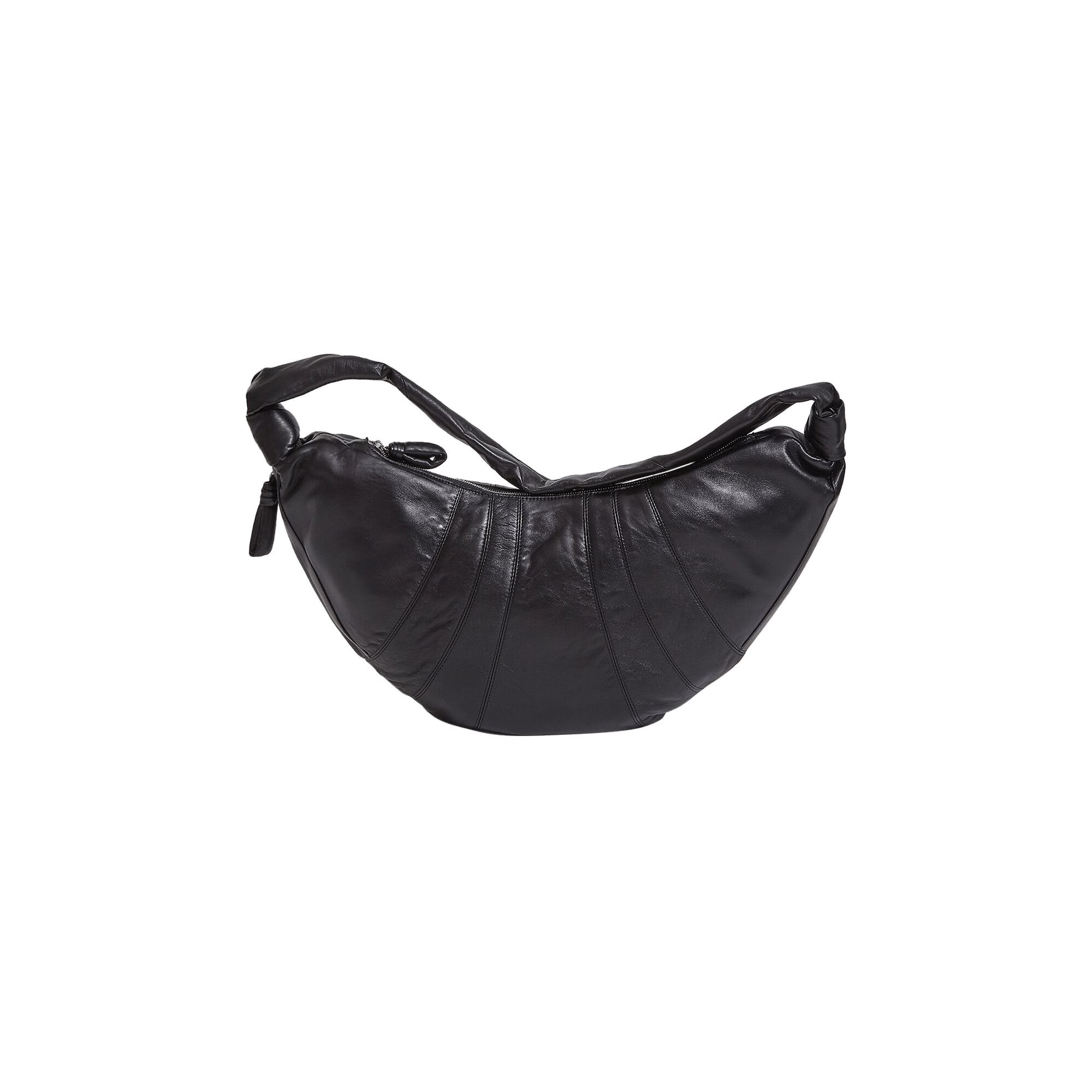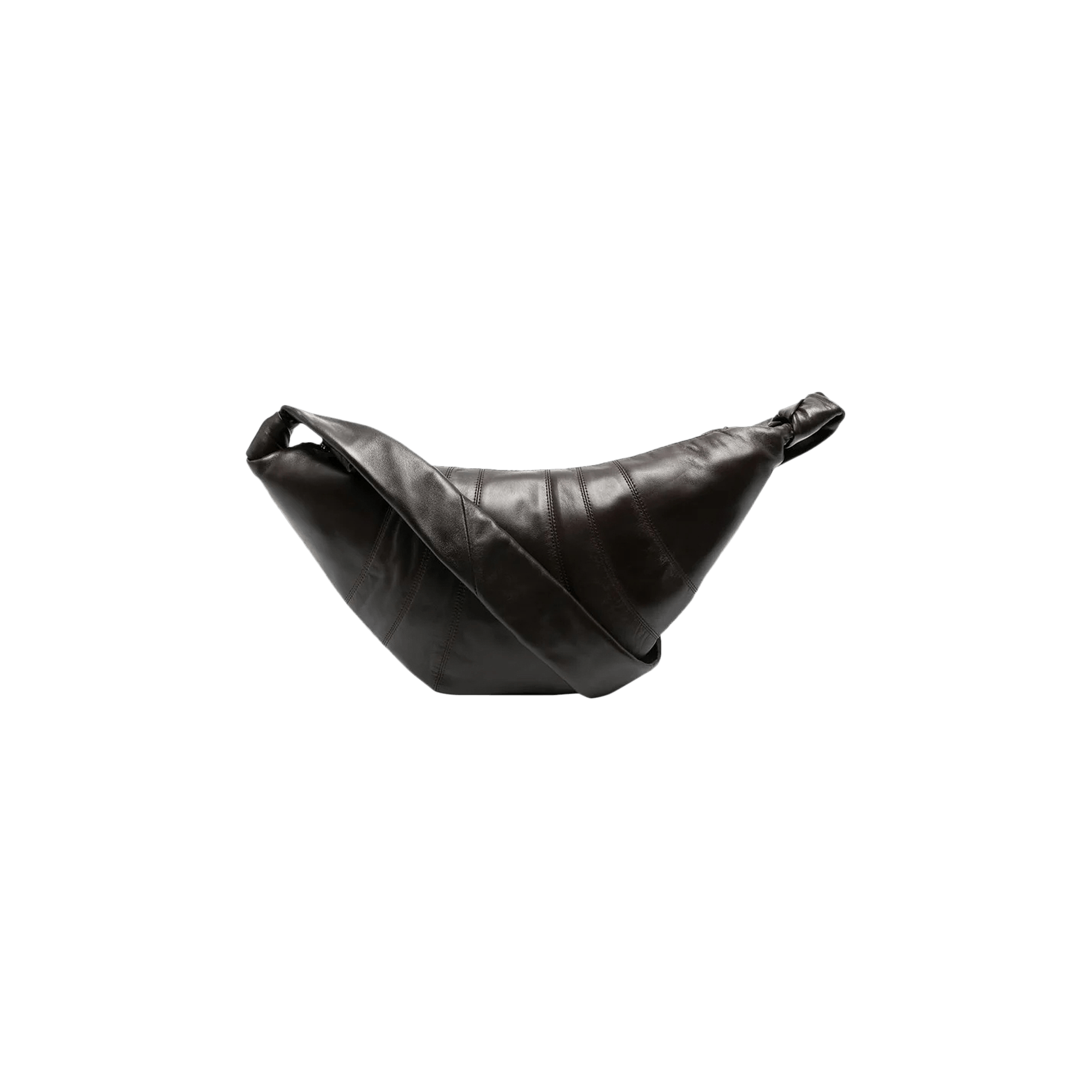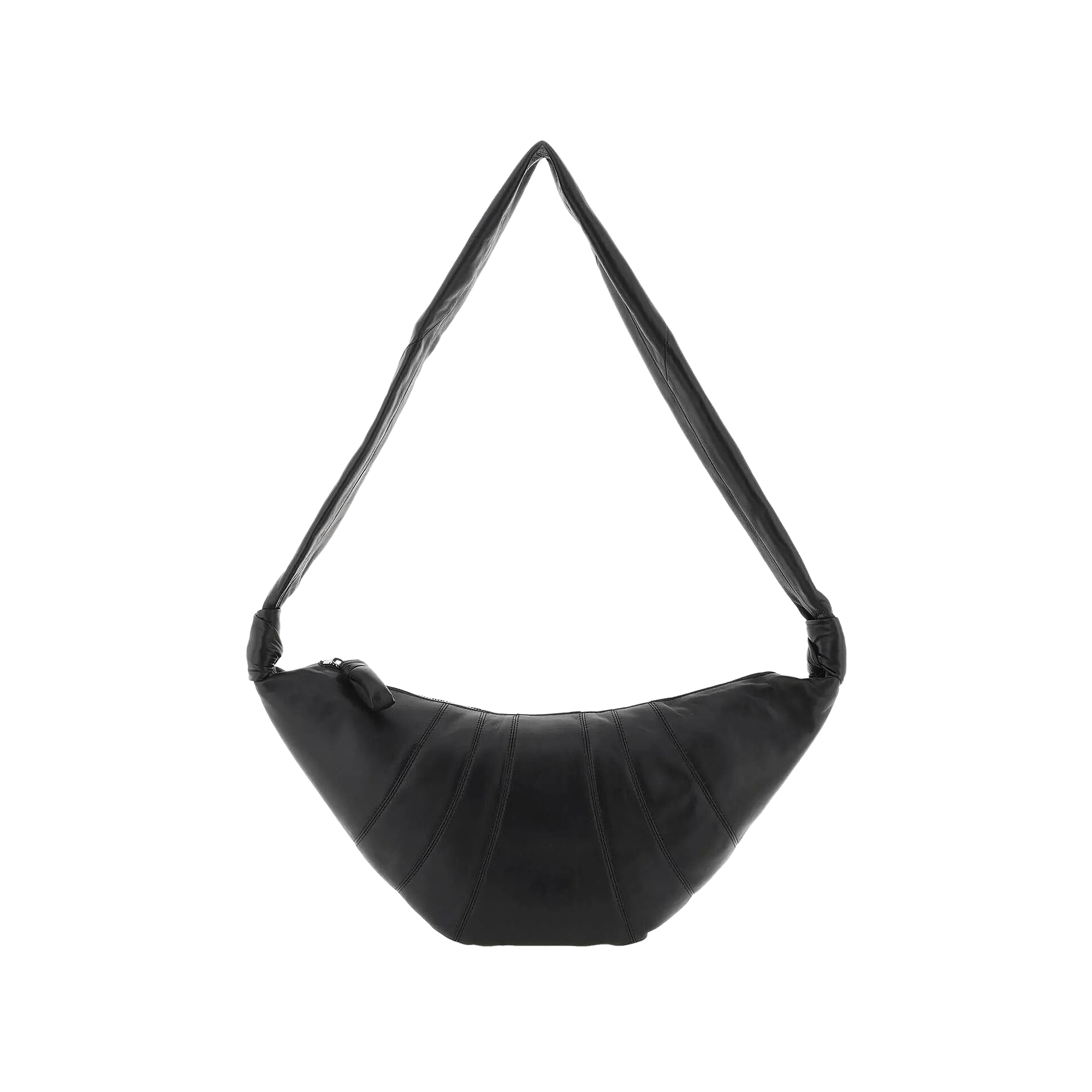
The Croissant Bag is Lemaire's signature crescent-shaped shoulder bag, finished with the brand's hallmark hand-tied knot strap and a quilted leather zipper pull in place of visible metal hardware. It comes in Small, Medium, and Large sizes across soft nappa leather, nubuck, and coated-cotton versions. No official launch date has been published, but it remains the house's most recognized and most imitated accessory.
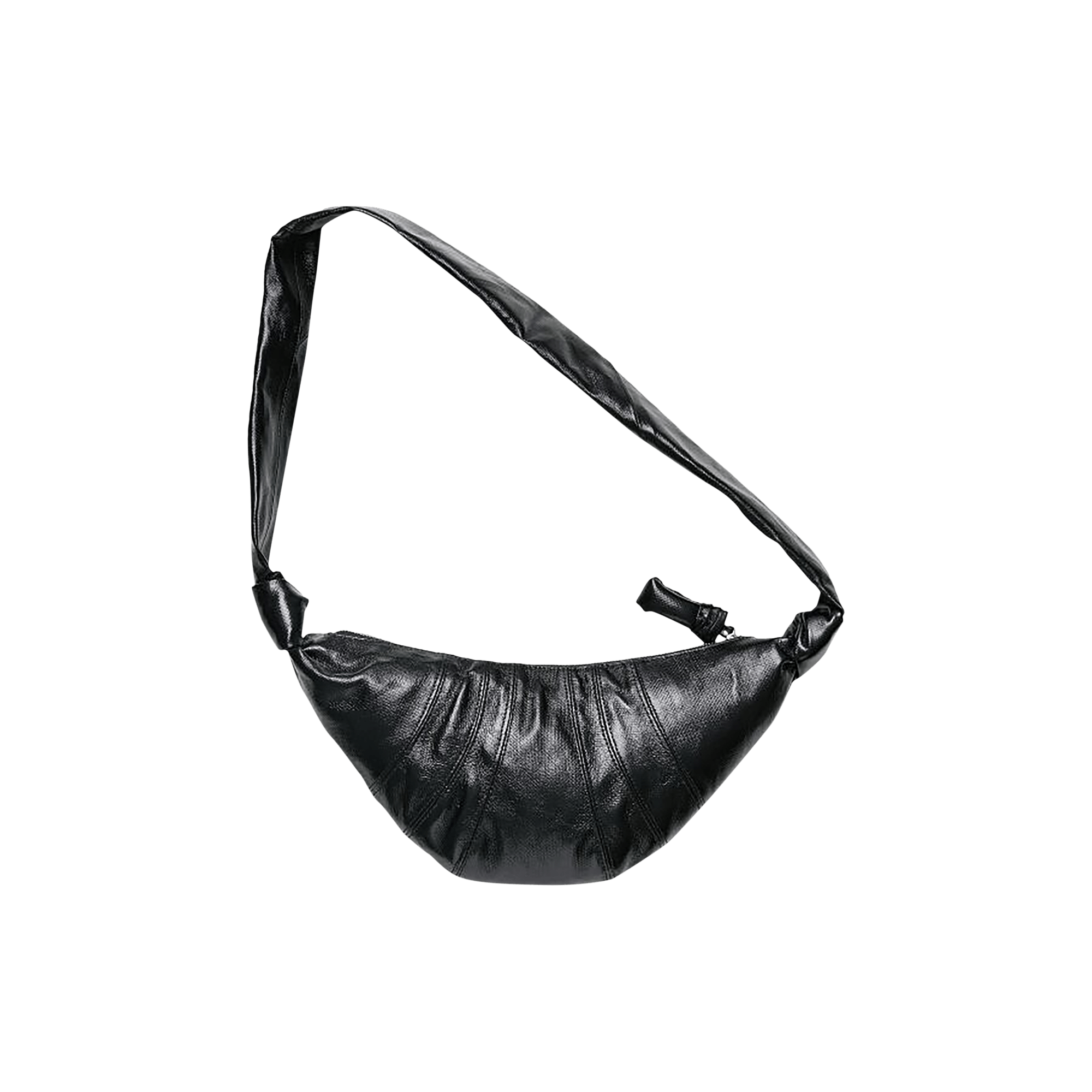
The smallest of the three sizes, retailing from about $940-$1,395 depending on material. Popular for evening and errand-running wear, worn crossbody or on the shoulder.
The best-selling size, retailing around $1,400-$1,445, and the most commonly reviewed and photographed on fashion blogs. Balances everyday capacity with the bag's soft, close silhouette.
The roomiest Croissant, retailing from about $1,365-$1,800 in standard leather, with enough capacity for daily work essentials. Popular with buyers who want the silhouette in a more practical, higher-capacity size.
The original and most common Croissant material, smooth, soft nappa leather in core colors like black and dark chocolate. The most liquid and highest-demand version on resale.
A napped, suede-like leather finish offered in select seasonal colorways. Slightly more delicate than nappa and more prone to visible wear, which factors into a lower resale ceiling.
A lighter-weight coated-cotton construction offered in select colors and collaborative editions like the Croissant FILT. Trades at a lower resale range than the leather versions.
Retail runs from roughly $940-$1,395 for a Small in soft nappa leather up to around $1,365-$1,800 for a Large, with Medium landing around $1,400-$1,445. Unlike most designer bags, the Croissant doesn't reliably depreciate: sought-after black nappa leather examples in Small and Medium routinely resell at or close to retail, and sold-out sizes or seasonal colorways occasionally trade above their original price, putting realistic resale at roughly $850-$1,900 depending on size and demand. Nubuck and coated-cotton versions trade lower, more typically 45-70% of retail, in line with how canvas and suede pieces generally resell versus leather. The takeaway: the Croissant in a core leather colorway is one of the few Lemaire bags, or contemporary-designer bags generally, that behaves like a legitimate near-retail resale asset rather than a depreciating purchase, which is a major reason it has become the brand's flagship.
The Croissant Bag emerged from the accessories line Christophe Lemaire and Sarah-Linh Tran built out as the house's silhouette-driven design language matured through the 2010s. Where much of the brand's ready-to-wear translated utilitarian tailoring into soft, unstructured shapes, the Croissant applied the same idea to a bag: a crescent built from curved, top-stitched leather panels designed to follow the body's own shape rather than hold a rigid form of its own. In place of the metal fittings usually found where a strap meets a bag body, Lemaire finished it with a hand-tied leather knot, now one of the most recognizable small details in the house's entire accessories range.
The bag was introduced across three sizes, Small, Medium, and Large, and, as demand grew, expanded from its original soft nappa leather into nubuck leather and coated cotton versions, along with occasional collaborative editions such as the Croissant FILT made with the French mesh-bag maker Filt. Its commercial impact on the label has been outsized: Lemaire's in-house sales grew roughly tenfold, from about €10 million in 2019 to more than €100 million in 2024, a rise widely credited in large part to the Croissant becoming the house's breakout, most-copied product.
The Croissant is the single Lemaire product most responsible for taking the brand beyond its existing customer base. It has been described repeatedly in fashion coverage as "the inevitable crescent-shaped bag" of Paris street style and cited alongside pieces from The Row and Toteme as a defining object of the 2020s quiet-luxury and normcore-adjacent moment, recognizable to anyone who follows fashion closely, essentially invisible to anyone who doesn't. That duality is a large part of its appeal: it signals taste without a logo.
Its following runs deep on fashion-editor Instagram accounts and minimalist-style blogs, where individual reviews of the Small versus Medium fit, or nappa versus nubuck, are common content. Specific colorways and sizes, the black nappa Small and Medium in particular, sell out at retail regularly, and the shape has been widely imitated by both fast-fashion and other designer labels, a form of flattery that fashion press has pointed to as further evidence of the bag's cultural reach.