Brands

Explore

Sell on alias
Amazona
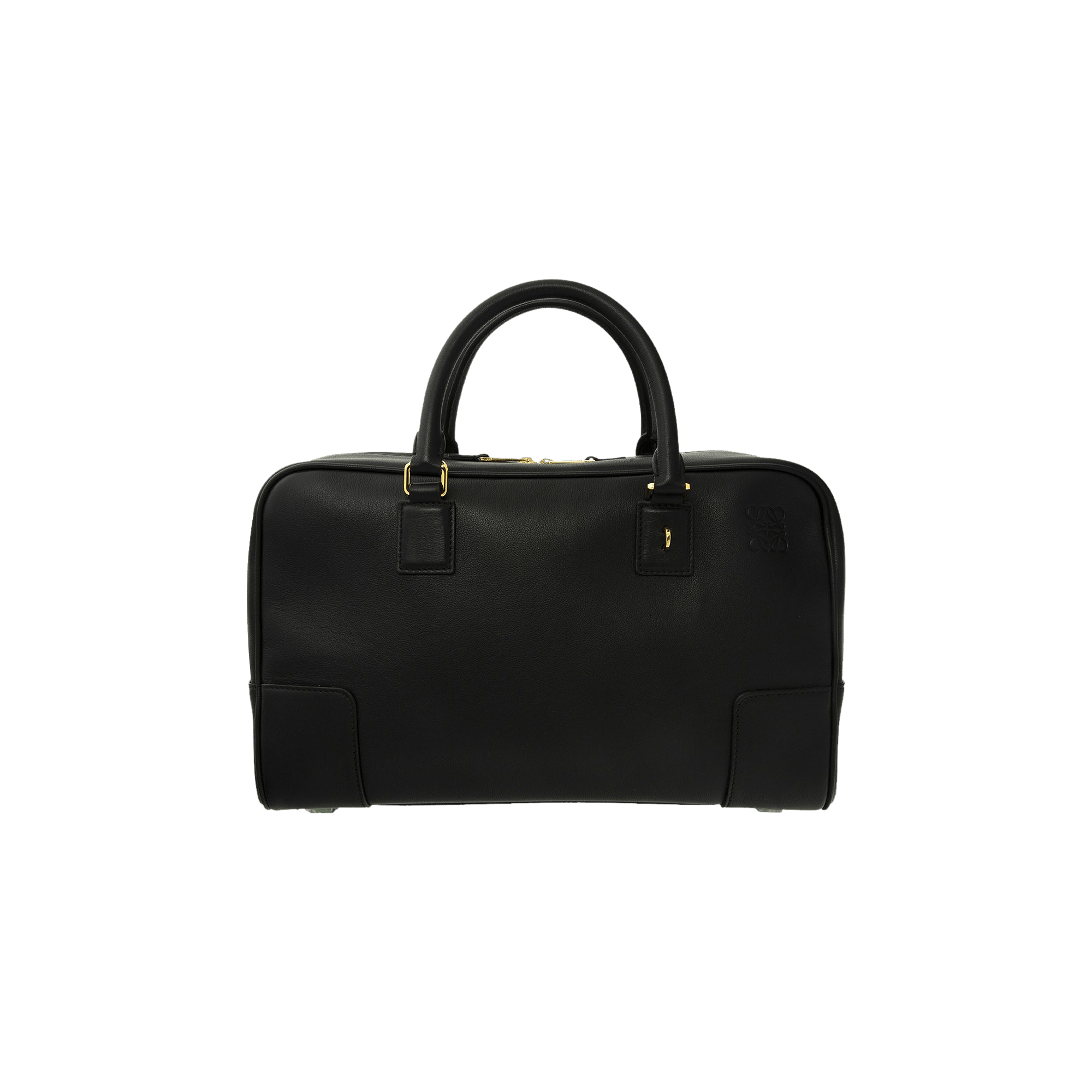
Anagram-engraved mini padlock with keyA signature miniature padlock hangs near the top handle.A detail resale buyers and authenticators check (Near top handle/zip), correct shape, finish, and placement here support a higher verified resale value.
Toron (twisted) single top handleA thick, twisted leather handle.A detail resale buyers and authenticators check (Top handle), correct shape, finish, and placement here support a higher verified resale value.
Double zip closure with calfskin pullsTwo parallel zip tracks, each with a leather pull.A detail resale buyers and authenticators check (Top zip pulls), correct shape, finish, and placement here support a higher verified resale value.
Reinforced corner detailingLeather-wrapped or reinforced corners protect the base edges.A detail resale buyers and authenticators check (Corners of bag), correct shape, finish, and placement here support a higher verified resale value.
Protective metal feetStuds on the underside.A detail resale buyers and authenticators check (Base), correct shape, finish, and placement here support a higher verified resale value.
Interior pocket for padlock keyA small dedicated pocket inside to store the key.A detail resale buyers and authenticators check (Interior), correct shape, finish, and placement here support a higher verified resale value.
Gold suede liningDistinctive interior lining color/material.A detail resale buyers and authenticators check (Interior, visible when open), correct shape, finish, and placement here support a higher verified resale value.

Amazona

Loewe
Stable
Resale
Resale value range
$500 to $1,500
MaterialNappa calfskin (also offered in Anagram jacquard canvas)
HardwareAnagram-engraved mini padlock and key
Introduced1975
Categorytop-handle, tote

The Amazona was designed by Dario Rossi in 1975 and remains Loewe's oldest continuously referenced silhouette. Its structured, boxy top-handle shape is finished with the house's signature twisted Toron handle and an Anagram-engraved mini padlock. Loewe revived the style for its 180th anniversary campaign, reaffirming its place in the brand's archive.
Amazona Sizes

Amazona Amazona 19 Square
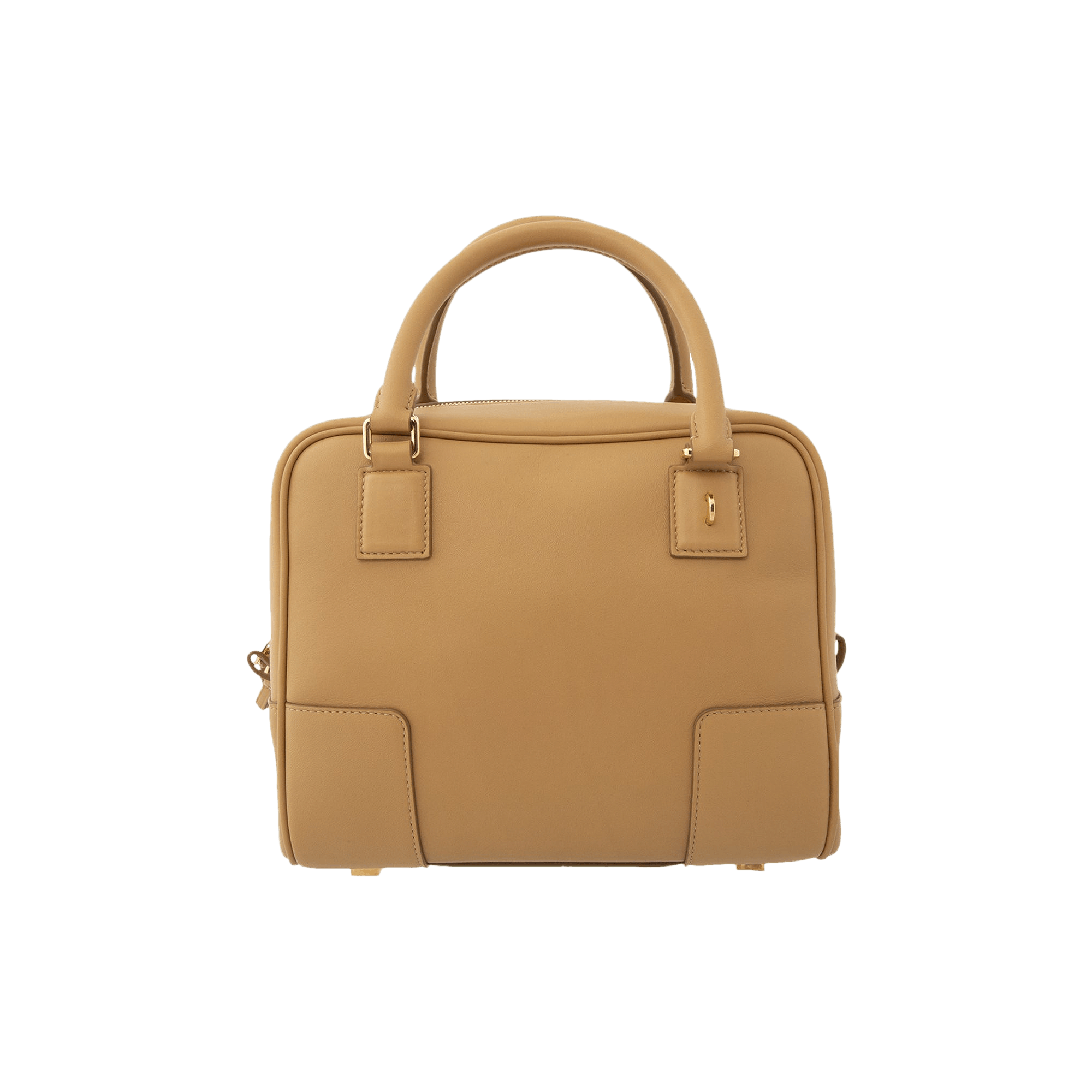
Amazona 19 Square
Compact Top-Handle

The smallest of the modern Amazona sizes, reintroduced in 2021. A compact top-handle that trades some of the original 1975 capacity for a more everyday-friendly scale.

$450 – $850
Amazona 23
Mid-Size
9.25" x 6" x 3"

Added to the lineup as an in-between option, striking a balance between the compact 19 Square and the larger 28. The most versatile size for daily use.

$600 – $1,100
Amazona Amazona 28
Amazona 28
Original Silhouette
11.25" x 7.25" x 4.5"

The size closest to Dario Rossi's 1975 original, and the version most associated with the bag's 2000s and 2020s revivals. The most recognizable and highest-demand Amazona size on the resale market.

$900 – $1,600

Amazona Materials

Nappa Calfskin
Smooth Leather

The bag's standard material since 1975, though the earliest examples were made in gold suede. Nappa calfskin holds its structure and shows wear more gracefully than canvas, supporting stronger resale prices.

$700 – $1,600
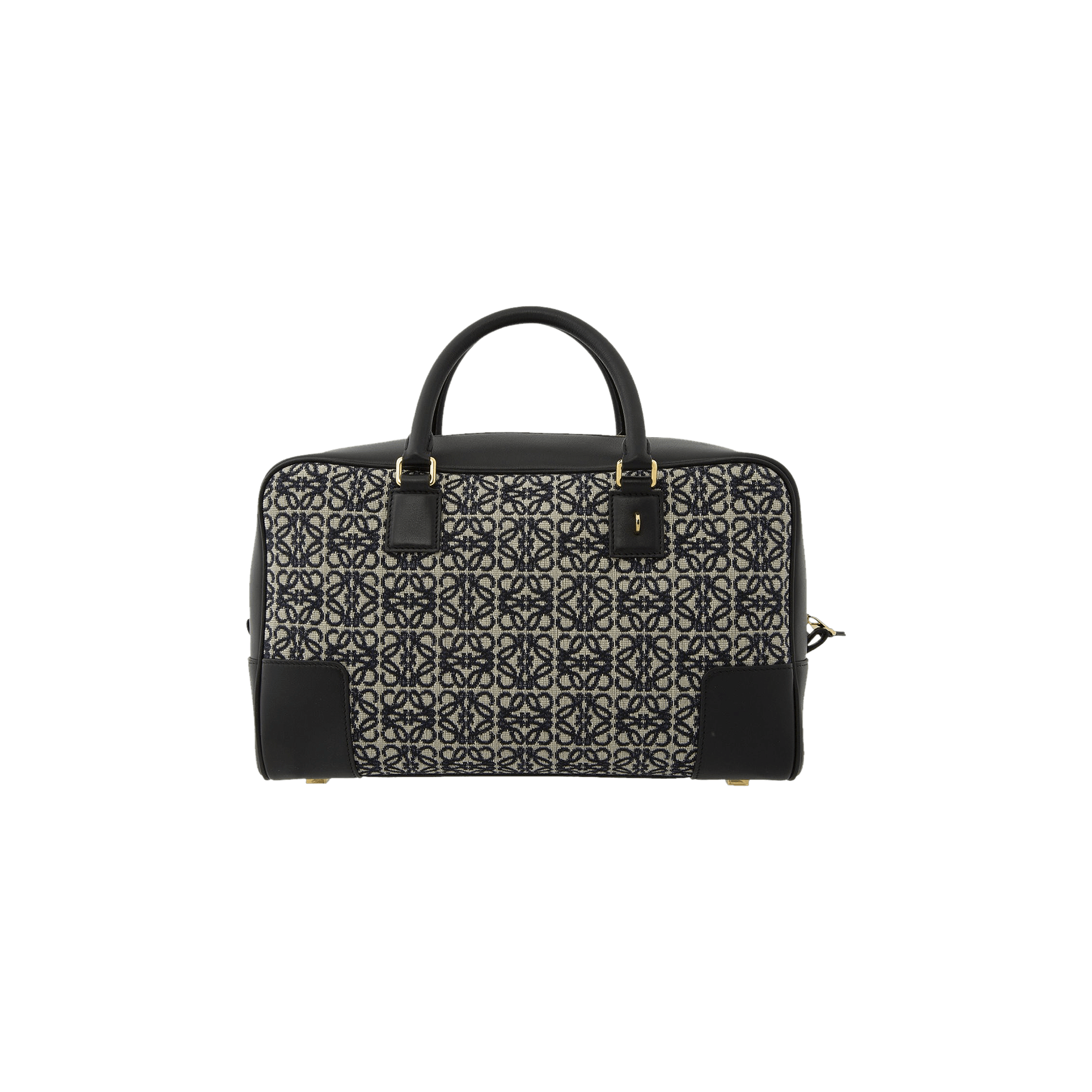
Anagram Jacquard Canvas
Woven Canvas

A textile alternative introduced alongside the 2021 relaunch, patterned with Loewe's Anagram motif. Less durable than calfskin and generally the lower-value option on the resale market.

$450 – $1,000

Is the Amazona Worth Buying?

The Amazona resells modestly compared with Loewe's Anderson-era bags, generally in the $500-$1,600 range depending on size, material, and condition, well below the $2,990-$3,450 current retail price of the Nappa and jacquard 28. Because it spent years out of regular production between its original run and its 2021 relaunch, older vintage examples trade at a discount tied to condition and hardware wear, while newer 19 Square, 23, and 28 pieces in Nappa calfskin hold value best, retaining roughly 45-55% of retail in good condition. The 2026 Amazona 180 anniversary reinterpretation could lift near-term resale interest the way archive relaunches often do, but as a heritage piece rather than an of-the-moment hype bag, the Amazona is best bought for its design history and long-term collectibility rather than short-term appreciation.

History of the Amazona

Designed by Italian-born Loewe collaborator Dario Rossi and launched in 1975, the Amazona takes its name from the warrior women of Greek mythology. It arrived as Spain was opening up economically and more women were entering the workforce, and Rossi conceived it explicitly as a softened alternative to the rigid businessman's briefcase: structured enough to look purposeful, but built without a rigid base so it could slouch and mold to the body over time. The earliest Amazonas were made in gold suede rather than the smooth calfskin most associated with the bag today, finished with a twisted Toron handle, reinforced corners, and a working mini padlock and key that doubled as both an anti-theft device and a signature identifier.

The Amazona became one of Loewe's defining silhouettes through the late 20th century, worn by style figures including Kate Moss, but it drifted out of the active lineup as the house's design language shifted in the 2000s and early 2010s under successive creative directors. Loewe brought it back for its Fall/Winter 2021 runway in two new proportions, the compact Amazona 19 Square and the larger Amazona 28, later adding the in-between Amazona 23. In 2026, to mark Loewe's 180th anniversary, incoming co-creative directors Jack McCollough and Lazaro Hernandez reinterpreted the style again as the 'Amazona 180,' softening its silhouette while preserving the padlock and Toron handle that have anchored the design for fifty years -- making it the house's oldest continuously referenced bag shape.

Cultural Significance

The Amazona's cultural footprint stretches across two distinct eras. In its original run it became closely associated with a generation of 1970s and '80s working women who wanted a structured bag that didn't look like a briefcase, and it was carried by style figures including Kate Moss during Loewe's broader visibility push. Decades later, its 2021 revival was framed explicitly around nostalgia: fashion press described it as the bag once reached for by 'iconic It girls,' tying the relaunch to the same 2000s-and-'90s revival wave that brought back other archive shapes across the industry.

Because the Amazona predates Jonathan Anderson's tenure by nearly four decades, it occupies a different niche than Anderson-era hits like the Puzzle or Hammock: it's Loewe's heritage flex rather than its hype item. Its selection as the face of the house's 180th-anniversary campaign in 2026 -- the bag chosen to represent Loewe's full history in a single object -- underscores that positioning, and has renewed interest among collectors who prize archival, house-history pieces over trend-driven ones.

FAQ

How much is a Loewe Amazona worth?
A pre-owned Loewe Amazona typically resells for $500-$1,600, depending on size (19 Square, 23, or 28), material, and condition. Nappa calfskin examples in the larger 28 size hold value best; canvas jacquard versions trade lower.
What sizes does the Loewe Amazona come in?
The current lineup includes the compact Amazona 19 Square, the mid-size Amazona 23, and the Amazona 28, which is closest to the bag's original 1975 proportions. It's also offered in smooth Nappa calfskin or Anagram jacquard canvas.
Is the Loewe Amazona still in production?
Yes. After years out of the regular lineup, Loewe revived the Amazona for its Fall/Winter 2021 collection and expanded it further for the brand's 180th-anniversary collection in 2026.
Is the Loewe Amazona a good investment?
It's a better buy for collectors of house history than for short-term resale gains. It typically resells well below current retail, though its status as Loewe's oldest continuously referenced silhouette gives it long-term collectibility that trend-driven bags lack.
How does the Amazona compare to the Loewe Puzzle?
The Amazona predates the Puzzle by nearly 40 years and represents Loewe's classic, structured leather-goods heritage, while the Puzzle (launched in 2014) is Jonathan Anderson's geometric, design-forward reinvention of the brand. The Puzzle commands significantly stronger resale demand and appreciation than the Amazona.