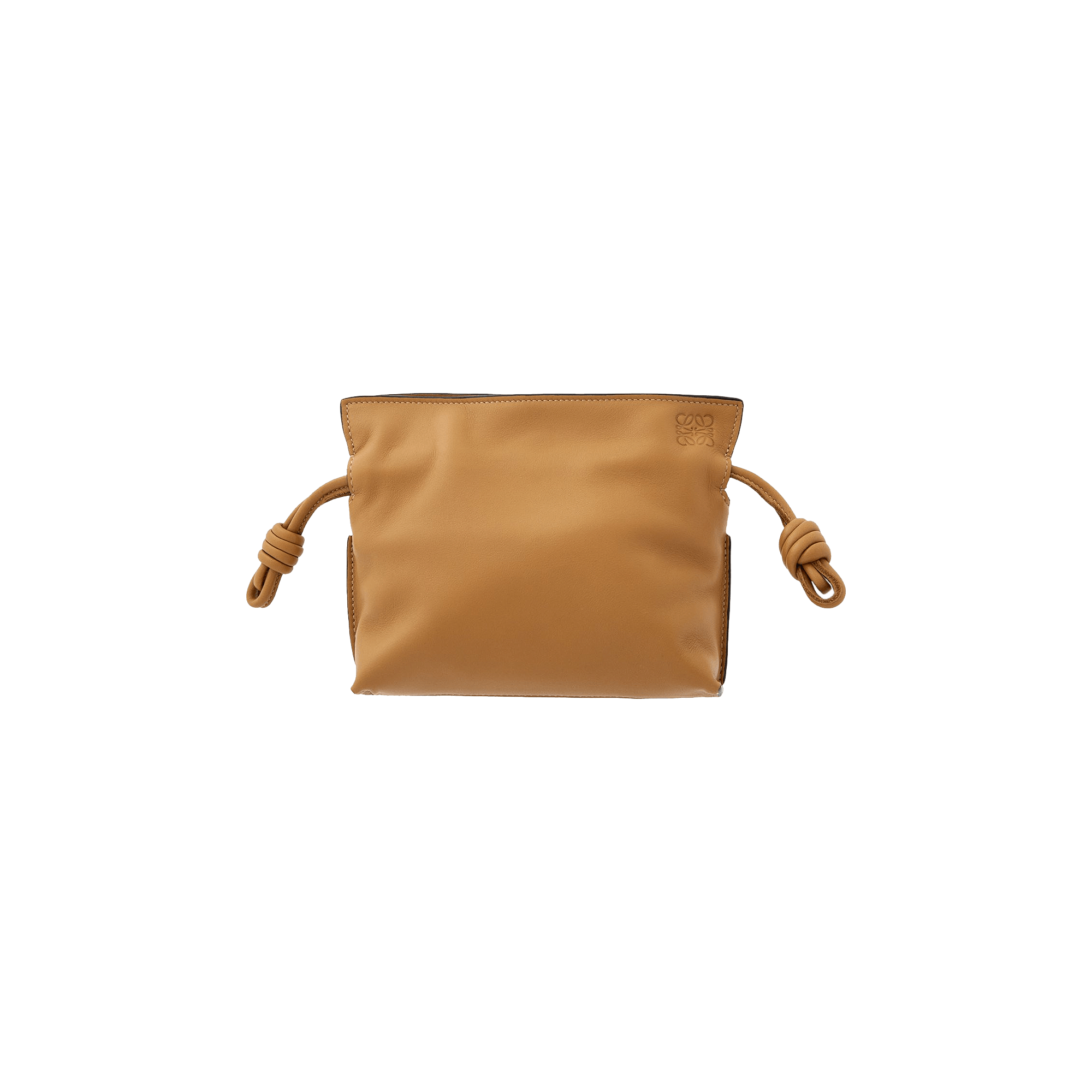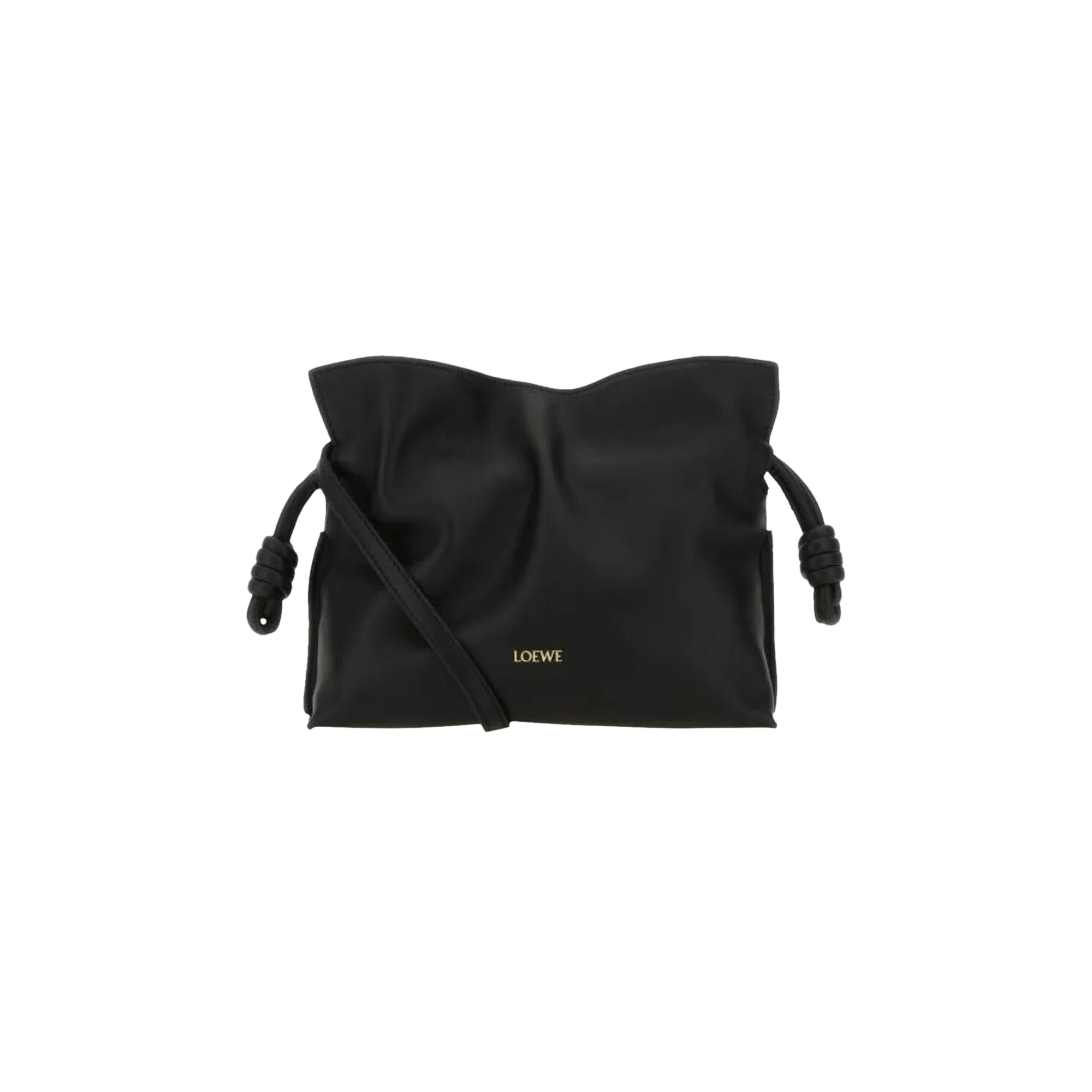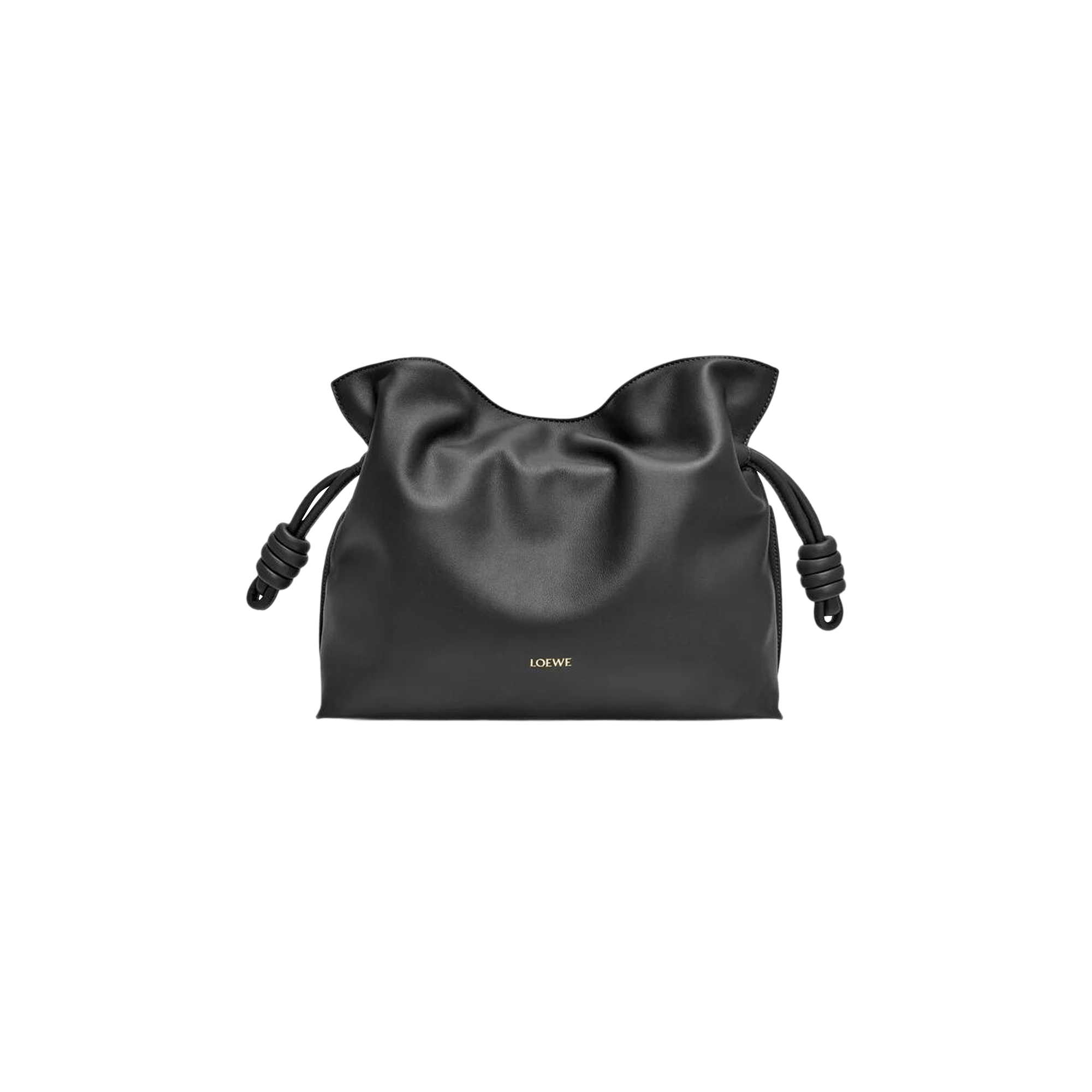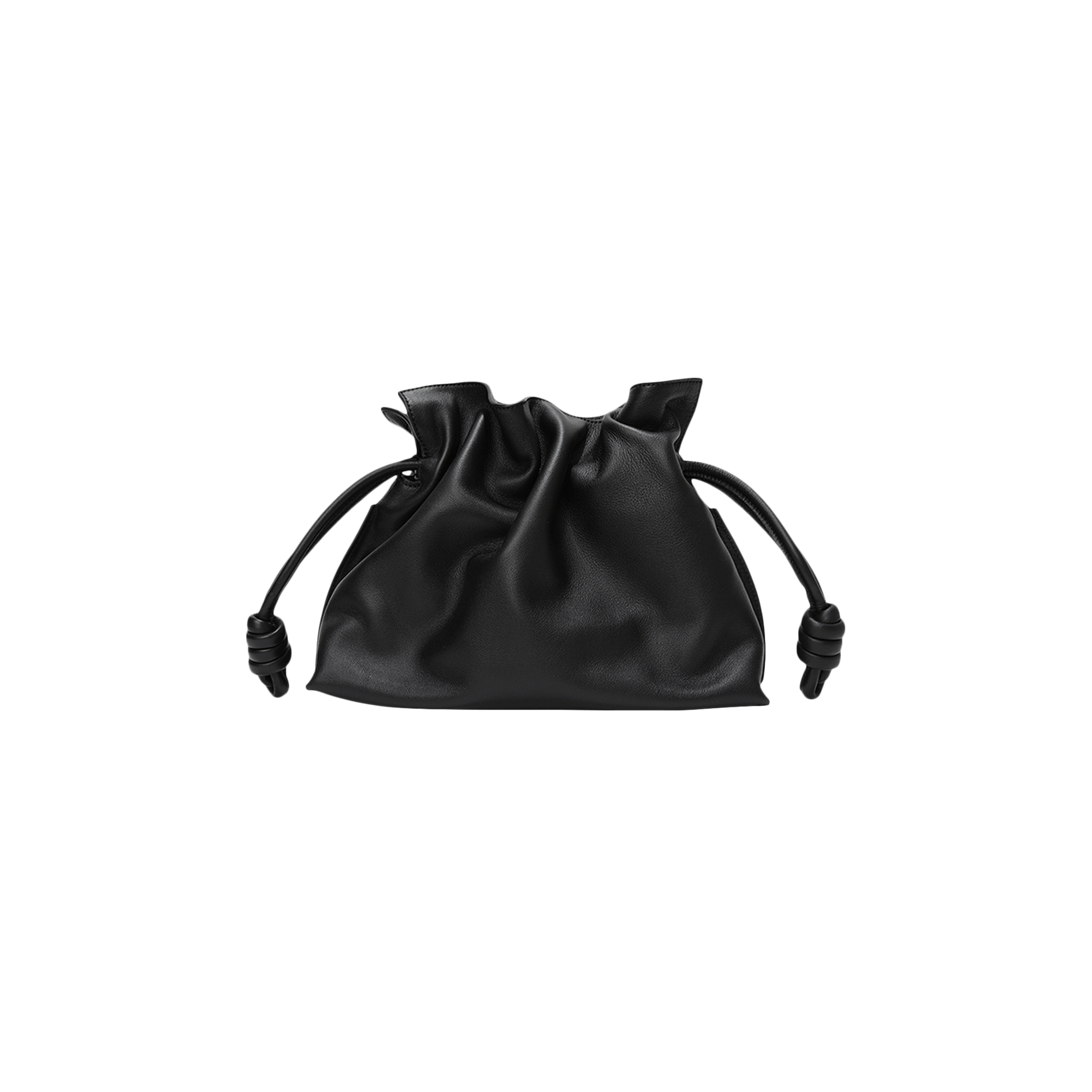
Drawstring closures with coiled knot pullsTwo side drawstrings each finished in a distinctive coiled knot.A detail resale buyers and authenticators check (Each side, at the knot), correct shape, finish, and placement here support a higher verified resale value.
Cinched, ruffled gathered topWhen drawstrings are pulled, the leather ruffles like flamenco-dress fabric.A detail resale buyers and authenticators check (Top opening, gathered leather), correct shape, finish, and placement here support a higher verified resale value.
Embossed Anagram logoLoewe's logo embossed on the front face.A detail resale buyers and authenticators check (Front panel), correct shape, finish, and placement here support a higher verified resale value.
Detachable adjustable strapRemovable strap for versatile carry.A detail resale buyers and authenticators check (Strap and its clip), correct shape, finish, and placement here support a higher verified resale value.
Discreet magnetic popper closureA hidden magnetic snap works alongside the drawstrings.A detail resale buyers and authenticators check (Under the flap/gather, at the popper), correct shape, finish, and placement here support a higher verified resale value.
Suede liningSoft suede used for the interior.A detail resale buyers and authenticators check (Interior, visible when opened), correct shape, finish, and placement here support a higher verified resale value.
Hand-painted edgesLeather edges finished with hand-applied paint.A detail resale buyers and authenticators check (Edge of leather panel), correct shape, finish, and placement here support a higher verified resale value.
Flamenco Bag
Loewe
Stable
MaterialCalfskin leather with hand-painted edges
HardwareConcealed magnetic popper with coiled leather knot pulls
Introduced2010
Categoryclutch, crossbody
The Flamenco is one of Loewe's rare archive revivals, originally created in the 1970s-80s, relaunched by Stuart Vevers in 2010, and redesigned again by Jonathan Anderson in 2015. Pulling its drawstrings gathers the leather into a ruffled, flamenco-dress-like silhouette. Few Loewe styles carry a design narrative spanning three creative directors.