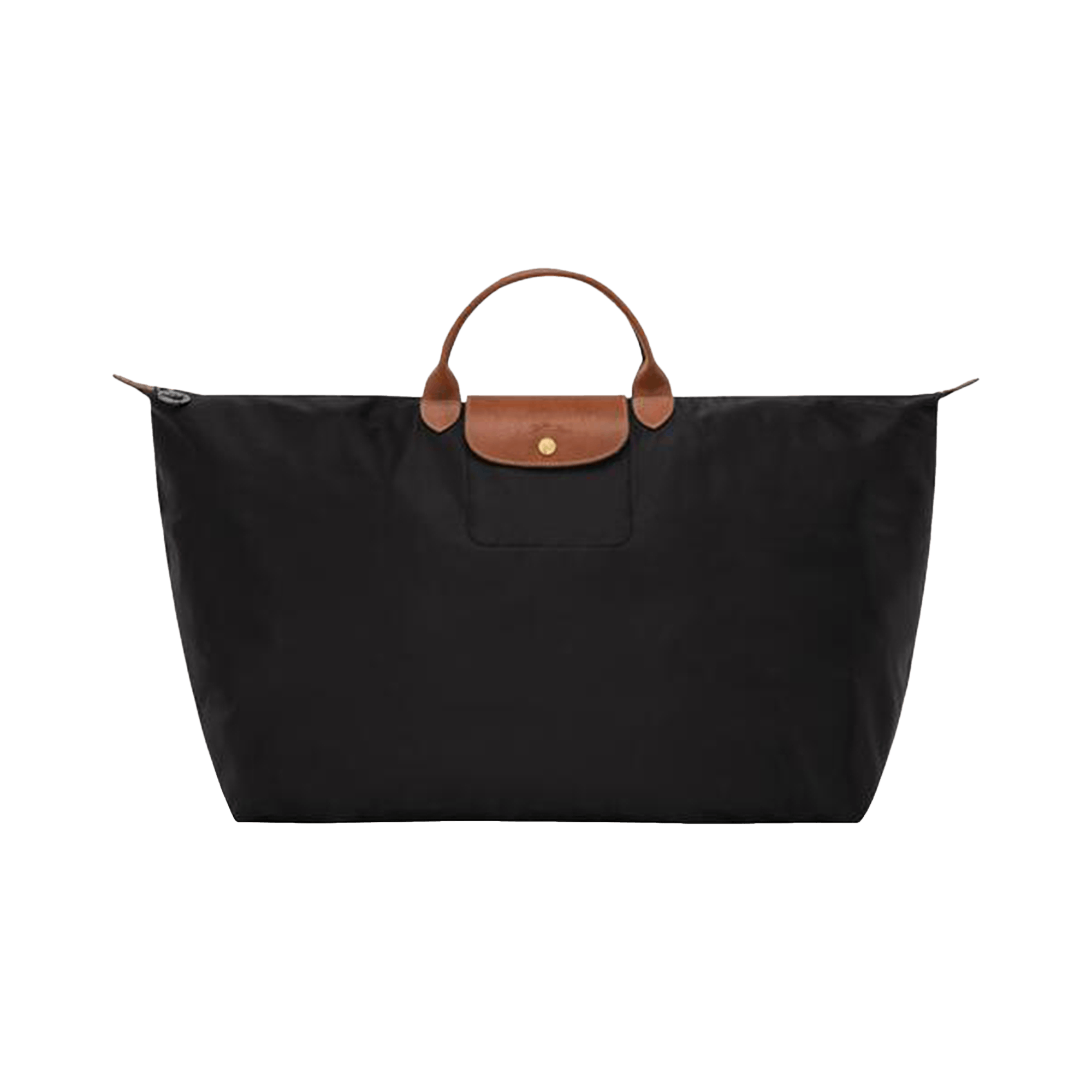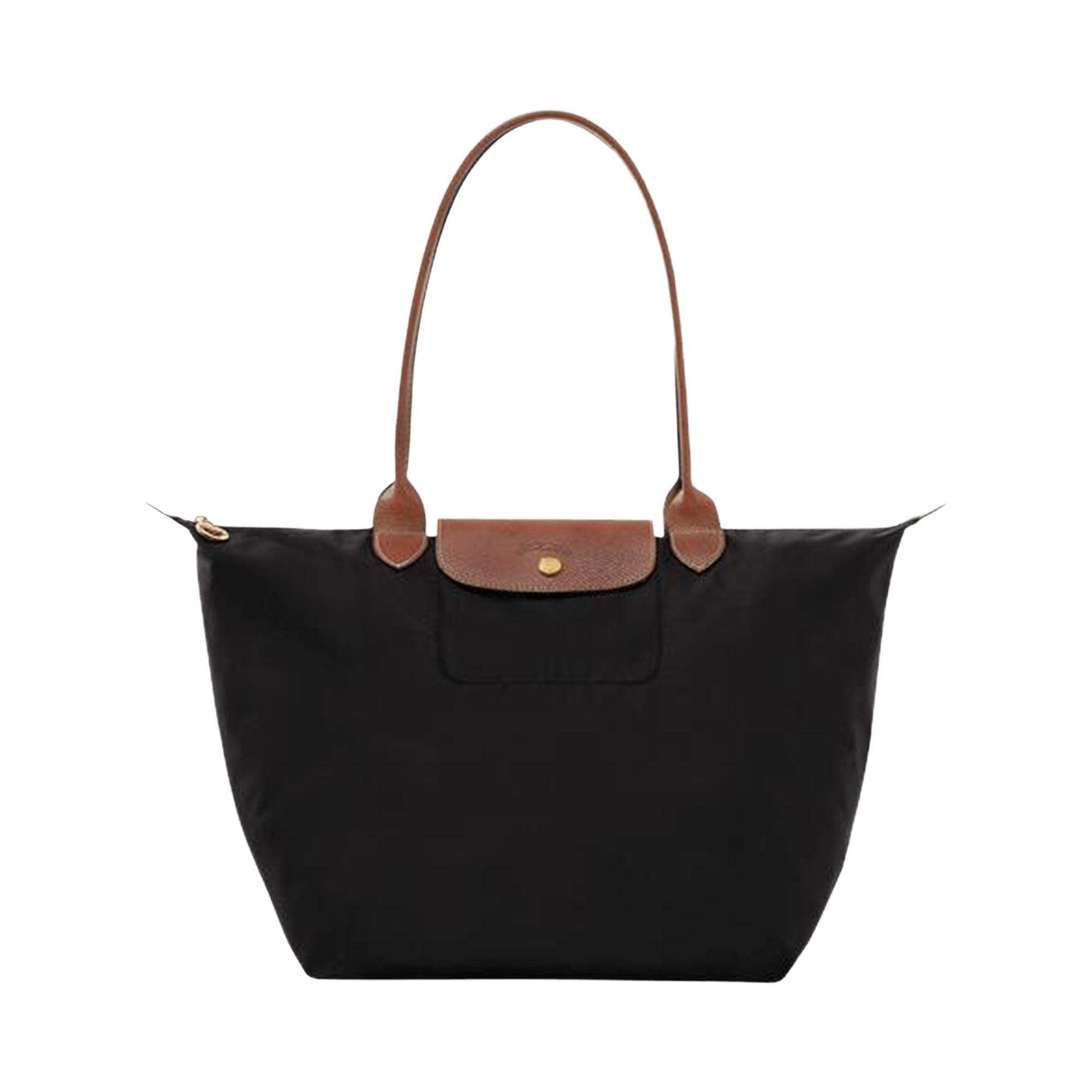
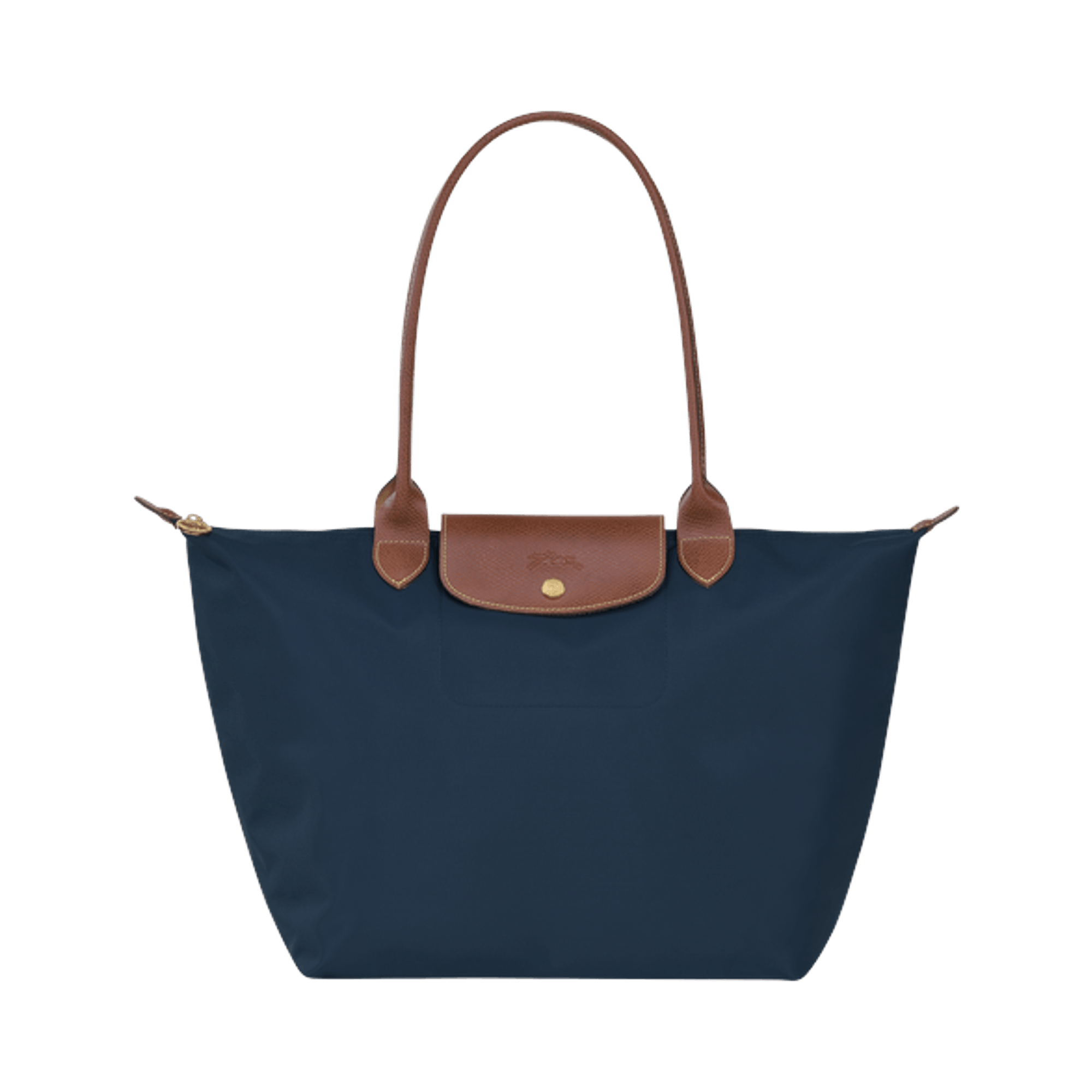
Designed by Philippe Cassegrain and launched in 1993, the Le Pliage is Longchamp's foundational nylon tote: a lightweight, foldable canvas body trimmed in Russian leather with a signature snap-flap closure over a top zip. More than 30 million have sold since launch, making it one of the best-selling handbags in the world and a multi-generational wardrobe staple.
The most compact standard Le Pliage, sized as a top-handle handbag rather than a full tote. Holds a wallet, phone, and small everyday essentials; too small for most laptops.
The best-selling everyday size: roomy enough for a light work or school day, still compact enough to wear on the shoulder without feeling oversized.
Longchamp's reference size for Le Pliage and the version most often used in the brand's own product photography. Fits a 13-inch laptop, making it the standard work-and-travel pick.
An oversized weekender/duffel version of the Le Pliage silhouette, built for overnight trips and gate-checked flights rather than everyday carry.
The same nylon-and-leather-trim construction is also produced as a backpack, crossbody bag, and bucket bag, giving the Le Pliage design a broader range of carry styles beyond the classic tote.
The nylon Le Pliage is not a resale investment, and buyers should go in with that expectation: at $104–$170 retail, a used one in good condition typically resells for $35–$85, or roughly 25–45% of original retail depending on size, color, and how worn the leather trim looks. That retention rate is low compared to true luxury leather goods, and it's structural rather than a sign the bag is unwanted, Longchamp manufactures the Original continuously in dozens of colorways, so a resale buyer can almost always just order the same bag new, which caps what anyone will pay secondhand for a used one. Neutral, frequently-restocked colors like black and navy tend to sell fastest but not for the most money; harder-to-find seasonal or limited colorways can occasionally clear closer to the top of the range. The realistic way to think about Le Pliage is as a well-made, low-cost-of-ownership bag to buy for years of actual use, not to flip, expect to recover perhaps a third to just under half of what you paid, and treat anything above that as a pleasant surprise. The exceptions that prove the rule are the Jeremy Scott print collaborations, which can hold or exceed retail once discontinued, and the leather Le Pliage Cuir and Xtra lines, which retain value slightly better in dollar terms simply because their retail price starts so much higher.
Philippe Cassegrain, son of Longchamp's founder, designed the Le Pliage in 1993 after a trip to Japan left him fascinated by the art of origami, he wanted a bag that could fold flat like paper when not in use, then spring back into a full-size tote. The result paired a lightweight nylon canvas body with Russian leather trim, rolled leather handles, and a snap-flap closure over a top zip, all built to be genuinely foldable for travel and storage. It was a radical departure from the structured leather goods Longchamp had built its name on since 1948, but the timing was right: shoppers in the early 1990s wanted something functional, water-resistant, and inexpensive enough to use hard, and Le Pliage delivered all three without abandoning the house's French leather-goods credentials.
Longchamp treated Le Pliage less as a single product than as a platform, extending its folded-tote architecture into new materials and formats over the following three decades. The nylon Original spawned an all-leather sibling, Le Pliage Cuir, in 2013; a mesh iteration made with net-bag specialist Filt, Le Pliage Filet, followed; and an upsized, structured leather flagship, Le Pliage Xtra, arrived in the early 2020s to give the silhouette a more elevated price tier. Longchamp has also run one of fashion's longest-continuous designer collaborations on this same canvas body, working with Jeremy Scott since 2006. Through all of it, the core nylon Original has stayed essentially unchanged in construction, cycling through dozens of seasonal colorways a year while the silhouette itself remains instantly recognizable more than 30 years on.
Le Pliage's cultural footprint comes less from any single viral moment than from sheer, quiet ubiquity, it is the bag equivalent of a white t-shirt, spotted on college campuses, school pickup lines, and airport security lines in roughly equal measure. It has nonetheless attracted plenty of famous carriers over the years, including Kate Moss, Katie Holmes, and Catherine, Princess of Wales, whose long-running affection for the bag has made it a recurring tabloid staple in the UK. That combination, genuine celebrity adoption plus mass, unpretentious everyday use, is unusual for a designer handbag and is central to why Le Pliage reads as accessible rather than aspirational.
For many buyers, Le Pliage functions as a practical entry point into the designer-handbag world: it carries a real French heritage brand name and leather trim detailing, but at a price close to premium contemporary bags rather than true luxury. It has also become something close to a uniform for air travel, prized for folding flat into a suitcase empty and expanding to hold a laptop, a water bottle, and a weekend's worth of essentials on the way home, a practicality-first reputation that has arguably done more for the bag's longevity than any runway moment.